
Cooking for a large community meal
You want to make enough stock in one batch. Compare the stated pot capacity with the amount you need: vegetables take up space, and the strained yield won’t equal the pot’s capacity.


Choose a slow cooker based on how much strained stock you need and the filling instructions for the specific model. Vegetables take up space too, so the pot’s capacity won’t match the amount of stock you end up with. A spacious, straightforward pot suits a larger batch; a timer or extra features are most useful if your schedule or other cooking needs justify them. If you make the stock in advance, plan how to cool and refrigerate it in line with advice from the Netherlands Nutrition Centre.
You want to make enough stock in one batch. Compare the stated pot capacity with the amount you need: vegetables take up space, and the strained yield won’t equal the pot’s capacity.
You make the stock before the meal and plan how to cool and store it too. The Netherlands Nutrition Centre advises keeping leftovers covered and refrigerated.
You want to be able to put the appliance away and don’t mind making several smaller batches, or you’re looking for extra features you can use for other cooking tasks too.
Start with the amount of strained stock you need, then decide whether storage, timing or extra features are the deciding factors.
| What to consider | What should you check? | Who is this important for? |
|---|---|---|
| Usable capacity | Work out how much strained stock you need and check the model’s filling instructions. Allow for the space taken up by the vegetables. | If I want to make one generous batch for a community meal, I focus on how much will realistically fit. Around 36% of consumers prioritise having enough usable capacity. |
| Making ahead and storage | Plan how you’ll cool the stock in smaller portions and keep it refrigerated. A keep-warm function is no substitute for this. | If you make the stock in advance or want to keep leftovers, it helps to have a practical plan for cooling and storage. Around 29% of consumers place particular importance on making food ahead safely. |
| Cooking time | Check whether the model has a cooking timer and what happens when the set time is up. Follow the instructions and a suitable recipe. | If I’m preparing other things while the stock simmers, knowing when it will be ready helps me plan. Around 21% of consumers prioritise this. |
| Cleaning and other uses | Check which parts are removable and dishwasher-safe. Only choose extra features if you’ll use them too. | If I want to keep washing up to a minimum after straining the stock, or use the pot for other dishes, ease of care and versatility matter. Around 14% of consumers focus on these factors. |
Vegetables take up space as the stock simmers. So the stated pot capacity doesn’t tell you how much strained stock one batch will yield.
First work out how much stock you want to serve, then follow the filling instructions for your chosen model and recipe.
Keeping stock warm isn’t the same as cooling it quickly and refrigerating it. The Netherlands Nutrition Centre advises putting leftovers in the fridge, covered and cooled, within 2 hours; setting the fridge to 4 °C; and keeping leftovers refrigerated for no more than 2 days. Freeze them if you want to keep them for longer.
Before you start cooking, make a separate plan for any stock that won’t be served straight away.
A pressure-cooking programme is different from the slow-cook setting. Extra cooking functions don’t, on their own, mean that stock will simmer faster on the slow-cook setting.
Compare the functions you’ll actually use and follow a suitable slow-cooker recipe for the stock.
According to the Dutch product information, the Superior 4-in-1 combines slow cooking with sautéing, steaming and keeping food warm, and has a stated capacity of 7.1 litres.
The N28780-56 is a slow cooker with a stated capacity of 7 litres, a ceramic inner pot and dial controls.
According to Tristar, the VS-3920 has a capacity of 4.5 litres, a timer and a keep-warm function. The VS-3915 is a smaller 3.5-litre model without a timer.
According to Tefal, the All-in-One CY505E is a multicooker with a slow-cook programme and a stated capacity of 6 litres.
These Joybuy products have a slow-cook function and are designed for anyone wanting to make vegetable stock for a meal; some models also offer other cooking functions.
 No image available
An option for a generous batch if you’d like to use other cooking functions as well as slow cooking.
The product title lists 7.1 litres, 10 servings, slow cooking, sautéing and steaming.
Do not use the inner pot on a hob, induction hob or in an oven.
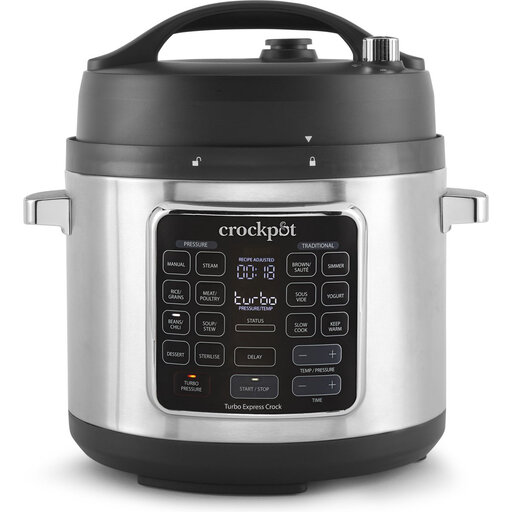 No image available
The stated capacity may be useful if you’re planning to make one larger batch.
The product title lists 5.6 litres, three settings and BPA-free materials.
Do not exceed the maximum fill line.
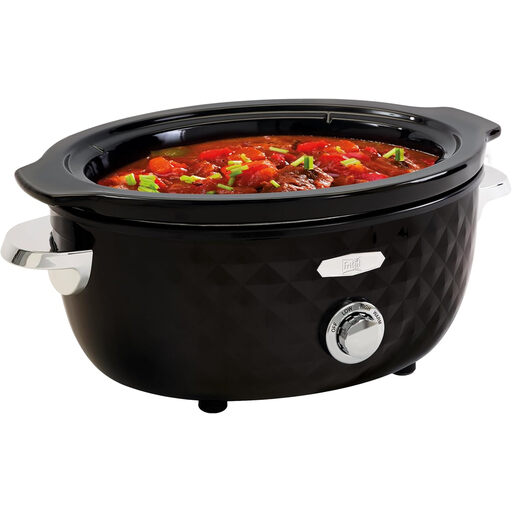 No image available
A slow cooker for anyone weighing up the stated capacity against how much stock they need for a meal.
The product title lists 5.5 litres, 210 W, 4 to 8 people, a ceramic pot and four heat settings.
The ceramic pot gets hot: use oven gloves and don’t put the hot pot straight into the fridge or under cold water.
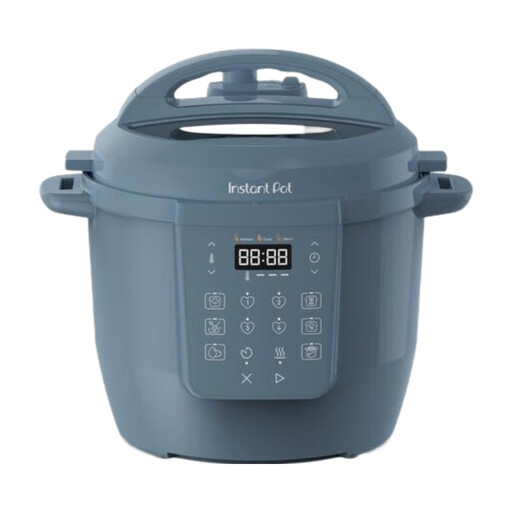 No image available
A multicooker to consider if you’d like a pressure-cooking function as well as slow cooking.
The product title lists 5.7 litres, seven functions, slow cooking and steaming.
When using it as a pressure cooker, don’t open the lid while the float valve is raised, as pressure and hot steam may still be present.
 No image available
An option for a larger batch planned in advance if you’d also like to use other functions.
The product title lists 7.6 litres, slow cooking and 9-in-1 functionality; the description mentions 12 programmes, delayed start and automatic keep-warm.
Do not open the lid while the appliance is under pressure, and do not exceed the maximum fill line.
First decide how much stock you want to serve or use in dishes. Leave room for the vegetables in your recipe and follow the instructions for the specific appliance. For example, a 7-litre pot doesn’t guarantee 7 litres of strained stock.
According to the Netherlands Nutrition Centre, put leftovers in the fridge, covered and cooled, within 2 hours; set the fridge to 4 °C and keep leftovers refrigerated for no more than 2 days. Freeze them if you want to keep them for longer. If needed, divide a large quantity into smaller portions so it can cool properly.
Unplug the appliance and let it cool. The Instant Pot Superior manual says that the inner pot and lid are dishwasher-safe; clean the base and cord with a damp cloth only. For other models, follow their own instructions.
It depends on how the meal is organised and whether food is being sold. The Netherlands Food and Consumer Product Safety Authority (NVWA) says that food sales rules also apply to individuals who sell food occasionally; for repeated sales at events, it requires an HACCP food safety plan. First establish how the community meal is being organised before applying rules for food sales.
Not simply because it has extra cooking functions. A pressure-cooking programme is different from the slow-cook setting. Consider the setting you actually want to use, and follow its instructions and a suitable recipe.