
Cook with limited worktop space
Wants to make vegetable curry slowly, but needs to be able to fit the appliance in while it’s in use and put it away afterwards. Capacity and external dimensions need to be checked separately.


Choose a capacity that suits the amount of curry you usually make, then check the appliance’s external dimensions and the space it needs around it. A basic slow cooker is enough if you mainly want to cook food slowly; a timer or multicooker is useful if you’ll actually use those extra controls or functions. Cook dried beans separately, following safe cooking instructions, and check that the specific appliance has the required CE marking.
Wants to make vegetable curry slowly, but needs to be able to fit the appliance in while it’s in use and put it away afterwards. Capacity and external dimensions need to be checked separately.
Makes curry for later and compares the pot’s capacity with the amount needed for the meal and the space available to store leftovers.
Wants to use other cooking functions as well as slow cooking, and weighs this up against choosing a simpler appliance.
First, compare the pot’s capacity with the amount of curry you usually make, then measure the space where the appliance will sit. After that, consider whether you need a timer or extra functions.
| What to consider | What should you check? | Who is this important for? |
|---|---|---|
| Worktop and cupboard space | Measure the available space and compare it with the exact model’s external dimensions, height with the lid on and placement instructions. | If I have limited worktop space, I want to know whether the appliance will fit and where I can store it after use. Around 36% of consumers put space first. |
| Amount of curry and leftovers | Compare the pot’s capacity with your usual recipe and consider how much you want to have left over. | If I batch-cook, I want to make enough curry without choosing a pot that’s too large for my kitchen. Around 29% of consumers prioritise getting the right portion size. |
| Adjustable cooking time | Check whether the exact model has a timer and what happens when the cooking time ends. | If I want cooking to finish at a planned time, I look for an adjustable timer and check which function stays on afterwards. Around 21% of consumers prioritise a planned finish time. |
| Multiple cooking functions | Check which functions the model offers and how the inner pot and lid should be cleaned, according to the instructions. | If I want to sauté or use other cooking methods as well as slow cooking, I check whether those functions are included in one appliance. Around 14% of consumers prioritise having multiple cooking functions. |
The pot’s capacity doesn’t tell you whether the appliance itself will fit on your worktop or how much space it needs while in use.
Measure the space and check the exact model’s external dimensions and placement instructions before you choose.
According to Tristar, the Tristar VS-3915 has a keep-warm setting but no timer. Keeping food warm is also no substitute for safely chilling curry you want to store.
Check separately whether it has a timer, and follow the Netherlands Nutrition Centre’s guidance for storing leftovers.
The European Food Safety Authority warns that undercooked beans can contain lectins.
Cook dried beans safely before adding them to the curry, or use pulses from a tin, jar or pouch. The Netherlands Nutrition Centre says these only need to be reheated.
The VS-3915 is a basic slow cooker with a 3.5 L capacity; the digital VS-3920 has a 4.5 L capacity.
The CSC046X-01 is sold in the Netherlands as a slow cooker with a 2.4 L capacity.
The Classic Mini 3,8 L is a multicooker for anyone looking to combine slow cooking with other cooking functions.
The Compact Home 25570-56 is marketed as a compact slow cooker.
This selection includes basic slow cookers, models with a timer and multicookers for anyone who wants to cook curry slowly or combine several cooking functions. Check that the specific appliance has the required CE marking; the Netherlands Food and Consumer Product Safety Authority says it is mandatory for electrical products.
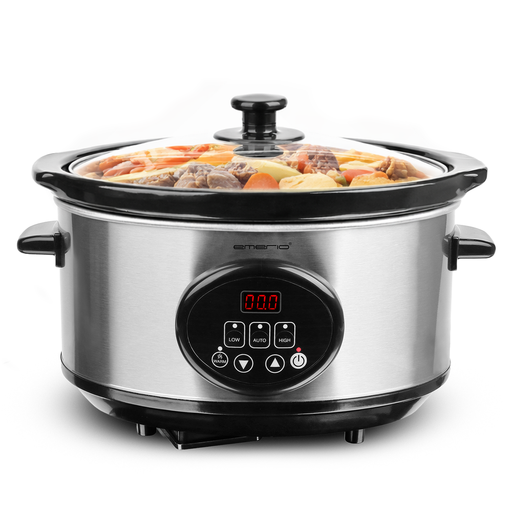 No image available
An option if you want to cook curry slowly and a timer matters to you.
The description lists three settings, a timer and automatic keep-warm after cooking. The stated external dimensions are 33,5 × 25,8 × 22,8 cm; compare these with the space you have available.
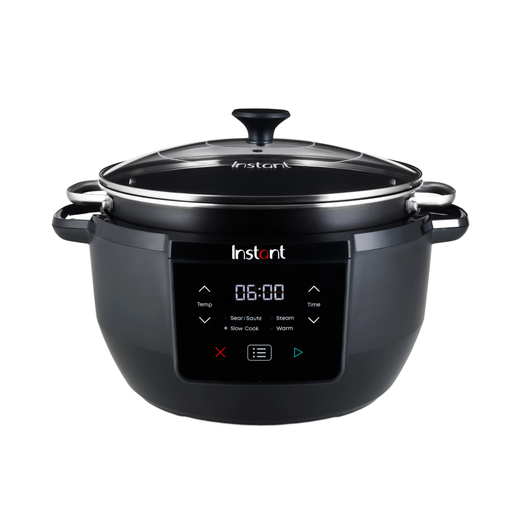 No image available
A good fit if you want to make larger quantities of curry and combine slow cooking with other cooking functions.
The description lists a 7,1 L capacity, up to 10 portions and four functions. Don’t use the inner pot on a hob or in an oven; the description warns that this could damage the coating.
 No image available
The smaller capacity may suit a modest amount of curry; compare the pot’s capacity with your usual recipe.
The title lists 2,6 L and 1000 W. The description mentions three manual heat settings and a non-stick inner pot. High-temperature frying is not recommended, to protect the non-stick coating.
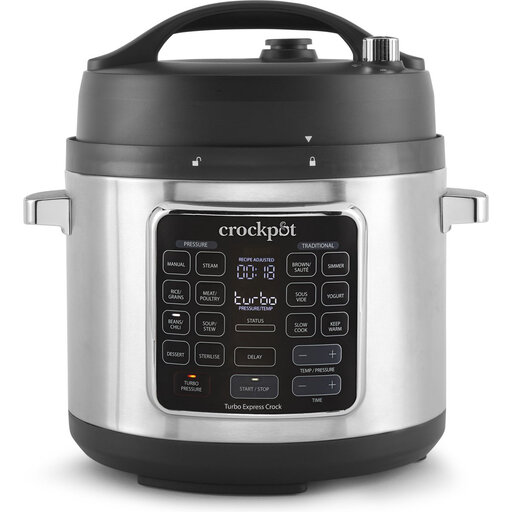 No image available
Worth considering if you want to make a larger quantity of curry and use extra functions.
The product information lists a 5,6 L capacity, three settings and 14 functions, including slow cooking, a timer and delayed start. When using the pressure-cooking function, follow the instruction not to force the lid open while the float valve is raised.
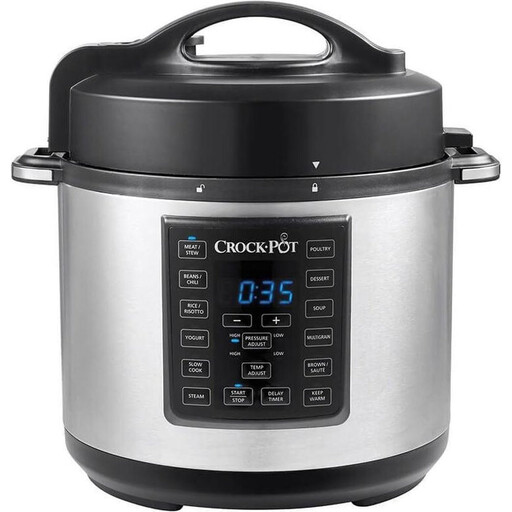 No image available
An option if you want to combine slow cooking with functions such as sautéing or steaming.
The product information lists a 5,6 L capacity, 12 programmes and a built-in timer. When using the pressure-cooking function, don’t open the lid while the float valve is raised; don’t fill the pot above the maximum mark.
Start with the amount of curry you usually make, then compare the appliance’s external dimensions with the space available. For reference, the models described include a 2.4 L Crock-Pot, a 3.5 L Tristar and a 3.8 L Instant Pot; the capacity in litres doesn’t automatically tell you how many portions your recipe will make.
Don’t assume that slow cooking alone is enough. For beans, the European Food Safety Authority recommends soaking them, changing the water and then boiling them at 100 °C for at least half an hour. The cooking time also depends on the type of bean. According to the Netherlands Nutrition Centre, pulses from a tin, jar or pouch only need to be reheated.
Follow the instructions for the exact model when cleaning the removable pot and electrical base; don’t immerse the electrical base in water. The Netherlands Nutrition Centre recommends keeping leftovers in the fridge for no more than two days.
Yes. The Netherlands Food and Consumer Product Safety Authority says CE marking is mandatory for electrical products. Check the marking on the specific appliance; a product listing alone doesn’t confirm that it’s present on the item you receive.
If a product is faulty, the seller must provide a solution. The Government of the Netherlands explains that your statutory guarantee gives you the right to a product that works properly and may continue to apply after a manufacturer’s or extended warranty ends, depending on the product’s expected lifespan.