
Cook with limited cupboard space
You want to make small stews, but need to be able to store the appliance, inner pot and lid. So compare the model’s external dimensions with your cupboard, not just its capacity.


If you’re only cooking tinned cannellini beans, you probably don’t need a slow cooker: according to the Voedingscentrum, tinned pulses only need reheating. If you also regularly make complete stews, compare the appliance’s external dimensions and capacity with your cupboard space and the quantity you want to cook. A larger capacity will generally need more storage space.
You want to make small stews, but need to be able to store the appliance, inner pot and lid. So compare the model’s external dimensions with your cupboard, not just its capacity.
You use tinned beans in a meal and wonder whether you need another appliance for the job. The Voedingscentrum says that tinned pulses only need reheating.
You regularly make a complete meal for several portions. In that case, space for all the ingredients matters more than simply choosing the smallest possible pot.
A good fit if: you mainly want to heat beans from a freshly opened tin for one meal and don’t want another appliance to store.
The trade-off: you make use of a pan you already have, but won’t get the separate low and high settings of a slow cooker.
A good fit if: you regularly make small, complete stews as well as cooking beans, and have room to store the appliance and its separate parts.
The trade-off: according to the manufacturer, the Bestron ASC150 has a capacity of 1.5 l and the Russell Hobbs Compact Home 25570-56 has a capacity of 2 l. Capacity alone doesn’t tell you whether the appliance will fit in your cupboard.
A good fit if: you want to cook several portions or extra ingredients at once.
The trade-off: according to the manufacturer, the Tristar VS-3915 has a capacity of 3.5 l, for up to four portions. Measure your available cupboard space before choosing a larger capacity.
When deciding between simply heating beans and making a complete slow-cooked meal, storage space, pot capacity and cleaning are the main things to consider.
| What to consider | What to look for when buying | Who is this important for? |
|---|---|---|
| Storage space and size | Measure the cupboard opening and compare it with the exact model’s external dimensions. Allow for the inner pot and lid. | I have limited cupboard space and want to store the separate parts too. Around 36% of consumers prioritise finding a suitable place to store their appliance. |
| Whether you need another appliance | Consider whether you regularly make complete stews as well as heating beans. | If I mainly use tinned beans for one meal, I want to know whether another appliance adds anything. Around 29% of consumers prioritise weighing up this choice. |
| Capacity for the whole meal | Compare the quantity in the full recipe with the model’s capacity and instructions for use. | I batch-cook and want the beans, sauce and other ingredients to fit in the pot together. Around 21% of consumers focus on capacity for several portions. |
| Cleaning | Check which parts are removable and dishwasher-safe for the exact model. | If I use it regularly, I want to know how many parts I’ll need to clean after cooking a stew. Around 14% of consumers make cleaning their main consideration. |
Tinned beans are already cooked and, according to the Voedingscentrum, only need reheating. A slow cooker is mainly worth considering if you also want to make complete stews.
Before setting aside extra cupboard space for an appliance, think about how often you make these kinds of complete meals.
An extra appliance also needs storage space when you’re not using it.
Capacity tells you how much the pot holds, but not whether the housing, inner pot and lid will fit in your cupboard.
Measure the cupboard opening and available space, then compare them with the external dimensions of the exact model.
The US Department of Agriculture’s food safety service, USDA, advises against reheating leftovers in a slow cooker.
Reheat chilled leftovers on the hob, in the microwave or in the oven, as advised by USDA FSIS.
The ASC150 is a compact model to compare, with a stated capacity of 1.5 l.
According to Russell Hobbs, the Compact Home 25570-56 has a capacity of 2 l.
The VS-3915 is a model to consider if you want to compare larger capacities.
These products are aimed at anyone who wants to make complete stews as well as cook tinned beans. Compare their capacity and stated dimensions with your recipe and available cupboard space.
 No image available
An option to compare if you want to make complete stews as well as cook beans.
The product description lists a capacity of 2,6 l and three manual heat settings. The title lists 1000 W.
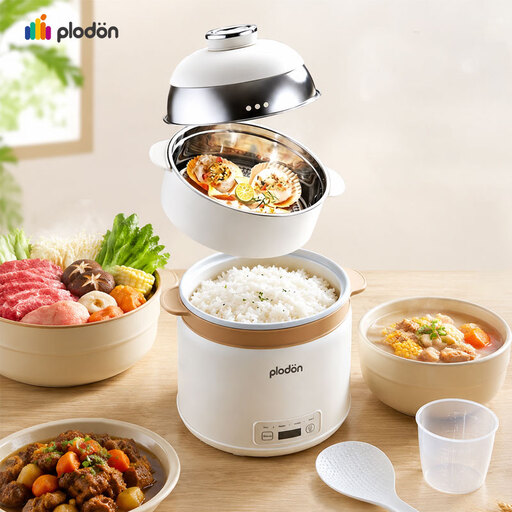 No image available
An option for small, complete stews if you also want to take the listed extra accessories into account.
The product description lists a capacity of 2,3 l and a steaming basket. The product name mentions a rice spoon and measuring cup.
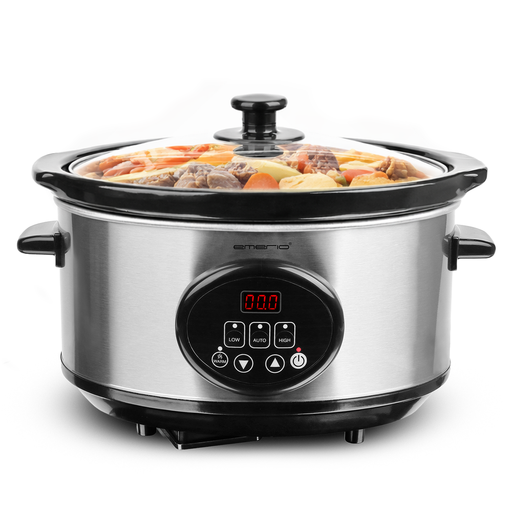 No image available
A larger capacity could suit you if you want to make complete stews for several portions. Measure your available space first.
The product description lists a capacity of 3,5 l, three settings, a timer and a removable ceramic pot. Its stated dimensions are 33,5 × 25,8 × 22,8 cm.
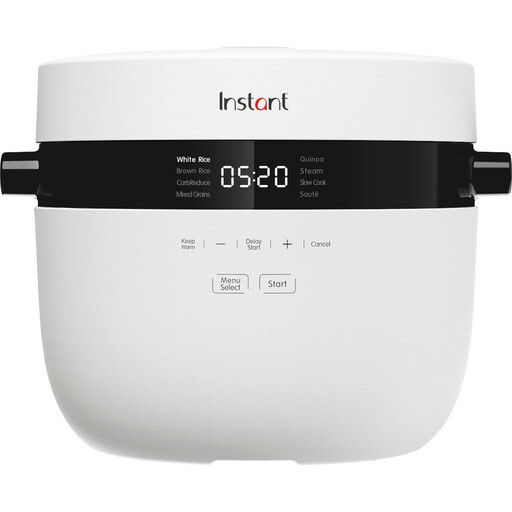 No image available
An option to compare if you want to use a slow-cook programme as well as reheat beans.
The product description lists a capacity of 5 l, a slow-cook programme and dishwasher-safe accessories. Its stated dimensions are 32 × 32 × 24,5 cm.
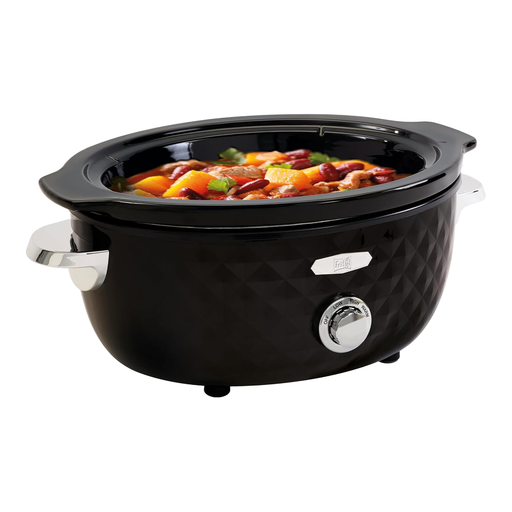 No image available
An option to compare if you regularly make complete stews and the pot capacity suits your recipe.
The product name lists a capacity of 3,3 l, 150 W, a ceramic pot and four heat settings. Its stated external dimensions are 319 × 318 × 224 mm.
No. According to the Voedingscentrum, tinned pulses only need reheating. A slow cooker is more relevant if you also want to slow-cook the whole stew.
Don’t use a slow cooker to reheat chilled leftovers. USDA FSIS advises reheating leftovers on the hob, in the microwave or in a conventional oven. This is food safety advice, not a Dutch legal requirement for appliances.
According to the Voedingscentrum, let leftovers cool within two hours, store them covered in the fridge and eat them within two days.
The Dutch government says that electrical appliances sold in the EU must carry a CE marking. Check the product information for the exact listing. When you buy online from a business, the Dutch government says you’ll often have a 14-day cooling-off period. Check the seller’s information for the terms that apply to your purchase.