
Small-portion cook
You mainly make stewed cabbage for one or two people and want a pot with a capacity that suits the way you cook.


Choose the capacity based on how much cabbage you usually cook at a time, and follow the filling instructions for the exact model; a larger pot isn’t automatically more convenient for a small portion. Russell Hobbs’ Dutch product information lists a capacity of 2 litres for the 25570-56, while Tristar lists 3.5 litres for the VS-3915. Crock-Pot describes the CSC061X as having an adjustable cooking timer from 30 minutes to 20 hours. As a general guideline, FoodSafety.gov advises filling a slow cooker to around half to two thirds full.
You mainly make stewed cabbage for one or two people and want a pot with a capacity that suits the way you cook.
You want to set the cooking time and be able to distinguish between a cooking timer and a delayed start.
Sometimes you cook more cabbage at once and want to weigh up the pot’s capacity against safely cooling and storing leftovers.
When making stewed cabbage for a small household, the main considerations are portion size, your preferred level of tenderness, the controls and what you’ll do with any leftovers.
| What to consider | What should you look for? | Who is this most important for? |
|---|---|---|
| Capacity for small portions | Compare the amount of chopped cabbage you usually cook with the model’s capacity and filling instructions. | If I usually cook for one or two people, I want my portion to fit the pot and the recommended fill level. Around 42% of consumers prioritise a suitable pot capacity. |
| Preferred level of tenderness | Check the settings and follow the appliance’s cooking instructions; don’t simply use a hob cooking time. | If I want the cabbage cooked to a particular texture, I want to be able to adjust the cooking to suit my model’s instructions. Around 25% of consumers prioritise their preferred texture. |
| Adjustable cooking time | Check whether the model has a cooking timer and what happens when the set time is up. | If I want to choose the cooking time in advance, I look for a timer for the cooking itself and distinguish this from a delayed start. Around 17% of consumers prioritise an adjustable cooking time. |
| Cleaning and leftovers | Check which parts are dishwasher-safe and whether you can cool and store leftovers. | If I make extra portions, I want to know how to clean the pot and how to store leftovers safely. Around 16% of consumers give cleaning and leftovers top priority. |
A pot’s capacity doesn’t tell you how much of your recipe you should or can cook according to the instructions. As a general guideline, FoodSafety.gov advises filling a slow cooker to around half to two thirds full.
Work out how much cabbage you usually cook, then check the filling instructions for the exact model.
A timer for setting the cooking time doesn’t mean ingredients can be left unrefrigerated while they wait for cooking to begin. FoodSafety.gov advises starting to cook straight after preparation.
Check which function the model has, and start cooking as soon as you’ve prepared the ingredients.
Dishwasher suitability varies by model and component. For example, Crock-Pot states that the pot and lid of the CSC061X are dishwasher-safe; this doesn’t automatically apply to other slow cookers.
Check the care instructions for the exact inner pot and lid you’re buying.
The Dutch product information for the Compact Home 25570-56 is a useful starting point if you’re looking for a pot for small portions.
The CSC061X shows what features a compact slow cooker with a digital cooking timer can offer.
The Dutch product information for the VS-3915 describes a larger option for cooking more portions at once.
These Joybuy products include compact pots and larger slow cookers. Compare each model’s listed capacity, settings and any timer with your usual portion size and cooking method.
 No image available
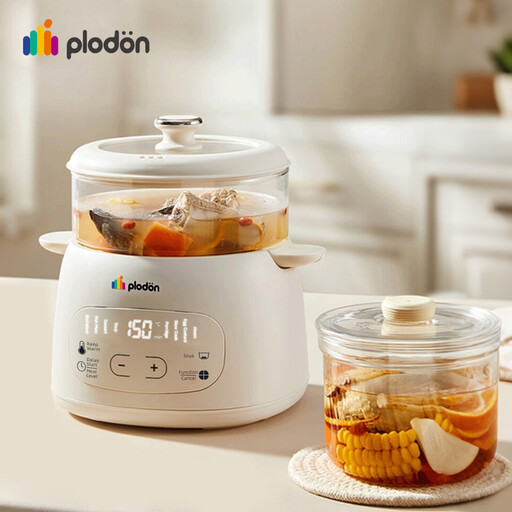
An option to consider if you’re looking for a compact pot for a small meal.
The product name lists 2L, 800W, 8-in-1 and five adjustable heat levels, as well as a delayed start function. Don’t leave ingredients unrefrigerated at room temperature while waiting for cooking to begin.
 No image available
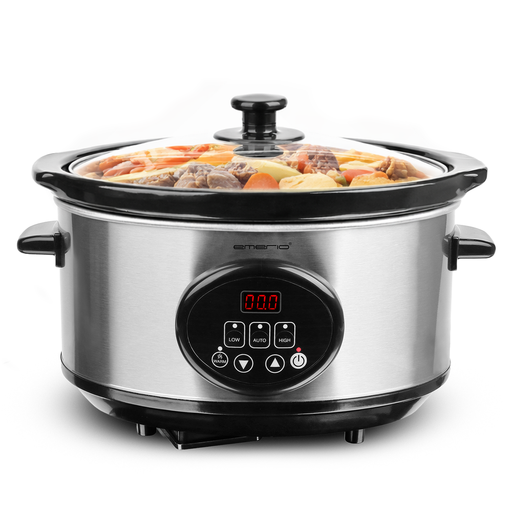
A larger pot to consider if you often cook more than a small portion at a time.
The product name lists 3.5L, a digital display and a keep-warm function.
 No image available
A compact option to compare if you’re looking for a smaller pot with several manual heat settings.
The product name lists 2.6L, 1000W and a steam function, with three manual heat settings.
 No image available
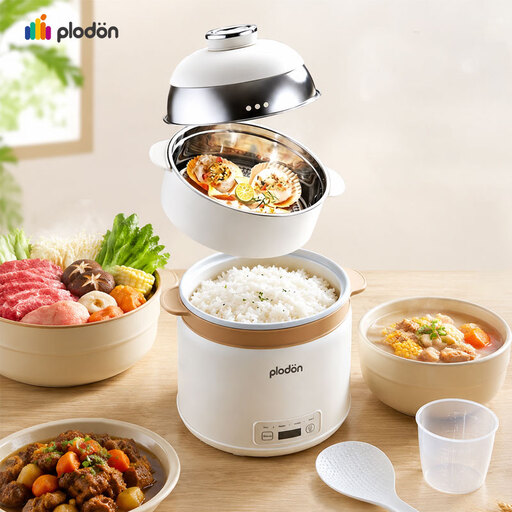
An option to compare if you’re looking for a pot with a steam function as well as slow cooking.
The product name lists 2.3L and a steam function. The product instructions say not to fill the pot beyond two thirds full.
 No image available
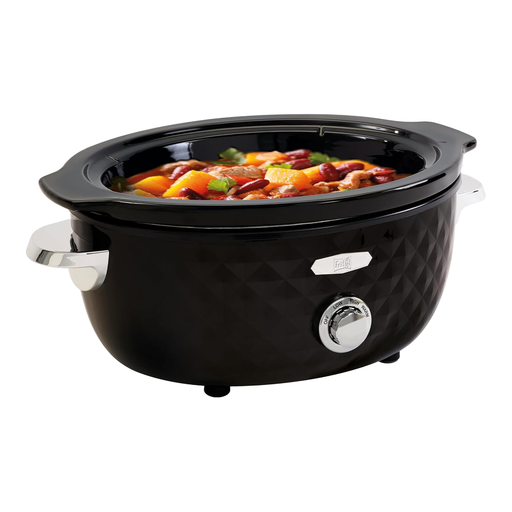
A larger option to consider if you sometimes cook several portions at once.
The product name lists 3.3L, 150W, use for 1 to 4 people, a ceramic pot and four heat settings. According to the product information, the ceramic pot isn’t suitable for use on a hob or in an oven.
Start by following the instructions for your model. As a general guideline, FoodSafety.gov advises filling a slow cooker to around half to two thirds full; this isn’t a universal specification for every model.
No, don’t simply use the cooking time from a hob recipe. The Netherlands Nutrition Centre gives a hob cooking time of 20–25 minutes for a recipe for two people; this isn’t a validated slow-cooking time. Follow your appliance’s instructions and check that the cabbage is cooked to your liking.
Don’t assume a cooking timer is a delayed start function. FoodSafety.gov advises starting to cook straight after preparation, as otherwise the ingredients may reach room temperature first.
According to the Netherlands Nutrition Centre, cool leftovers within two hours and store them covered in the fridge at 4 °C. Eat them within two days or freeze them; when serving again, reheat thoroughly until steaming hot.
Electrical equipment within the scope of 50–1,000 V AC is subject to EU electrical safety requirements, including conformity assessment, an EU declaration of conformity and CE marking, as described by EUR-Lex and the European Union’s Your Europe website. Check the documentation for the specific appliance; a model listing alone doesn’t confirm that an individual unit meets the requirements.