
Solo cook with limited space
You usually make one serving and want a pot suited to a small meal and a compact kitchen. Russell Hobbs’ product information describes a compact slow cooker with a removable inner pot.


If you usually make one serving, start with a compact slow cooker and check its usable capacity and guidance for cooking small quantities. A larger pot makes more sense if you want to cook and store several servings at once. Red lentils can also be cooked on the hob, so you don’t need a slow cooker to make dhal. Choose a multi-cooker only if you’ll make real use of its extra features, such as cooking rice or steaming.
You usually make one serving and want a pot suited to a small meal and a compact kitchen. Russell Hobbs’ product information describes a compact slow cooker with a removable inner pot.
You usually cook for yourself, but sometimes want to make several meals at once and store the rest safely. The Netherlands Nutrition Centre offers advice on cooling and storing leftovers.
You’d like to cook rice or steam food as well as making dhal, for example. A Dutch product description for Instant Pot lists cooking rice, slow cooking and steaming.
Start with the amount you actually want to cook. Then consider whether batch cooking or extra features are worth the space the appliance will take up.
| What to consider | What should you check? | Who should prioritise this? |
|---|---|---|
| Capacity for one serving | Check the usable capacity of the pot and the minimum quantity that the manual says you can cook. | If I usually make one serving, I don’t want an impractically large pot; around 42% of consumers prioritise a suitable capacity. |
| Controls or extra features | Check whether the appliance has a slow cook setting and whether the keep-warm function works independently of a timer. | If I want to make other dishes as well as dhal, I’ll look at the features I’ll genuinely use; around 25% of consumers prioritise controls or versatility. |
| Cooking time | Decide whether slow cooking fits your schedule and follow a recipe designed for your appliance and serving size. | If I want red lentil dhal quickly, cooking it on the hob may suit my schedule better; around 17% of consumers prioritise cooking time. |
| Batch cooking and storage | Decide how many servings you’ll make and whether you have suitable containers and space in the fridge or freezer. | If I want to make several meals at once, I’ll plan how to store the leftovers in advance; around 16% of consumers prioritise batch cooking. |
Russell Hobbs’ official product page lists both 1.5 and 2 litres for the Compact Home 25570-56. A stated capacity also doesn’t tell you which quantities are suitable for a small batch.
Check the specific version, the manual and the minimum fill level before you decide.
A Good Food hob recipe simmers red lentils gently for around 20 minutes after preparation. That isn’t the slow-cooking time.
Compare slow cooking with cooking on the hob, and use a recipe suited to your slow cooker and serving size.
If speed matters to you, an extra appliance may simply mean more waiting and another item taking up space in your kitchen.
Extra servings are only practical if you can cool and store them promptly.
Portion up the leftovers and follow the storage advice from the Netherlands Nutrition Centre.
Batch cooking also requires storage containers and space in the fridge or freezer.
These brands are worth considering because of the product ranges and features mentioned; the points below don’t necessarily apply to the entire brand.
The Compact Home 25570-56 is a simple option to consider if you usually make small meals.
The VS-3915 is a straightforward 3.5-litre slow cooker for anyone who wants to make several servings at once.
A 2.8-litre rice cooker, slow cooker and steamer is most relevant if you’ll use all those different functions.
This selection includes slow cookers and multi-cookers with a slow cook function. Above all, check that the capacity and stated cooking options suit your serving size.
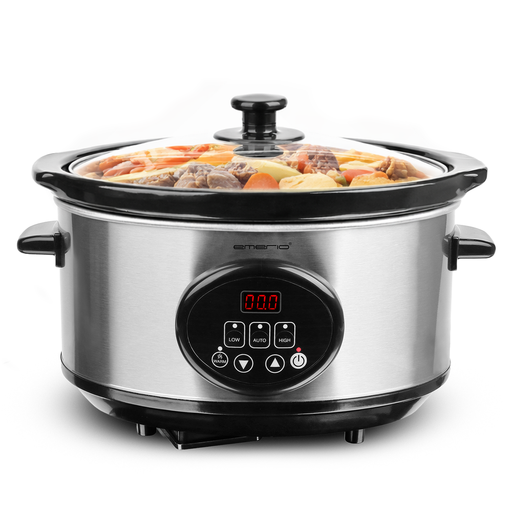 No image available
The digital timer and keep-warm function are useful if you want to prepare several servings in advance; check that the capacity suits the amount you’re making.
3.5 litres; three settings; digital timer; removable ceramic pot; glass lid; keep-warm function.
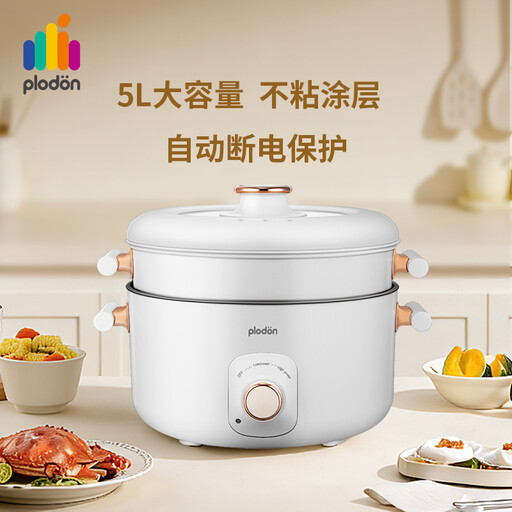 No image available
Consider this pot if you want to steam food as well as slow cook; for a small serving, check the manual for the recommended fill level.
1200 W; 5 litres; two heat settings; non-stick coating; removable steamer; suitable for 1–6 people according to the product description.
 No image available
The product description also mentions steaming and preparing soup and noodles; check which functions and quantities suit the way you’ll use it.
1000 W; 2.6 litres; three manual heat settings; non-stick inner pot; steamer.
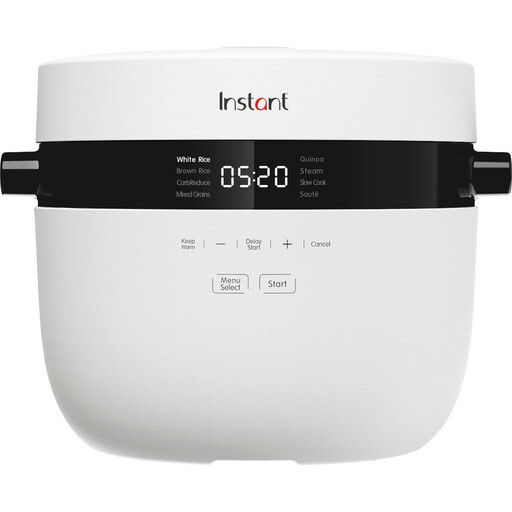 No image available
This multi-cooker combines slow cooking with rice and grain programmes. The stated serving size starts at two servings, so it’s less suited to making exactly one serving.
5 litres; 8-in-1; steam function; sauté function; stated range of 2–20 servings.
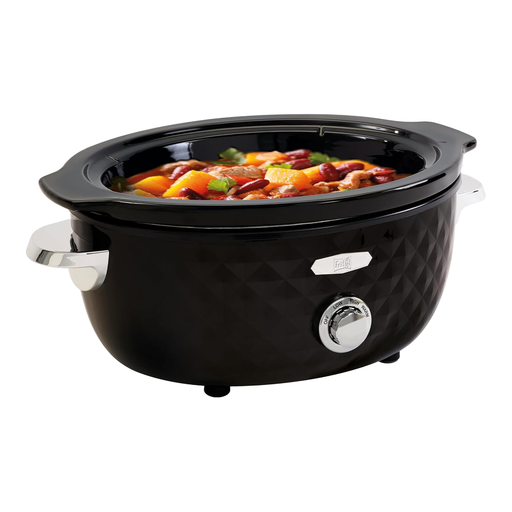 No image available
The stated serving size is one to four people; check that the amount of dhal you want to make falls within this model’s recommendations.
3.3 litres; 150 W; ceramic pot; four heat settings; stated as suitable for 1–4 people.
No, you can also make red lentil dhal on the hob. A Good Food recipe simmers the lentils gently for around 20 minutes after preparation; that isn’t the slow-cooking time. Choose a slow cooker if its slower cooking method suits your schedule.
No. Tristar says the VS-3915 has a keep-warm function, but its product specifications don’t mention a timer. Check these features separately for the model you’re considering.
The Netherlands Nutrition Centre advises cooling leftovers within two hours and eating refrigerated leftovers within two days. When reheating, heat each portion all the way through until piping hot.
Electrical appliances within the voltage range covered by the EU Low Voltage Directive must meet the applicable EU safety requirements. The European Union says that manufacturers use the CE marking to indicate that a product complies with the relevant EU rules. The marking is not an independent test certificate and does not, by itself, prove that a particular item conforms. The Dutch government says that if a product is faulty when delivered, you have the right to repair or replacement, in addition to any manufacturer’s warranty.