
Small-batch cook
You usually make a modest amount of dhal and want a compact, easy-to-use pot. Russell Hobbs Nederland lists the Compact Home as having a removable 2-litre ceramic pot.


Choose a compact slow cooker if you usually make a small amount of dhal; a larger inner pot gives you more room when cooking extra portions. A Bored of Lunch dhal recipe allows 6–7 hours on low or 3–4 hours on high. If you’re starting late and want to eat soon, consider a multicooker with a pressure-cooking function. The result depends on the recipe, quantity and setting you choose.
You usually make a modest amount of dhal and want a compact, easy-to-use pot. Russell Hobbs Nederland lists the Compact Home as having a removable 2-litre ceramic pot.
You want to make dhal for several people or save some for later, so you’re considering the inner pot’s capacity and how to chill leftovers safely. Tristar lists the VS-3915 as having a 3.5-litre ceramic inner pot.
You sometimes want to slow-cook for hours, but after a late trip to the market you may also need a quicker cooking option. A multicooker with a pressure-cooking function offers an alternative to slow cooking.
First, work out how much dhal you usually make. Then consider whether you have enough time for slow cooking or would also like another cooking method.
Choose this if: you usually make small quantities and want a compact pot.
Bear in mind: the smaller capacity may not leave enough room for larger portions; check the fill limits in the manual.
Choose this if: you often cook for several people or want to save portions for later.
Bear in mind: a larger capacity also means planning how to portion and chill leftovers.
Choose this if: you sometimes want to use a quicker cooking method as well as slow cooking.
Bear in mind: extra functions and parts may be unnecessary if you only want to slow-cook dhal; check the exact model and electrical specifications.
| What to consider | What should you check? | Who is this important for? |
|---|---|---|
| Pot capacity | Compare the capacity with the amount of dhal you usually make, and check the fill limits in the manual. | If I usually make a small pot of dhal, I want a capacity that suits my needs without taking up unnecessary space. Around 25% of consumers say portion size is their top purchasing priority. |
| Cooking time | Compare the time and settings in your recipe with the time you have available; pressure cooking is a different cooking method. | If I get home late and want to eat that evening, the cooking time available matters a lot. Around 25% of consumers say cooking time is their top priority. |
| Controls and cleaning | Check whether the model has a timer and which parts can be cleaned according to the manual. | If I want to use few settings and make the pot easy to clean after cooking, I look at the controls and removable parts. Around 25% of consumers put ease of use first. |
| Storing leftovers | Make room for suitable, sealable containers so you can chill leftovers promptly; keeping food warm is not the same as storing it. | If I make extra portions for later, I want to be able to chill and store them promptly after cooking. Around 25% of consumers say batch cooking is their top priority. |
According to the Netherlands Food and Consumer Product Safety Authority, CE marking is compulsory for electrical products. Check that the specific appliance carries the required marking; a general rule does not confirm that an individual model on sale has been checked.
A keep-warm setting is not a way to store dhal you plan to eat later. The Netherlands Nutrition Centre advises chilling leftovers quickly and not leaving them out of the fridge for more than 2 hours.
If you’re making a larger quantity, allow time to portion and refrigerate the leftovers.
Features vary by model. Tristar lists the VS-3915 as having two heat settings and a keep-warm function, but no timer.
Check the specifications for the exact model, and don’t confuse the keep-warm function with an automatic cooking timer.
Slow cooking and pressure cooking are different functions. A claim about pressure-cooking speed doesn’t tell you how long dhal will take on the slow-cook setting.
Choose the extra cooking method only if you’ll use it for other meals too.
Extra features and parts can mean more choices and steps that you won’t use if you only slow-cook.
The Compact Home is a standalone slow cooker for anyone looking for a 2-litre inner pot.
The VS-3915 is a standalone slow cooker with a stated capacity of 3.5 litres.
The 5.7-litre Duo Crisp is designed for anyone who wants to use pressure cooking and other functions as well as slow cooking.
According to Tefal, the All-in-One CY505E combines slow cooking with functions including simmering and pressure cooking.
The selection below includes standalone slow cookers with different pot capacities, as well as models with additional cooking functions. For the specific appliance, check for the required CE marking and the product specifications, including the exact model.
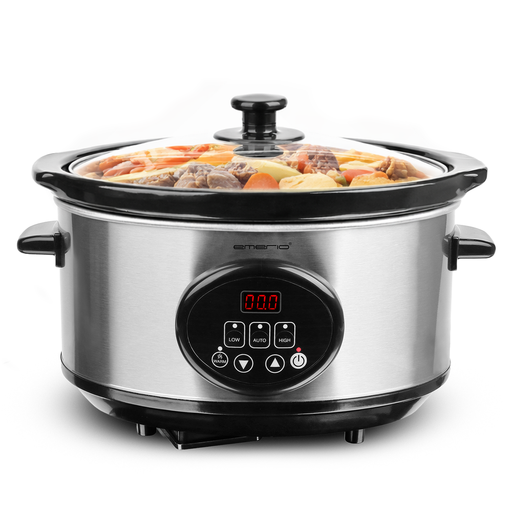 No image available
Its stated capacity is worth considering if you make dhal for several portions.
3.5 litres; digital display; keep-warm function.
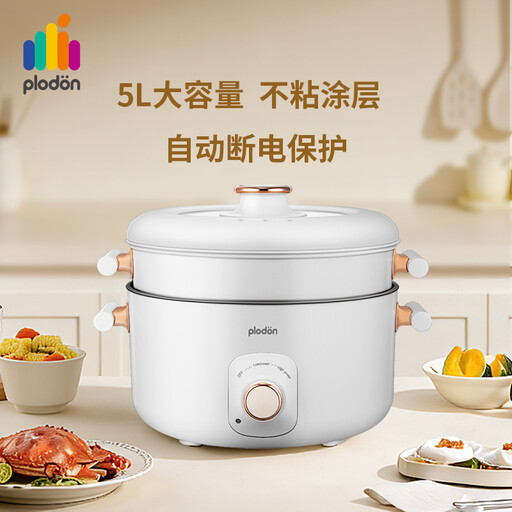 No image available
Its stated capacity may suit you if you want to make more dhal; choose the extra steaming function only if you’ll use it too.
1200 W; 5 litres; with steamer.
 No image available
Consider this model if you want to use the listed sauté and steam functions as well as slow cooking.
7.1 litres; 4-in-1; sauté and steam functions.
Don’t use the inner pot on a hob or in an oven; the product information warns that this may damage the coating.
 No image available
The smaller stated capacity may suit you if you usually make modest portions and would also like to steam food.
1000 W; 2.6 litres; three manual heat settings.
The product information advises against high-temperature frying to protect the non-stick coating.
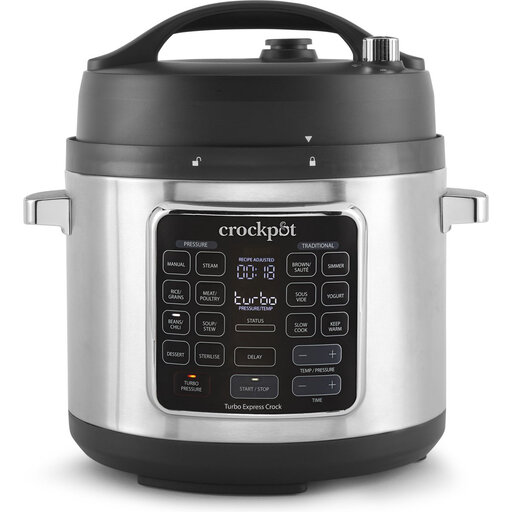 No image available
Consider this model if you’re looking for a larger capacity and would also like the option of pressure cooking as well as slow cooking.
5.6 litres; three settings.
When using it as a pressure cooker, use enough liquid and observe the maximum fill mark.
No. The Netherlands Nutrition Centre distinguishes between dried pulses, which need to be cooked until tender, and pulses in jars, tins or pouches, which only need reheating. Follow a suitable recipe for dried red lentils and check that they’re cooked through.
It depends on the recipe, quantity and appliance. A Bored of Lunch recipe specifies 6–7 hours on low or 3–4 hours on high; this is a recipe instruction, not a guaranteed cooking time for every model.
Cool leftovers quickly, store them in a sealed container in the fridge or freezer, and don’t leave them out of the fridge for more than 2 hours. The Netherlands Nutrition Centre says leftovers can be kept for up to 2 days in the fridge or 3 months in the freezer.
According to the Netherlands Food and Consumer Product Safety Authority, CE marking is compulsory for electrical products. This general requirement doesn’t confirm that a specific appliance on sale meets all applicable requirements; check the marking and product information for the exact model.
For online sales, you generally have a statutory cancellation period of up to 14 days after delivery, according to the Netherlands Authority for Consumers and Markets. You’re also covered by the statutory guarantee if, under normal use, the product doesn’t do what you could reasonably expect; the seller is responsible for this.