
Cooking with limited washing-up space
You want to brown the onions and then leave the soup to cook without leaving several used pans in the shared kitchen.


Choose based on how much soup you want to make and how you plan to brown the onions. A compact model is suitable for a smaller batch if you can brown the onions separately. To cut down on washing up, look for an inner pot that’s suitable for your hob or a model with a built-in sauté function. Before buying, check the instructions and compliance information for the exact model.
You want to brown the onions and then leave the soup to cook without leaving several used pans in the shared kitchen.
You usually make a smaller batch and are looking for a removable pot and an appliance you can put away after use.
You often make a larger pot of soup and want to match the capacity to the number of people eating and the guidance for storing leftovers.
Good Food’s onion soup recipe browns the onions before adding the stock. So first consider whether you want to use a separate pan, an inner pot that’s suitable for your hob, or a built-in sauté function.
Suitable if: you have limited cupboard space and can brown the onions in a regular pan if needed. Tristar lists a removable 3.5 L ceramic pot for the VS-3915.
Bear in mind: browning the onions separately means using the hob and another pan.
Suitable if: you have access to a hob and would rather use the removable inner pot for browning. Russell Hobbs lists this option for the 22740-56.
Bear in mind: you’ll still need a hob; this isn’t the same as a built-in electric sauté function.
Suitable if: you regularly cook for several housemates and want to brown the onions and cook them in the same appliance. Instant Pot lists a sauté function and a capacity of 7.1 L for the Superior 4-in-1.
Bear in mind: a larger pot takes up more space and won’t necessarily be practical for a small batch of soup.
| Point to consider | What should you check? | Who should pay particular attention? |
|---|---|---|
| Browning onions with less washing up | Check whether the appliance can sauté or whether the removable pot is suitable for your type of hob. Read the cleaning instructions too. | If I’d rather not wash up a frying pan as well, I’ll choose a suitable way to brown the onions in or with the slow cooker. Around 33% of this group prioritise doing less washing up. |
| Space for use and storage | Measure the available space and check the external dimensions of the exact model. The pot’s capacity isn’t the same as the amount you can cook according to the manual. | If I have limited storage space in my kitchen, I want to know where the appliance will fit after use. Among consumers who prioritise compact storage, the proportion is around 27%. |
| Amount of soup and filling it correctly | Decide how much soup you want to make, then follow the filling instructions for your chosen slow cooker. Leave room to cool and store any leftovers too. | If I’m cooking for several housemates, the capacity needs to suit the portions I need. Consumers who mainly cook for several people make up around 20%. |
| Planning the cooking time | Check whether the exact model has a cooking timer, what happens when the time is up and what the manual says about keeping food warm. A keep-warm setting isn’t a delayed start. | If my mealtimes and cooking times don’t match, I want to know in advance how I can plan the cooking. Around 20% of consumers prioritise an adjustable cooking time. |
Keep-warm is intended for use after cooking. FoodSafety.gov warns against leaving prepared ingredients for hours before the slow cooker starts.
Check what the timer and keep-warm function do on the exact model, and start cooking after preparing the ingredients.
Good Food’s onion soup recipe browns the onions separately. How you can do this with a slow cooker depends on the model.
Compare a built-in sauté function with a removable pot that the manufacturer says is suitable for your hob. You’ll need a separate pan for a model without a browning function.
The stated pot capacity doesn’t automatically tell you how much soup you can safely make according to the instructions. FoodSafety.gov recommends filling a slow cooker between half and two-thirds full.
First decide how much soup you want to make, then follow the filling instructions in the manual for your chosen model.
The VS-3915 is a compact 3.5 L model, designed for anyone looking for a smaller pot.
The 22740-56 is designed for anyone looking for a compact slow cooker with a removable pot that can be used for browning on the hob.
The Superior 4-in-1 is worth considering if you’re looking for a larger capacity and the ability to sauté in the same appliance.
These models suit different needs in terms of capacity, setting the cooking time and slow cooking; the Instant Pot in this selection also has a sauté function.
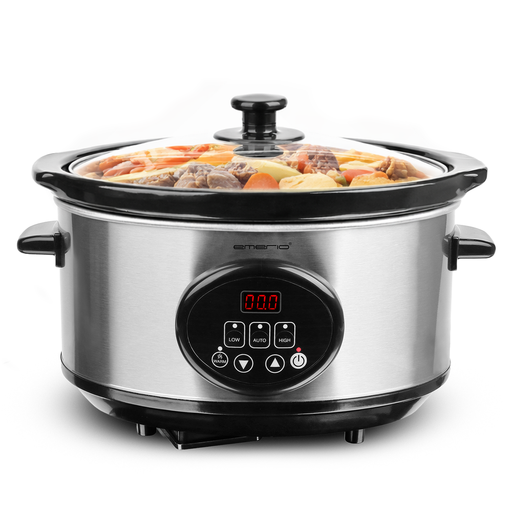 No image available
Suitable for a smaller batch if a timer and removable inner pot matter to you; the pot isn’t designed for use on a hob, in an oven or in a microwave.
Capacity: 3.5 L. The product information lists a digital timer, three settings and a keep-warm function. The ceramic pot is removable.
 No image available
Suitable if you want to sauté onions in the same appliance and then cook the soup slowly; the inner pot isn’t designed for use on a hob or in an oven.
Capacity: 7.1 L; the title lists 10 portions. Functions: slow cooking, sautéing and steaming. The product information lists adjustable time and temperature, a keep-warm function and a removable inner pot.
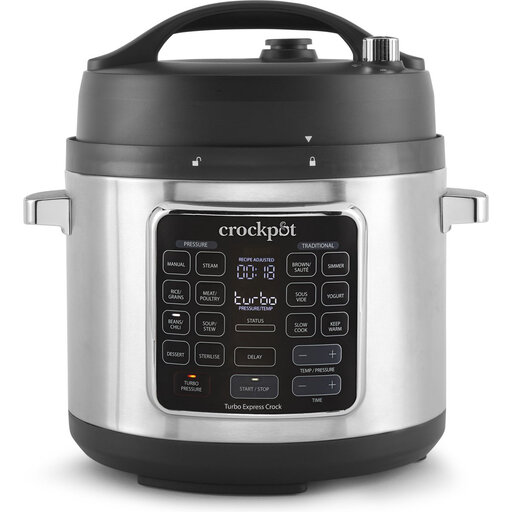 No image available
Suitable if you’re looking for a larger pot and want to be able to set the cooking time; compare the amount you need with the filling instructions.
Capacity: 5.6 L. The product name lists three settings; the product information mentions a timer.
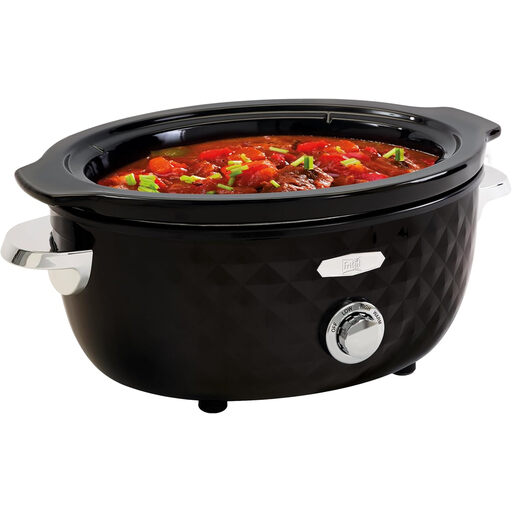 No image available
Suitable for cooking for several people when your main priority is slow cooking and keeping food warm. Don’t put the hot ceramic pot straight into the fridge or under cold water.
Capacity: 5.5 L; the product name lists 4 to 8 people and 210 W. The product information mentions a ceramic pot and four heat settings.
Follow the method in your chosen recipe. For browned onions like those in Good Food’s recipe, fry them separately first. You can use a separate pan, an inner pot that the manufacturer says is suitable for your hob, or a slow cooker with a built-in sauté function.
The Netherlands Nutrition Centre (Voedingscentrum) recommends cooling leftovers within 2 hours, putting them in sealed containers labelled with the date, and storing them in the fridge or freezer. Eat refrigerated leftovers within two days. When reheating a portion, heat it until piping hot throughout and use clean utensils.
Electrical equipment covered by Directive 2014/35/EU must carry the CE marking. The European Commission lists household appliances operating at 50–1,000 V AC as within the scope of the directive; EUR-Lex outlines the CE marking requirement. This does not automatically confirm that an individual model meets the requirements.
No. A commercial warranty is not the same as your statutory rights against the seller. ACM ConsuWijzer explains that if a product breaks sooner than expected during normal use, the seller must put it right free of charge, for example by repairing or replacing it, or refunding your money.