
Workshop cook preparing food for a group
Compare the quantity in your recipe with the pan’s usable capacity. The stated capacity in litres doesn’t automatically tell you how much broth you can make in it.


Start with the amount of broth you need and when you want to serve it. A standard slow cooker could be suitable if you have enough time for slow cooking; a multicooker is worth comparing if you also want a dedicated soup or pressure-cooking programme. Always check the usable capacity and measure the temperature if you’re keeping the broth warm.
Compare the quantity in your recipe with the pan’s usable capacity. The stated capacity in litres doesn’t automatically tell you how much broth you can make in it.
Plan the cooking around your lesson. A timer won’t make slow cooking any quicker; other programmes on a multicooker may be relevant if you’re considering different cooking methods.
A keep-warm setting won’t tell you the broth’s temperature. Check the food temperature and think ahead about how you’ll store any leftovers.
First, choose based on the amount you need and the time available for cooking. Then consider whether you need a keep-warm setting or extra cooking programmes.
| What to consider | What to look for when buying | Who is this important for? |
|---|---|---|
| Amount per batch | Work out the recipe quantity and compare it with the permitted fill level of the exact model. The pan’s capacity and usable capacity may differ. | If I’m cooking for a group, I want to know whether one batch will be enough. Around 40% of consumers prioritise the amount of broth per batch. |
| Cooking time | Compare the recipe time with the time available for your lesson and the programme duration; start in advance if needed. | I want to be able to serve the broth at the planned time, so I’d rather not have cooking start only when the lesson begins. Around 30% of consumers prioritise planning. |
| Serving warm and storing | Check whether the model has a keep-warm setting and use a digital probe thermometer when keeping food warm. Plan how you’ll cool any leftovers, too. | If participants are eating later, I want to be able to check the temperature and store leftovers safely. Around 20% of consumers prioritise serving food safely at a later time. |
| Cleaning and reuse | Check which parts are removable and follow the cleaning instructions; don’t assume they’re dishwasher-safe unless this is confirmed. | After the workshop, I want to be able to clean the pan and possibly use the appliance for other dishes. Around 10% of consumers prioritise cleaning and reuse. |
For the Tefal CY505E10, Tefal states a pan capacity of 6 litres and a usable capacity of 3.8 litres. These figures don’t mean the same thing, and they matter when you’re cooking for a group.
Work out the quantity you need for your recipe and check the fill limit in the manual for the exact model before choosing an appliance.
A keep-warm function doesn’t tell you the temperature of your broth. For professional food preparation, the NVWA states that hot food should be kept above 60 °C and that you should check the temperature with a digital probe thermometer.
Measure the temperature while keeping the broth warm, and find out which food safety rules apply to your workshop.
Bear in mind that you may need a suitable digital probe thermometer to check the temperature.
The Instant Pot Duo Crisp and RIO aren’t automatically the same model as the Duo 5,7 L reviewed here. The Tefal RK8121 is also a different model from the CY505E10, so specifications for one model don’t necessarily apply to the other.
Before buying, compare the full model name, features and usable capacity of the appliance you’re actually considering.
The VS-3920 is a digital slow cooker for meals you can plan to cook over several hours.
The Duo 5,7 L is a multicooker worth considering if you want to use other programmes as well as slow cooking.
The CY505E10 combines slow cooking with other multicooker functions.
This selection includes standard slow cookers and multifunctional appliances for slow cooking or making soup. Check that each model’s capacity and features suit your workshop.
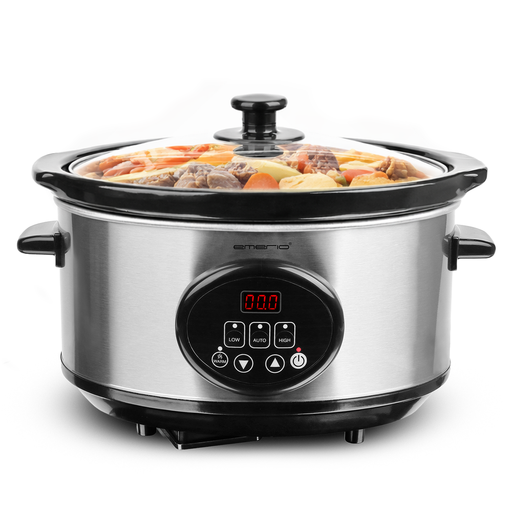 No image available
A standard slow cooker to consider if you want to cook the broth slowly and set the cooking time.
The product information lists a 3.5-litre ceramic pot, a digital timer, a glass lid and a keep-warm function. The stated capacity isn’t the same as a confirmed usable fill level.
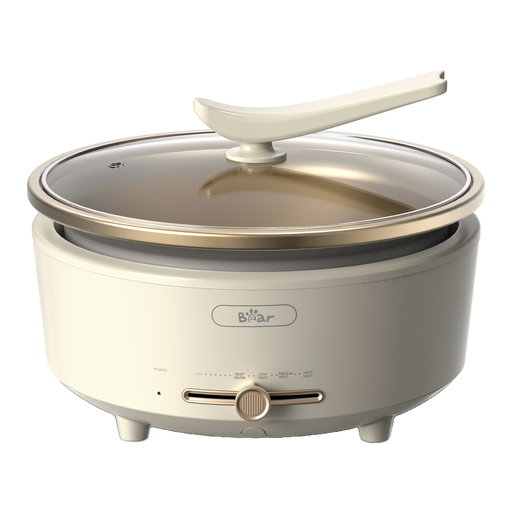 No image available
A multifunctional appliance to compare if you want to use other cooking methods as well as slow cooking.
The product information lists a capacity of 5 litres, slow cooking, stewing and keeping food warm. Take care around hot surfaces and steam during use.
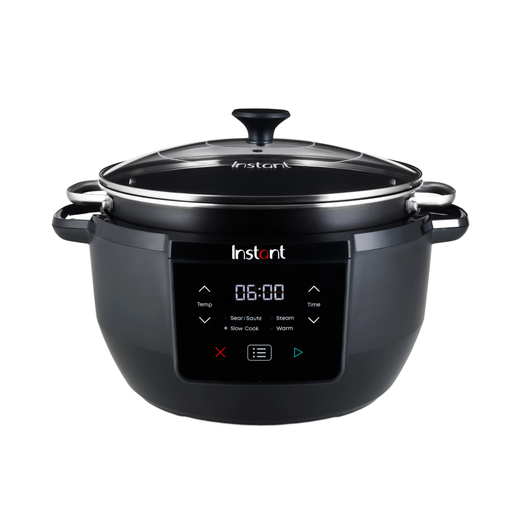 No image available
A larger slow cooker to compare if you’re planning a bigger batch for a workshop.
The product information lists a capacity of 7.1 litres, up to 10 servings, adjustable time and temperature, and a keep-warm function. The inner pot isn’t suitable for use on a hob, induction hob or in an oven.
 No image available
A compact option to compare for a smaller batch; the product information also mentions making soup.
The listing states a usable capacity of 2.6 litres and three manual settings. The product information specifies that the appliance is for domestic use only, so check whether that suits your workshop.
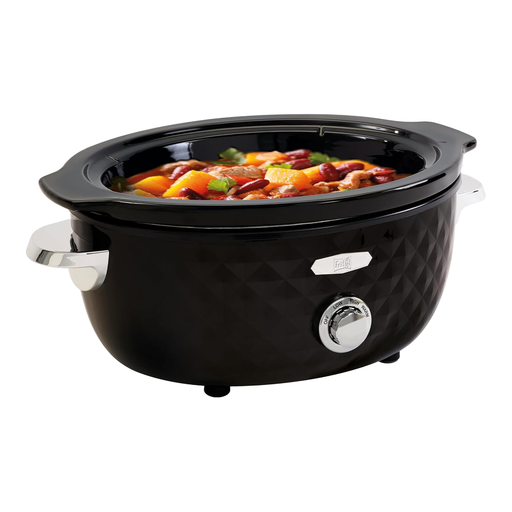 No image available
A slow cooker to consider for a smaller group and a meal you can plan to cook in advance.
The product information lists a capacity of 3.3 litres, four heat settings, a removable ceramic pot and enough for 1 to 4 people. The pot and exterior can get hot; the pot isn’t suitable for use on a hob or in an oven.
Don’t count on it without checking the recipe time. Tristar lists adjustable cooking times of 3 to 10 hours for the VS-3920; if needed, start in advance or compare another programme on the exact appliance.
Measure the temperature rather than relying on the keep-warm setting alone. For professional food preparation, the NVWA states that hot food should be kept above 60 °C and that you should check the temperature with a digital probe thermometer; find out which rules apply to your workshop.
Cool leftovers quickly and store them in a sealed container in the fridge or freezer. The Netherlands Nutrition Centre advises not leaving leftovers out of the fridge for more than 2 hours; for professional food preparation, also follow the relevant hygiene code or food safety plan.
The Netherlands Nutrition Centre advises against picking mushrooms in the wild because of the risk of poisonous varieties, and recommends cooking edible mushrooms thoroughly. A slow cooker won’t make a misidentified mushroom safe to eat.
Check that the exact appliance carries the required CE marking; a brand or model name alone doesn’t prove this. As a consumer, you have a legal guarantee in addition to any commercial warranty: if a product develops a fault too soon under normal use, the seller must offer an appropriate solution. Consumer rights don’t automatically apply to business purchases; for professional food preparation, processing or sales, the NVWA also sets out the requirement for an HACCP food safety plan or hygiene code.