
Cooking for a crowd
Wants to make enough minestrone for everyone at the table or prepare extra portions, so compares the pot capacity with the quantity in their own recipe.


Choose a slow cooker based on how much soup your recipe makes and when you want to serve it. A smaller pot takes up less space, while a larger one gives you more room for extra diners or portions. A timer and keep-warm setting can help you plan, but you can add tinned beans to the soup later, and pasta needs separate attention to get it cooked just the way you like it.
Wants to make enough minestrone for everyone at the table or prepare extra portions, so compares the pot capacity with the quantity in their own recipe.
Prepares the soup earlier in the day and wants to plan when it will finish cooking or be kept warm.
Doesn’t want to leave tinned beans and pasta to cook for the entire cooking time without a second thought, and considers how to finish the soup as it cooks.
First, compare the capacity with your recipe and the number of people you’re feeding. Then check whether the controls suit your evening plans and when you want to add the beans and pasta.
| What to consider | What to look for when buying | Who is this important for? |
|---|---|---|
| Pot capacity | Compare the recipe volume with the pot capacity and filling instructions; don’t look only at the stated number of portions. | If I’m cooking for several people, I want my recipe to fit in the pot in one go. Around 36% of consumers make capacity their main buying priority. |
| Planning your meal | Check whether the model has a timer and how the keep-warm setting works. | If I prepare the soup earlier in the day, I want to coordinate the cooking and serving times. Around 29% of consumers prioritise planning for this reason. |
| Beans and pasta | Check whether you can add ingredients while the soup is cooking; check the pasta separately to see if it’s done. | If I’m using tinned beans and pasta, I want to decide when they go into the soup. Around 21% of consumers focus mainly on how and when ingredients are cooked. |
| Cleaning | Check which parts are removable and which the manufacturer says are dishwasher-safe. | After making a pot of soup, I want to know how many parts I’ll need to wash and how to clean them. Around 14% of consumers prioritise cleaning and everyday use. |
Tristar lists six portions for its 4.5-litre model, while Instant lists a maximum of ten for its 7.1-litre model. These manufacturers’ estimates don’t tell you exactly how many bowls your minestrone recipe will make.
Add up the quantities in your own recipe and compare the total with the pot capacity and filling instructions.
A keep-warm setting is for serving time; leftover soup needs to be stored separately and according to food-safety advice.
Follow the Netherlands Nutrition Centre’s advice: cool leftovers quickly, store them in a sealed container in the fridge or freezer, and don’t leave them out of the fridge for more than two hours.
According to the manufacturer, the inner pot of the Instant Superior 4-in-1 must not be used on a hob or in an oven.
Read the instructions for the model you choose. With this Instant model, use the sauté function on the appliance itself.
The 4.5-litre VS-3920 and 3.5-litre VS-3915 offer different capacities to compare with your recipe.
The TSC3501B is a 3.5-litre slow cooker with rotary controls.
The 7.1-litre Superior 4-in-1 is worth considering if you want to make a larger quantity or are looking for extra cooking functions.
The Bronte Soft Navy N28780-56 has a 7-litre ceramic pot and rotary controls.
This selection from Joybuy ranges from compact models to larger pots and appliances with different controls and cooking functions.
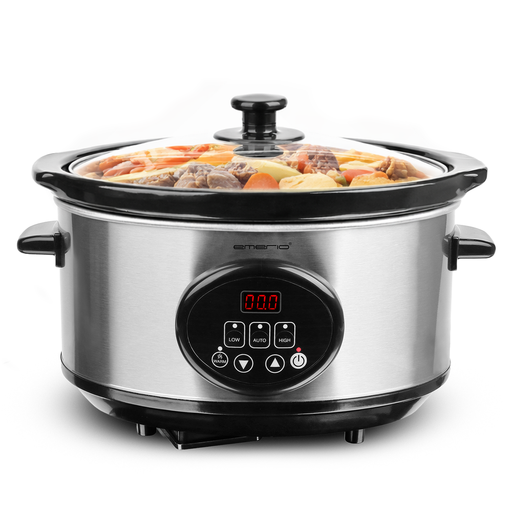 No image available
The stated capacity may suit anyone looking for a smaller pot; compare it with the quantity in your own recipe.
The product name mentions a digital display and keep-warm function. Don’t fill the ceramic pot more than three-quarters full, as stated in the instructions.
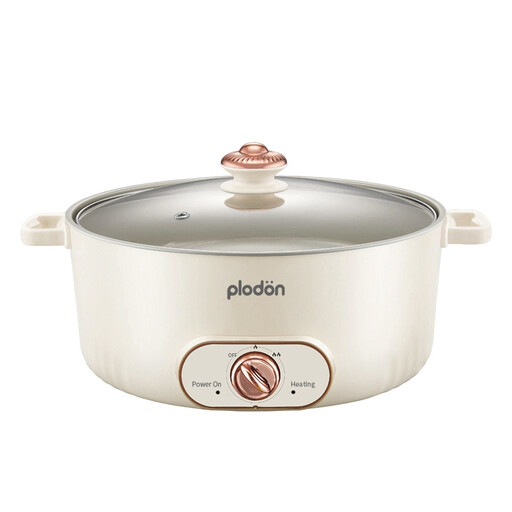 No image available
The capacity may suit anyone looking for a larger pot; check that the cooking settings listed match the way you want to make your minestrone.
The product name mentions a non-stick coating. The pot and lid get hot during use, so use heat-resistant gloves.
 No image available
The larger capacity and sauté function may suit you if you want to make a generous quantity and brown ingredients in the same appliance.
The product name also mentions steaming. Don’t use the removable inner pot on a hob or in an oven.
 No image available
The compact capacity may suit a smaller shared meal; compare the pot size with the amount of soup you want to make.
The product name mentions three manual heat settings and a non-stick coating. The product information advises against high-temperature frying to protect the coating.
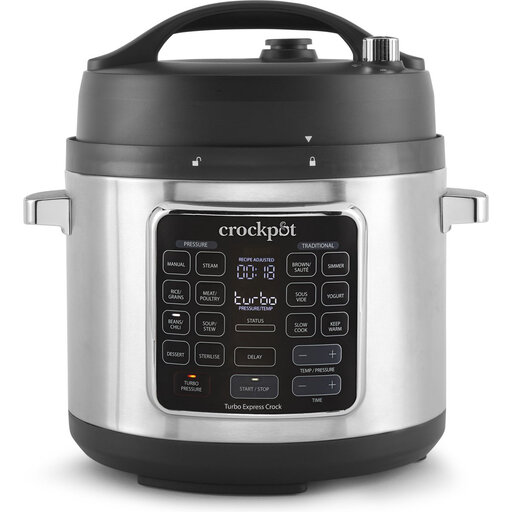 No image available
The capacity may suit anyone cooking for several people; compare the stated size with your recipe and the filling instructions.
The product name lists three settings. Check the product information if you specifically need a timer or delayed start.
No, they don’t. The Netherlands Nutrition Centre advises following the cooking instructions on the label; in its minestrone recipe, the rinsed beans are heated through in the soup later on. The recipe describes cooking on the hob and doesn’t give a specific slow-cooking time.
Check the pasta towards the end of cooking, or cook it separately. The Netherlands Nutrition Centre checks whether the pasta is cooked in its minestrone recipe; the hob cooking time doesn’t automatically apply to a slow cooker.
Cool leftovers quickly, store them in a sealed container in the fridge or freezer, and don’t leave them out of the fridge for more than two hours. This is the storage advice from the Netherlands Nutrition Centre.
In the Netherlands, statutory warranty rights apply alongside any manufacturer’s warranty. ACM ConsuWijzer says that if a product breaks sooner than you could reasonably expect under normal use, the seller must put it right free of charge. There is no single fixed statutory warranty period for every appliance.
CE marking is compulsory for electrical equipment covered by the Commodities Act Decree on Electrical Equipment, according to the NVWA. The low-voltage rules mentioned apply to a nominal AC voltage of 50 to 1,000 V. Check the details and markings on the specific appliance.