Who is this for?

Group workshop organiser

You want to make enough carrot soup for everyone attending, so you’ll need to match the cooker’s capacity to your recipe, the number of portions and how you plan to serve it. Tristar and Tefal offer models in different capacities; for the CY505E10, Tefal distinguishes between the bowl’s total capacity and its usable capacity.

Cook with a fixed workshop schedule

You want to know whether the soup will be ready when it’s time for everyone to eat. According to Tristar, the VS-3920 has adjustable cooking times from 3 to 10 hours; the Voedingscentrum’s carrot soup recipe describes cooking in a conventional pan.

Facilitator of a small cooking group

You’re looking for controls that are easy to manage during the workshop, and a pot you can remove for serving or clearing away. Russell Hobbs and Tristar list a removable ceramic pot for their models; also check the terms and conditions if you’ll be using it commercially.

What should you look for?

Basic slow cooker

A good fit if: you’re making a modest amount of soup and have plenty of time for slow cooking.

Bear in mind: according to Tristar, the VS-3915 has no timer, so you’ll need to monitor the cooking yourself.

Digital slow cooker with timer

A good fit if: you want to plan the cooking around a scheduled workshop and make a larger batch.

Bear in mind: according to the manufacturer, the Tristar VS-3920 has cooking times from 3 to 10 hours; check that they fit your schedule.

Multicooker with pressure-cooking function

A good fit if: you’d like to have another cooking option as well as slow cooking.

Bear in mind: the Tefal CY505E10 has a stated usable capacity of 3.8 litres, compared with a total bowl capacity of 6 litres.

What to consider What to look for Who is this important for?
Amount of soup Compare the volume of your recipe and the portions you want to make with the usable capacity of the exact model. I want to make enough soup for my group in one batch, so I’ll match the pot to the recipe and the number of portions. Capacity is the top priority for around 40% of consumers.
Schedule and serving time Compare your recipe’s cooking time with the length of the workshop, and check whether a timer suits your schedule. If the group is eating at a set time, I want to know whether the soup will be ready and whether I’ll need to prepare anything in advance. Timing is the top priority for around 30% of consumers.
Controls and cleaning up Check how to use the controls, whether the pot is removable and what cleaning instructions apply. I don’t want to keep monitoring the cooking during the session, and I want to be able to remove the pot easily afterwards. Ease of use is the top priority for around 20% of consumers.
Another cooking option Think about whether you’ll use the extra cooking function, and compare it with cooking in a conventional pan. For a short session, I want the option of switching to a quicker cooking method or using a conventional pan. This choice of cooking method is the top priority for around 10% of consumers.

Common pitfalls

  • Confusing the bowl’s capacity with the amount of soup you can make

    For the Tefal CY505E10, Tefal gives a total bowl capacity of 6 litres and a usable capacity of 3.8 litres. If you plan based on the bowl size alone, your recipe may not fit in the batch you had in mind.

    Work out the volume of your recipe and the number of portions you want, then compare these with the usable capacity of the exact model.

  • Assuming a keep-warm button guarantees a controlled serving temperature

    A keep-warm function doesn’t confirm that the soup reaches or maintains the temperature required for your situation.

    Find out which food safety rules apply to your workshop. Where temperature checks are required, the NVWA recommends using a digital probe thermometer.

  • Not checking the manufacturer’s warranty for commercial use

    Tristar states that its own warranty does not apply if a product is used in a commercial setting. This does not, in itself, say anything about every type of workshop or about statutory consumer rights.

    Before buying, check which warranty terms apply to your intended use, and distinguish between the manufacturer’s warranty and any statutory rights.

Brands to consider

Tristar

Tristar offers a basic slow cooker with a 3.5-litre pot and a digital model with a 4.5-litre pot.

  • Tristar lists a removable ceramic pot for both models.
  • According to Tristar, the VS-3915 has no timer. The manufacturer excludes commercial use from its own warranty terms.

Russell Hobbs

According to Russell Hobbs, the Chalkboard 24180-56 is a basic slow cooker with a 3.5-litre capacity.

  • Russell Hobbs lists three heat settings, a glass lid and a removable ceramic pot.
  • Capacity alone won’t tell you how much soup you can make for your workshop in one go; match it to your recipe and portions.

Tefal

According to Tefal, the Tefal CY505E10 is a multicooker with both slow-cooking and pressure-cooking functions.

  • Tefal lists a total bowl capacity of 6 litres and a usable capacity of 3.8 litres.
  • Use the usable capacity when planning how much soup to make, and check that your chosen cooking method fits the workshop session.

Products for making carrot soup at a workshop

Joybuy product picks for making carrot soup at a workshop, including slow cookers and multicookers.
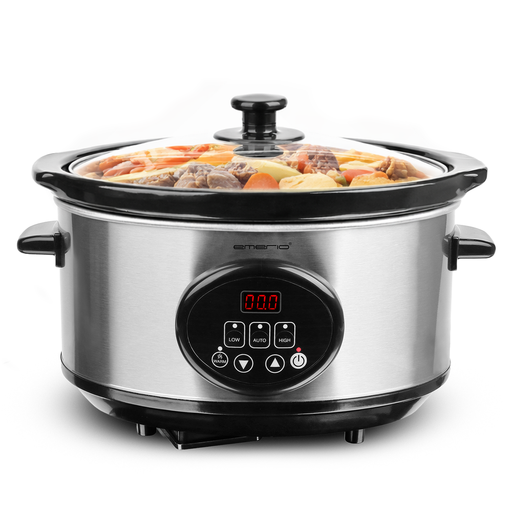
Emerio SC-129406 digital slow cooker, 3.5 litres, black

Emerio SC-129406 Slow Cooker, 3.5L, Digital Display, Keep Warm Function, Black

The timer function suits a planned cooking stage; match the total cooking time to your recipe and workshop.

The product name lists 3.5L, a digital display and a keep-warm function. A keep-warm function is no substitute for temperature checks when these are needed in your situation.

Joybuy

Instant Pot Superior 7.1L 4-in-1 Slow Cooker, black

Instant Pot Superior 7.1L 4-in-1 Slow Cooker, Black

The stated capacity and portion guidance may be useful if you’re cooking for a larger group; compare them with your own recipe.

The product name lists 7.1L and 4-in-1. Don’t use the inner pot on a hob or in an oven; the product information warns that this may damage the coating.

Joybuy
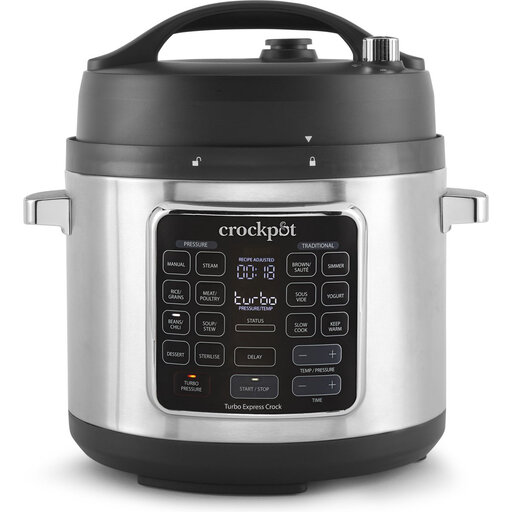
CrockPot CSC062X slow cooker, 5.6 litres, 3 settings

CrockPot CSC062X Slow Cooker, 5.6L, 3 Settings

This option may suit a group-sized batch if you’re considering another cooking method too; check which functions are included with this variant.

The product name lists 5.6L and 3 settings. Follow the pressure safety instructions: don’t force the lid open while the float valve is raised, and don’t exceed the maximum fill line.

Joybuy
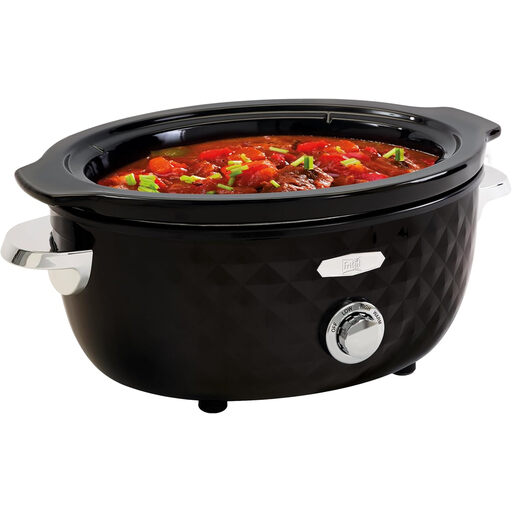
Fritel Slow Cooker SC 2290, 5.5 litres, ceramic pot

Fritel Slow Cooker SC 2290, 5.5L, 210W, Ceramic Pot

The product name lists a 5.5-litre ceramic pot; compare its capacity with the amount of soup and number of portions you want to make.

The product name lists 4 heat settings and a capacity guide for 4 to 8 people. The pot and housing get hot: use oven gloves and avoid sudden temperature changes to the ceramic pot.

Joybuy

Midea 9-in-1 electric pressure cooker, 7.6 litres, black

Midea 9-in-1 Fast Electric Pressure Cooker, 7.6L, Black

This multicooker is worth comparing if you want a faster cooking option as well as slow cooking; check that its functions suit your recipe.

The product name lists 9-in-1 and 7.6L. Follow the warnings about high pressure and steam, and don’t fill the pot above the marked line.

Joybuy

Frequently asked questions

Can I make carrot soup from start to finish during a short workshop?

Not necessarily with slow cooking: Tristar lists cooking times of 3 to 10 hours for the VS-3920. For a shorter session, you could consider another cooking method. The published Voedingscentrum recipe cooks the carrot in a conventional pan for 10 minutes, then purées the soup. This isn’t a time estimate for an adapted slow cooker recipe.

Is the keep-warm setting enough to serve soup safely?

Don’t rely on the function’s name alone. For the professional situation described by the NVWA, involving unpackaged perishable food kept in a warming cabinet or bain-marie, the required temperature is 60 °C or above; the NVWA recommends checking it with a digital probe thermometer. A keep-warm function does not confirm that the soup reaches or maintains this temperature.

What should I do with soup left over after the workshop?

According to the Voedingscentrum, you can keep leftovers covered in a fridge set to 4 °C for up to two days, or freeze them. Don’t leave perishable food out of the fridge for more than two hours, and let leftovers cool before putting them in the fridge.

Do food business registration, a food safety plan and allergen information apply to a cooking workshop?

If you run a food business or sell food to consumers, the NVWA outlines requirements for registration and working with an HACCP food safety plan or the applicable hygiene code. Businesses in sectors including catering must inform consumers about allergens in non-prepacked dishes. The word “workshop” alone doesn’t determine whether your activity is commercial; first check which situation applies to you.

Who is responsible if a product is faulty, and does commercial use make a difference?

For a consumer purchase, the Authority for Consumers and Markets (Autoriteit Consument & Markt) says the seller is responsible for the statutory guarantee. Tristar also states that its own warranty does not apply to use in a commercial setting. Check the terms for your intended use, and don’t confuse the manufacturer’s warranty with statutory consumer rights or rights relating to a business purchase.
