
Cooking for a group
You want to make enough soup for everyone, so you match the pot capacity to the recipe quantity, number of portions and filling instructions.


First decide how much soup you want to make and how much room the recipe needs to leave in the pot. Then choose a capacity to suit. A timer can help you plan the cooking around serving time, while a basic slow cooker will do if you can keep an eye on when the cooking finishes. Don’t rely on the keep-warm setting to keep soup safely warm for a long time without checking.
You want to make enough soup for everyone, so you match the pot capacity to the recipe quantity, number of portions and filling instructions.
You want the soup ready for a set serving time, so you compare using a timer with starting and stopping the cooking manually.
You want to use your slow cooker for other cooking methods after the festive meal, too.
First work out how much soup you need and when you plan to serve it. Then consider whether a timer, removable pot or extra cooking programmes would make a difference for the way you’ll use it.
| What to consider | What should you look for? | Who is this important for? |
|---|---|---|
| Amount of soup | Compare the recipe quantity and portion size with the pot capacity and the model’s filling instructions. | If I’m cooking for a group, I want to know whether all the soup will fit in one batch without overfilling the pot. Around 36% of consumers say making enough soup in one go is their main buying concern. |
| Planning the cooking | Check whether the model has an adjustable cooking time and what happens if the soup is ready early. | If the soup needs to be on the table at a set time, I want to be able to plan the cooking more precisely. Around 29% of consumers prioritise serving time. |
| Blending and cleaning | Check which parts are removable and dishwasher-safe; also make sure you have a suitable appliance for blending the soup. | For smooth carrot soup, I want to be able to blend it and tidy up easily after cooking. Around 21% of consumers say easy-to-handle and easy-to-clean parts are their main buying concern. |
| Extra cooking functions | Compare the programmes on the exact model with the other cooking methods you actually plan to use. | If I want to use the appliance for other meals too, extra programmes could be useful. Around 14% of consumers put versatility first. |
How much soup you can make also depends on the recipe and the filling instructions. If the usable capacity is too small, you may have to cook in several batches.
Work out how many portions you need in advance and check the filling limit for the model you choose.
Fritel gives a temperature range of 28–48 °C for the keep-warm setting on the SC 2290 and SC 2395. This range doesn’t show what temperature all the soup in the pot will reach.
Plan to serve the soup after cooking. If you’re delayed, check the actual temperature of the soup and cool any leftovers promptly, following advice from the Voedingscentrum.
Extra programmes can be useful if you want to cook other dishes, but they aren’t necessary if you only want to slow-cook soup.
Choose extra functions only if you have a specific use for them beyond this meal.
According to Fritel, the SC 2290 and SC 2395 are 5.5-litre slow cookers designed for multiple portions.
The VS-3915 is a smaller slow cooker. Tristar states that it has a capacity of 3.5 litres and can make up to four portions.
According to Russell Hobbs, the Sous Vide Slow Cooker combines slow cooking with sous vide cooking and has a 6.5-litre pot.
The 5.7-litre Duo is a multicooker for anyone looking to combine slow cooking with other programmes.
These models are suited to making soup using slow cooking and include both slow cookers and multicookers with a slow-cook function.
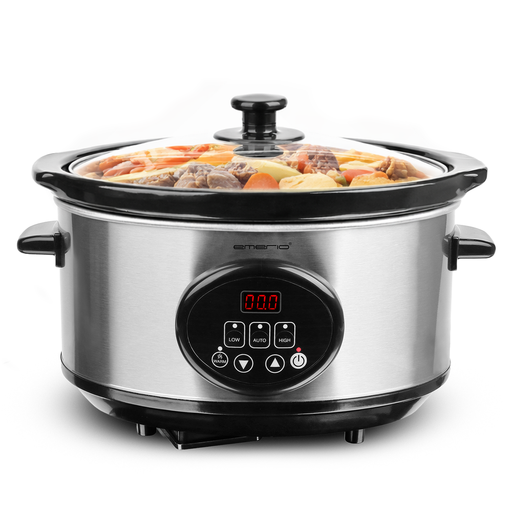 No image available
A compact option if the amount of soup you need fits within the pot capacity and filling instructions.
The product information lists a removable ceramic pot, digital controls with a timer and a keep-warm function.
 No image available
A multicooker to consider if you want to use other cooking methods as well as slow cooking.
The product name lists a capacity of 7.1 litres, up to 10 portions, sautéing and steaming. Don’t use the inner pot on a hob or in an oven.
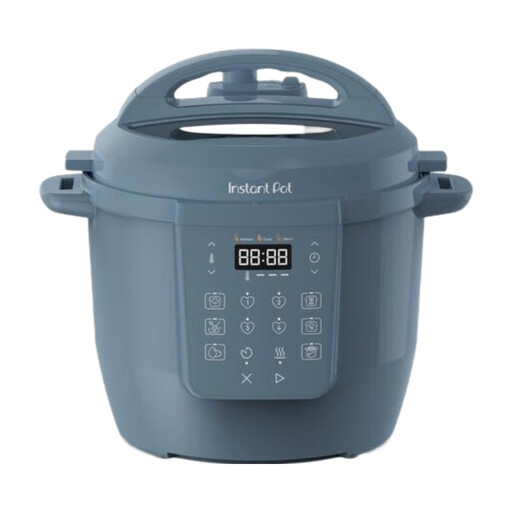 No image available
A multicooker with a slow-cook function for anyone who wants to use other cooking programmes too.
The product information lists a capacity of 5.7 litres, up to six portions, slow cooking, steaming and sautéing.
 No image available
An option to consider if you’re looking for a large capacity, slow cooking and several programmes.
The product information lists a 24-hour timer and automatic keep-warm after cooking.
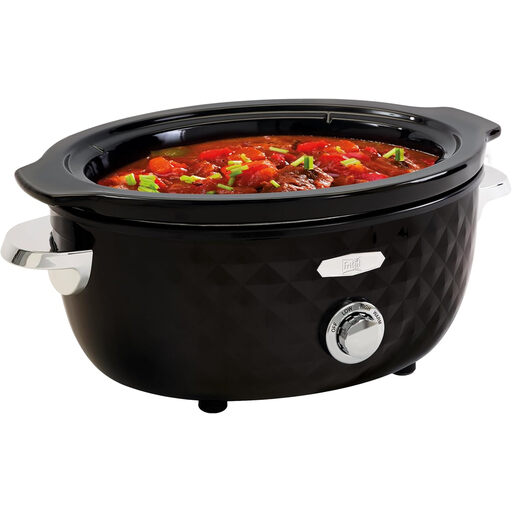 No image available
A spacious slow cooker to consider if you can plan the cooking yourself.
The product information lists 210 W, a ceramic pot and four heat settings. Fritel doesn’t list a delayed start or automatic switch-off; check the temperature of the soup if you’re serving it later.
First compare your recipe quantity and the number of portions with the capacity and filling instructions for the exact model. In a soup recipe, Fritel recommends filling the pot no more than three-quarters full. The stated number of people isn’t a fixed measure of the bowls of soup you’ll serve.
The slow-cook functions described cook the soup, but blending is a separate step. In Fritel’s slow cooker recipe, the soup is blended until smooth after cooking, so make sure you have a suitable blending appliance and follow the instructions for your pot and appliance.
The Voedingscentrum advises putting cooked leftovers in the fridge or freezer within two hours. Keep leftovers in the fridge, set to 4 °C, for no more than two days. When reheating chilled soup, heat it thoroughly until piping hot and stir well as it warms.
No. According to the Dutch Government, the Netherlands has no fixed legal guarantee period; it depends on what you can reasonably expect from the product. If there’s a fault, you should generally contact the seller. Any manufacturer’s guarantee is separate.
Electrical equipment covered by the European Low Voltage Directive must meet requirements including CE marking, conformity assessment and safety information. A product listing alone doesn’t show whether a specific model and individual item meet all the applicable requirements.