
Cooking for a large group
You want to make the cabbage soup in one batch, so your main priority is checking how much soup fits within the permitted fill level.


When making cabbage soup for a group, the usable capacity of the specific pot matters more than the number of litres in the product name alone. A large traditional slow cooker suits anyone who mainly wants one big pot; sautéing or pressure cooking can be useful if you’ll use those functions for other dishes too. Before buying, check the permitted fill level and the documentation for the exact model. According to the NVWA, CE marking is compulsory for electrical products covered by the relevant regulations, but it is not an independent safety assessment.
You want to make the cabbage soup in one batch, so your main priority is checking how much soup fits within the permitted fill level.
You want to plan the cooking around your gathering and compare a timer and keep-warm function, without treating keep-warm as a way to store food indefinitely.
You’re weighing easy cleaning and extra cooking functions against a simpler appliance that you’ll mainly use for soup.
Choose this if: you mainly want to make one large pot of cabbage soup for a group.
Trade-off: the stated pot capacity doesn’t tell you how much soup you’re allowed to make according to the manual.
Choose this if: you want to soften the vegetables in the same pot before slow-cooking the soup.
Trade-off: check which heat sources are suitable for the inner pot. A sauté function doesn’t mean you can use the pot on the hob.
Choose this if: you regularly want to pressure-cook as well as slow-cook.
Trade-off: pressure cooking is a different cooking method. Also check whether any accessories are included.
Choose this if: you’ll actually use the sous-vide function as well as the slow-cook setting.
Trade-off: sous-vide requires a different approach, using a water bath and bags. It isn’t a necessary function for cabbage soup.
First, compare the amount of soup you plan to make with the maximum fill level for the exact model. Then decide whether extra functions, easy cleaning and the way you plan to serve the soup matter to you.
| What to consider | What should you check? | Who should pay particular attention? |
|---|---|---|
| Enough usable capacity | Work out how much soup you want and check the maximum fill level in the manual for the exact model. | If you want to fill every bowl in one batch, the permitted capacity is your main concern. Around 40% of consumers prioritise having enough room in the pot. |
| Planning around serving time | Check whether the timer switches to keep-warm when it finishes, and follow the recipe instructions. | If you want to plan cooking around a set serving time, look for a timer and keep-warm setting. Around 30% of consumers prioritise planning. |
| Cleaning up afterwards | Check separately whether the inner pot and lid are dishwasher-safe, and where the pot can be heated. | If you want to minimise hand-washing after your gathering, the cleaning instructions are important. Around 20% of consumers give easy clean-up top priority. |
| Other cooking methods | Choose functions you’ll use, and check which accessories are included with each model. | If you also want to use the appliance for other dishes, compare the functions you genuinely need. Around 10% of consumers prioritise versatility. |
The stated capacity isn’t necessarily the amount of soup you’re allowed to cook at once according to the manual. If the usable capacity is too small, you may need to cook a second batch or use another pot.
First work out how much soup you want to serve, then check the permitted fill level for your recipe and the exact model.
Cooking a second batch may take extra preparation time and make it harder to plan around serving time.
A removable pot isn’t necessarily suitable for use on a hob or in an oven. The product information for the Instant Superior states that its inner pot is not designed for either.
Check which heat sources are permitted for each model, and use a built-in sauté setting only as instructed in the manual.
A keep-warm function doesn’t tell you how long cooked soup can safely be left out. Voedingscentrum advises against leaving cooked food out of the fridge for more than two hours, and recommends keeping leftovers for no more than two days at 4 °C.
Plan when you’ll serve the soup, and cool any leftovers promptly in line with Voedingscentrum’s storage advice.
The CSC063X is a traditional slow cooker with a stated pot capacity of 7,5 litres.
The Superior 4-in-1 and Classic XL are sold as multicookers with a stated capacity of 7,1 litres.
According to Russell Hobbs, the 25630-56 combines a slow-cook setting with sous-vide for anyone who wants to use both cooking methods.
These products are designed for slow-cooking soup, or for anyone who wants to combine slow cooking with other methods. Don’t assume that the stated pot capacity is the same as the permitted amount of soup: check this for the exact model. Before buying, also check the marking and product documentation for the electric model you’ve chosen. The NVWA states that CE marking is compulsory for products covered by the relevant regulations.
 No image available
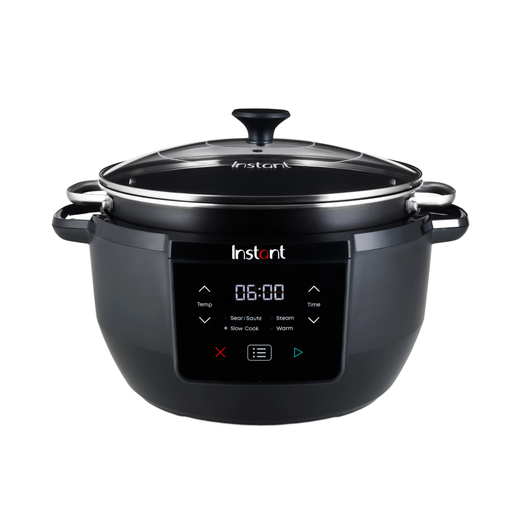
Suitable for anyone who wants to soften vegetables and then slow-cook them in the same appliance.
The product information lists a capacity of 7,1 litres, up to 10 portions, sauté and steam functions, and a dishwasher-safe inner pot and lid. According to the same information, the inner pot must not be used on a hob or in an oven.
 No image available
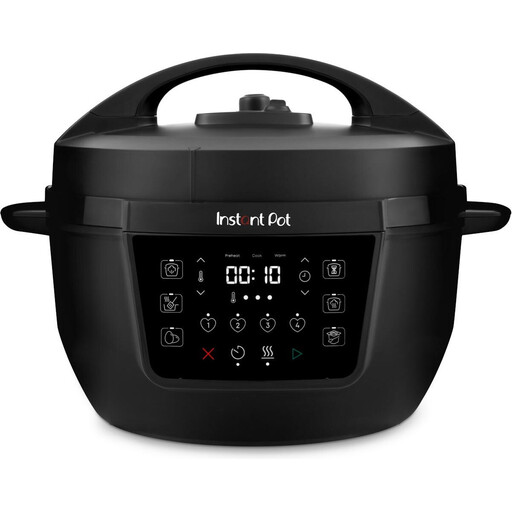
Suitable for combining slow cooking with pressure cooking and other methods.
The product information lists a capacity of 7,1 litres, a slow-cook function and a stainless-steel inner pot.
 No image available
Suitable for anyone who wants to combine a slow-cook function with advance planning using a delayed start.
The product information lists a capacity of 7,6 litres, slow cooking, a 24-hour delayed start and automatic keep-warm.
 No image available
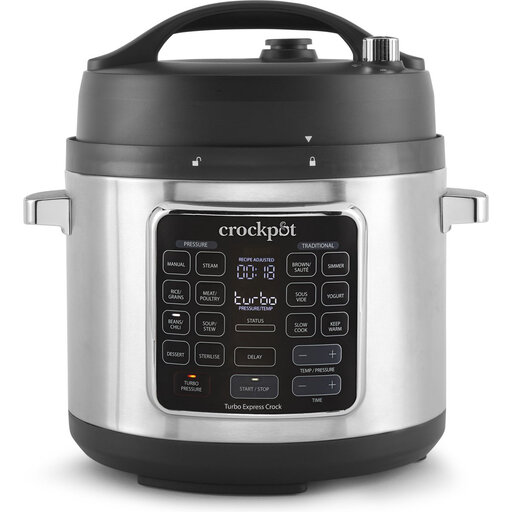
An option to compare if a capacity of 5,6 litres is suitable for the amount of soup you plan to make.
The product information lists digital controls, a timer, a delayed start and a dishwasher-safe inner pot. If using it as a pressure cooker, follow the stated fill limits.
 No image available
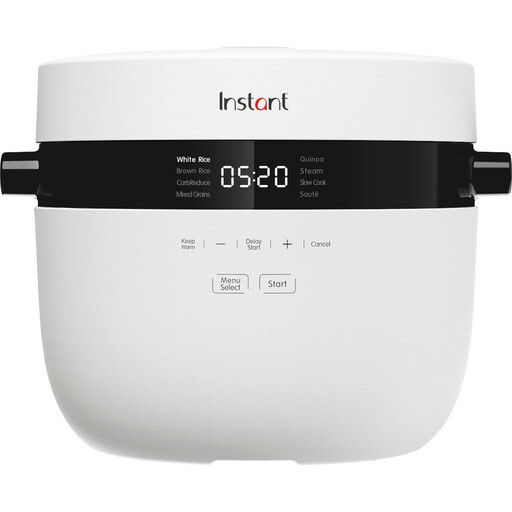
Suitable for anyone who wants to prepare rice and grains as well as slow-cooked dishes.
The product information lists a capacity of 5 litres, slow cooking, sautéing and a dishwasher-safe inner pot.
Not necessarily. These figures refer to the stated pot capacity, not the permitted amount for your recipe. Work out how much soup you need and check the maximum fill level in the manual for the exact model.
No. According to the product information, this inner pot must not be used on a hob, induction hob or in an oven. Use the appliance’s sauté function to soften ingredients, and follow the manual.
Voedingscentrum advises against leaving cooked food out of the fridge for more than two hours, and recommends keeping leftovers in a tightly sealed container for no more than two days at 4 °C. Reheat leftovers until piping hot before serving.
According to the Dutch government, you’re entitled to a product that works properly and can contact the seller if there’s a fault. The Netherlands doesn’t have a fixed statutory two-year guarantee period for every product; a manufacturer’s guarantee is in addition to your statutory rights.
According to the NVWA, CE marking is compulsory for electrical products covered by the relevant regulations. Check the marking and documentation for the exact model; CE marking is not an independent safety assessment.