
Batch cooks who plan ahead
You make several portions of a complete bean dish and choose a pan based on how much you’re cooking at once and dividing up afterwards.


You don’t need a slow cooker just to heat tinned butter beans: according to the Dutch Nutrition Centre, you only need to heat tinned pulses according to the instructions on the label. A slow cooker is mainly worthwhile if you also want to cook a complete meal slowly. If so, choose one based on how much you’re making and whether you need extra features such as sautéing or pressure cooking. Store portions carefully and heat chilled leftovers thoroughly before eating; the US Department of Agriculture’s Food Safety and Inspection Service advises against reheating leftovers in a slow cooker.
You make several portions of a complete bean dish and choose a pan based on how much you’re cooking at once and dividing up afterwards.
You want to heat tinned butter beans or a stored portion and are wondering whether a slow cooker would be useful.
You want to brown ingredients first, then cook a larger meal in the same appliance.
Choose this if: you mainly want to heat cooked tinned beans or a chilled portion.
The trade-off: you won’t have an appliance for slowly cooking a larger stew.
Choose this if: you regularly slow-cook fresh sauces or stews and don’t need extra cooking programmes.
The trade-off: you don’t need a long cooking time for cooked tinned beans. Be sure to follow the filling instructions for the model you choose.
Choose this if: you want to brown ingredients in the same appliance or need another cooking method too.
The trade-off: features vary by model. Instant lists sautéing for the Superior 7.1 l and both sautéing and pressure cooking for the Duo 5.7 l. According to the manufacturer, the slow-cook function on Instant multicookers works differently from that of a traditional ceramic slow cooker.
| What to consider | What should you check? | Who should consider this? |
|---|---|---|
| Heating | Decide whether you’re heating cooked beans or preparing a fresh dish. Don’t use the keep-warm setting instead of heating chilled leftovers. | If I mainly want to heat tinned beans or a chilled portion, I want the whole portion to be piping hot. Around 36% of consumers say safe, convenient reheating is their main reason for buying. |
| Batch size | Estimate the combined volume of the beans, sauce and other ingredients, then compare it with the capacity and filling instructions for the exact model. | When making several portions, I want the whole dish to fit in the pan without choosing an unnecessarily large appliance. For around 29% of consumers, finding a suitable batch capacity comes first. |
| Cooking functions | Check whether each model can sauté, slow-cook or pressure-cook; these functions aren’t interchangeable. | If I’m also making a sauce or complete meal, I want to choose how to prepare the ingredients. Extra cooking functions are the top priority for around 21% of consumers. |
| Cleaning and purchase | Check the cleaning instructions for the exact inner pot and consider whether your existing pan or microwave already meets your needs. | When batch cooking regularly, I don’t want unnecessary washing-up or another appliance. Around 14% of consumers prioritise maintenance and avoiding an unnecessary purchase. |
According to the Dutch Nutrition Centre, you only need to heat tinned pulses according to the preparation instructions on the label. Slow cooking adds little for this purpose.
First decide whether you only want to heat food or also want to slow-cook a complete meal.
The Dutch Nutrition Centre advises heating leftovers thoroughly until piping hot. The US Department of Agriculture’s Food Safety and Inspection Service advises against reheating chilled leftovers in a slow cooker.
Reheat a stored portion in a pan or microwave, stirring it as you go.
The capacity needs to suit the whole dish, and the permitted fill level varies by model. Specifications can also differ between versions of a compact model.
Compare the exact model number with the manual and the total volume of your recipe.
For the Instant Superior 7.1 l, the retailer states that the inner pot must not be used on a hob or in an oven. Other models may have different usage instructions.
Check the manual for the exact version to find out which heat sources and cleaning methods are permitted.
Worth considering if you’re comparing a larger slow cooker with a sauté function against a multicooker that also pressure-cooks.
Worth considering if you’re choosing between compact and larger slow cookers, or a multicooker.
A conventional slow cooker to consider alongside multicookers with extra features.
These product choices are aimed at slow cooking and preparing meals in batches; the extra features listed vary by model. None of these features makes a slow cooker suitable for reheating chilled leftovers.
 No image available
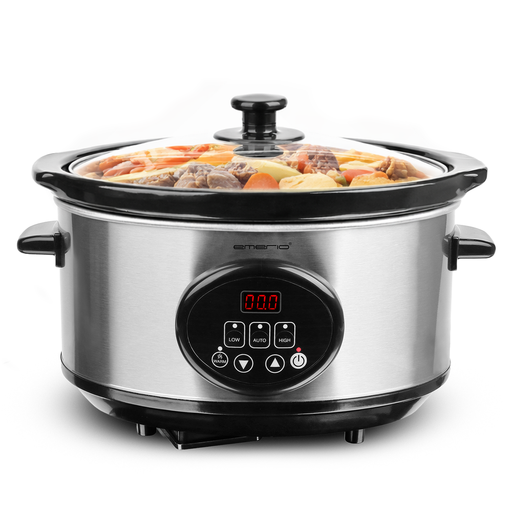
An option for preparing a complete meal ahead of time; the product name lists a digital timer and keep-warm function.
Stated capacity: 3.5 l. A keep-warm setting is not a substitute for safely reheating chilled leftovers.
 No image available
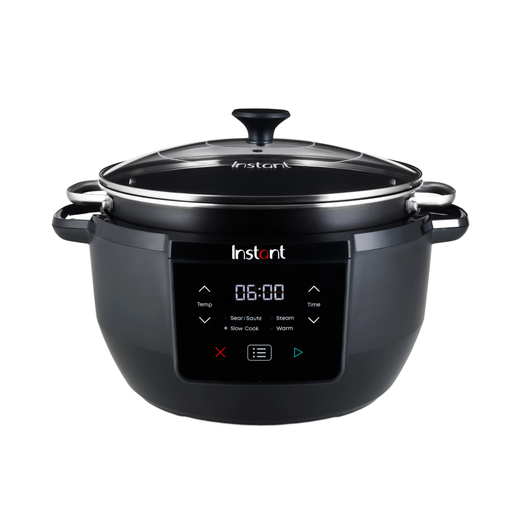
Suited to anyone who wants to slow-cook a larger meal and, according to the product information, sauté ingredients in the same appliance.
The product name lists a capacity of 7.1 l and 10 portions. The retailer also lists steaming and a dishwasher-safe inner pot; according to the product description, the inner pot must not be used on a hob or in an oven.
 No image available
A smaller capacity may suit you if you want to cook portions in a more compact pot; compare the amount with your complete recipe.
The product name lists a capacity of 2.6 l, 1000 W and three manual heat settings. Rapid boiling and steaming are also listed. The product information advises against high-temperature frying to protect the non-stick coating.
 No image available
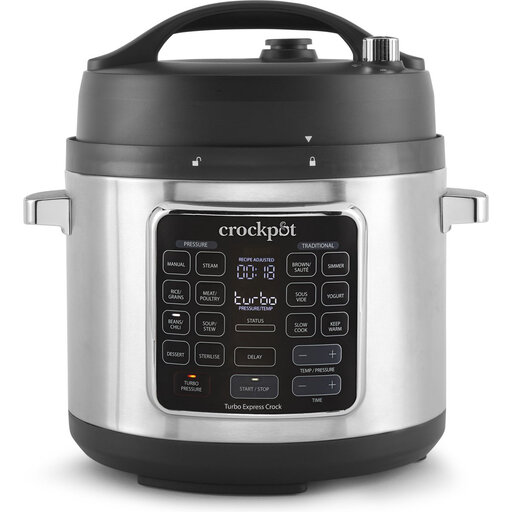
A conventional slow cooker to consider if you mainly want to slow-cook larger dishes.
The product name lists a capacity of 5.6 l and three settings. Check the manual and filling instructions against the volume of your own recipe.
 No image available
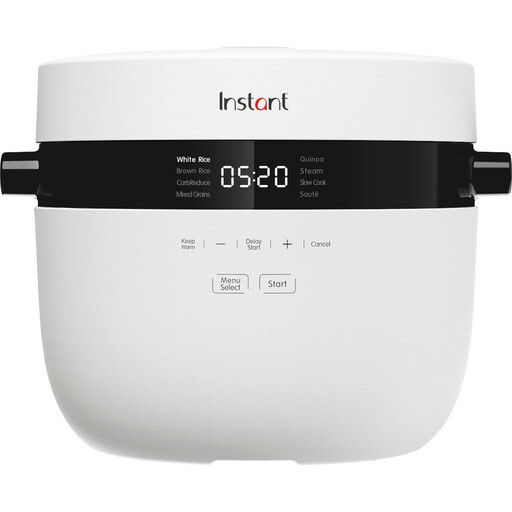
An option if you want a rice and grain cooker with a slow-cook programme, as well as sautéing and steaming functions; check the programmes on the exact version.
The product name lists a capacity of 5 l and 8-in-1. Capacity alone doesn’t guarantee a particular number of portions for your recipe.
No. According to the Dutch Nutrition Centre, you only need to heat tinned pulses according to the preparation instructions on the label. This doesn’t necessarily apply to dried beans.
Don’t use the keep-warm setting instead of reheating. The Dutch Nutrition Centre advises heating leftovers thoroughly until piping hot and stirring them as you go; the US Department of Agriculture’s Food Safety and Inspection Service advises against reheating chilled leftovers in a slow cooker.
Put cooked food in the fridge within two hours, divided between sealed containers. The Dutch Nutrition Centre advises keeping it in the fridge at 4 °C for no more than two days; freeze any portions you want to eat later.
It varies by model. For the Instant Superior 7.1 l, the retailer states that the inner pot and lid are dishwasher-safe, but that the inner pot must not be used on a hob or in an oven. For other models, check the manual for the exact version.
Electrical appliances placed on the market in the Netherlands must meet the applicable European safety requirements. Among other things, the responsible economic operator must ensure CE marking and an EU declaration of conformity. When you buy as a consumer, you have a statutory guarantee from the seller, but there is no fixed statutory guarantee period in the Netherlands; the product’s reasonable lifespan is taken into account.