
Host making a large pot of ragù
You want to make the whole recipe in one go for a meal with guests, so capacity is where you start. Tomado offers a 6-litre model, among others; whether it’s suitable depends on your recipe.


For beef ragù for guests, first choose a slow cooker that can accommodate the quantity in your recipe; a stated capacity in litres does not guarantee a set number of portions. Next, consider whether you need an adjustable timer and whether the inner pot of your chosen model can be used to brown the meat on your hob. A multicooker is worth considering if you also want to use it for cooking methods other than slow cooking.
You want to make the whole recipe in one go for a meal with guests, so capacity is where you start. Tomado offers a 6-litre model, among others; whether it’s suitable depends on your recipe.
You want to fit the cooking around other preparations, so compare the controls, timer and keep-warm setting on the specific model. Russell Hobbs lists a programmable timer for the MaxiCook 22750-56.
You want to brown the beef first without having to switch pans unnecessarily. Check whether the inner pot of your chosen model is suitable for your hob, or whether the appliance itself has a browning function.
A good fit if: you can start the ragù well in advance and are mainly looking for a spacious pot. Tomado lists the TSC6001B as having a 6-litre ceramic pot and dial controls.
Bear in mind: no timer is listed for this model, and browning in the ceramic inner pot is not confirmed as a feature.
A good fit if: you want to brown the meat first and set the cooking time. Russell Hobbs lists the MaxiCook 22750-56 as having a digital timer and an aluminium inner pot that can be used on a hob.
Bear in mind: check that the inner pot is suitable for your type of hob; these specifications do not prove that it will cook better.
A good fit if: you want to be able to use cooking methods other than ragù. Crock-Pot lists slow cooking, pressure cooking and browning among the functions of the Express CSC051X.
Bear in mind: extra functions do not automatically make a multicooker better suited to slow-cooked ragù; compare the settings on the exact model.
For this dish, the quantity in your own recipe is what matters; a stated pot capacity does not guarantee a set number of portions.
| What to consider | What should you check? | Who should pay particular attention? |
|---|---|---|
| Room for your recipe | Compare the quantity in your recipe with the capacity and filling instructions for the exact model. | If I want to make a whole pot of ragù for guests in one go, I need to know whether my recipe will fit; around 36% of consumers are mainly concerned with recipe volume. |
| Planning the cooking | Check whether the model has an adjustable cooking time and what happens when it ends. | If I don’t want to keep checking on the food while preparing for a celebration, I look at the timer and keep-warm setting; around 29% of consumers prioritise planning above all else. |
| Browning without changing pans | Look for a clearly stated browning function or check whether the inner pot can be used on your hob. | If I want to brown the beef first without using an extra pan, I check that the pot is compatible with my hob; around 21% of consumers consider browning their top priority. |
| More cooking methods | Compare the programmes on the exact model with the dishes you actually want to make. | If I want to use the appliance for more than ragù, I look at which other functions will be useful to me; around 14% of consumers prioritise versatility. |
The proportions of meat, vegetables and sauce determine whether your celebratory dish will fit in the pot; the stated capacity in litres does not automatically tell you how many guests it will serve.
First work out the quantity in your recipe, then check the filling instructions for the exact model. Don’t choose based solely on a claim about portions.
Leftovers still need to be cooled and stored safely after cooking. A timer does not change the storage instructions.
Remember to transfer leftovers to suitable containers and put them in the fridge or freezer within 2 hours, as advised by the Voedingscentrum.
Russell Hobbs specifically states that the aluminium pot of the MaxiCook 22750-56 can be used on a hob. This feature is not automatically implied by the term ‘removable pot’.
Check the manual and compatibility with your type of hob before browning meat in the inner pot.
If the inner pot cannot be used on your hob, you may need a separate pan for browning.
The TSC6001B we looked at is a 6-litre standalone slow cooker; the TSC3501B is a smaller 3.5-litre model. The right capacity depends on your recipe.
According to Russell Hobbs, the MaxiCook 22750-56 combines a 6-litre capacity with digital controls and a removable pot for browning.
The Express CSC051X is a 5.6-litre multicooker for anyone considering cooking methods other than slow cooking.
The Duo 5.7L described here is a multicooker option with slow-cook, sauté and pressure-cook programmes, among others.
These Joybuy products are multicookers with a listed slow-cook function, for anyone looking to make beef ragù and potentially use other cooking programmes too.
 No image available
The stated 7.1-litre capacity and slow-cook function may suit anyone looking to cook a larger quantity in one go.
The product information states that it can make up to 10 portions and has sauté, steam, and adjustable time and temperature settings. According to the product information, the inner pot is not suitable for use on a hob or in an oven.
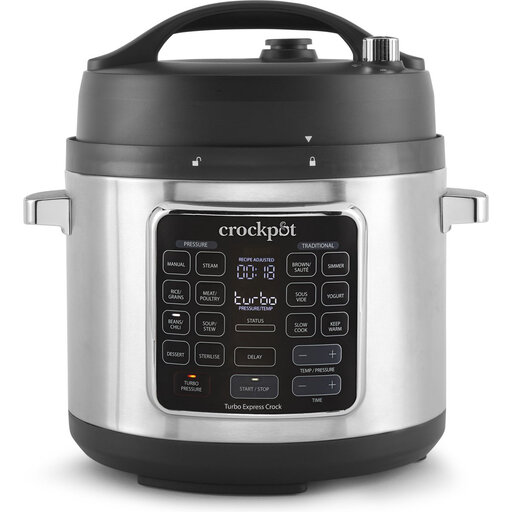 No image available
The slow-cook function and 5.6-litre capacity are useful if you want to prepare ragù in one appliance.
The product information lists three settings, a timer and a delay-start function. When using pressure cooking, do not force the lid open while the float valve is raised.
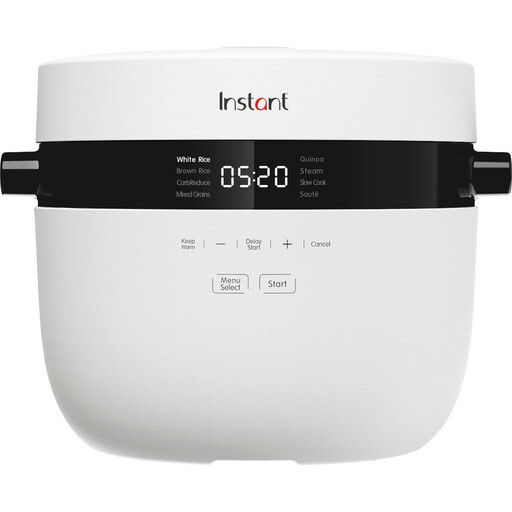 No image available
This model is an option if you want to combine slow cooking with other listed cooking programmes.
The title states a 5-litre capacity and lists slow cooking, steaming, and rice and grain programmes. The product information also lists sauté and keep-warm functions.
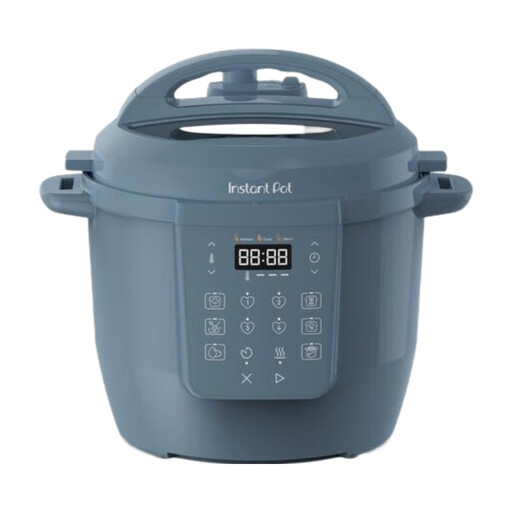 No image available
The listed slow-cook function and 5.7-litre capacity may suit anyone who wants to make ragù and use other cooking methods too.
The title lists pressure cooking, slow cooking and steaming; the product information also lists sauté and keep-warm functions. When using pressure cooking, do not open the lid while the float valve is raised.
 No image available
The listed slow-cook function and 7.6-litre capacity are worth considering if you want to cook a larger quantity and have several cooking methods to choose from.
The product information lists 12 programmes, a timer with a delay-start function and automatic keep-warm. When pressure cooking, do not exceed the maximum fill line or force the lid open while the appliance is under pressure.
Thaw the meat first. The US Department of Agriculture (USDA) advises thawing meat before cooking it in a slow cooker and keeping perishable ingredients chilled until cooking.
Yes. Cool leftovers quickly after cooking, cover and put them in the fridge or freezer within 2 hours, and eat refrigerated leftovers within 2 days. The Voedingscentrum advises reheating leftovers until piping hot throughout before serving them again.
Follow the instructions for the exact appliance for the permitted filling level and care of the inner pot. The USDA advises keeping the lid in place during cooking and lifting it only to stir or check the food.
No. ACM ConsuWijzer distinguishes between a manufacturer’s or seller’s guarantee and statutory rights: when used normally, a product must meet the standard you could reasonably expect. If a product develops a fault too soon, the seller is responsible for providing an appropriate remedy free of charge, subject to the applicable conditions; the statutory guarantee period is not automatically two years for every appliance.
Depending on their characteristics, electrical appliances are subject to the applicable EU product safety rules. Dutch government information lists the Low Voltage, EMC and RoHS rules, along with the associated CE marking, among those applying to electrical and electronic products. A CE marking on its own does not prove that a specific item being offered complies with the rules; check the product information for the exact model.