Choose a slimline dishwasher based on the space and connections available, and check how many of your own breakfast bowls actually fit in the racks. For back-to-back workshop sessions, also consider the programme duration and drying phase: short programmes may shorten or skip the drying phase and are generally less energy-efficient, according to the Consumentenbond. If your workshop prepares, processes or sells food as a business, make sure your washing-up procedure follows the relevant food safety plan or hygiene code.
Who is a slimline dishwasher suitable for?
Workshop leader with limited kitchen space
Wants to wash breakfast bowls in a machine, but has no room for a standard dishwasher. The Consumentenbond describes slimline dishwashers as 45 cm wide; you’ll also need to choose between a freestanding position and a suitable built-in space.
Organiser running back-to-back workshop sessions
Needs the bowls ready for another session, so capacity, programme duration and the drying phase all need to fit the schedule. The Consumentenbond points out that short programmes often skip or shorten the drying phase.
Food business organiser
Needs to make sure the washing-up procedure follows their food safety plan or the relevant hygiene code. According to the NVWA, a business that prepares, processes or sells food must work with an HACCP food safety plan.
What should you look for in a slimline dishwasher?
Freestanding slimline
Choose this when: there’s no suitable built-in space, but there is room and the connections needed for a freestanding appliance.
Bear in mind: the appliance will be on show, and you may need to run several loads if the slimline racks can’t hold enough bowls.
Slimline built-in
Choose this when: there’s a suitable slimline space and a matching kitchen door panel.
Bear in mind: the required space and door-panel measurements; the nominal width alone doesn’t confirm that the appliance will fit.
Standard size
Choose this when: your kitchen has room for a larger machine and you regularly have enough workshop crockery to fill it.
Bear in mind: a standard dishwasher takes up more space; according to the Consumentenbond, a standard-size model is the most energy-efficient when you can fill it.
| What to consider |
What to look for |
Who is this important for? |
| Positioning and connections |
Measure the available space and compare it with the appliance’s full dimensions or the dimensions of the built-in space; also check the water supply and drainage. |
I want to know whether the appliance will fit in the workshop kitchen and can be connected. Around 31% of consumers put positioning and connections at the top of their list. |
| Turnaround between sessions |
Check the duration and drying phase of the programme you actually plan to use, not just the eco figures on the energy label. |
If I need the same bowls again soon, both washing and drying affect my schedule. Around 25% of consumers give reusing items between workshop sessions their top priority. |
| Room for bowls |
Compare the diameter and height of your bowls with the rack layout, and allow room for spoons, glasses and other crockery too. |
I want to know in advance whether my deep breakfast bowls will fit in the racks; place settings don’t directly tell you how many bowls will fit. Around 19% of consumers choose mainly based on space for their own crockery. |
| Food safety procedure |
For business use, establish which procedure is required by your food safety plan or the relevant hygiene code. The NVWA requires businesses that prepare, process or sell food to have an HACCP food safety plan. |
If my workshop is part of a food business, the washing-up procedure must follow the applicable requirements; a programme name is no proof of this. Around 13% of consumers give this their top priority. |
| Energy use and noise |
Compare energy label figures on an eco basis and assess the noise level separately, based on where the machine will run during a workshop. The Consumentenbond bases energy label information on the eco programme at full capacity. |
I want to take energy use and noise into account during the workshop without treating eco figures as the same as those for a short programme. Around 12% of consumers prioritise these practical considerations. |
Common mistakes
-
Assuming place settings equal a guaranteed number of breakfast bowls
A place setting means the crockery and cutlery for one person for one meal. It doesn’t tell you how many deep bowls will fit in the racks, as their shape and dimensions affect how they can be arranged.
Before you choose, compare the dimensions and shape of your own bowls with the rack layout.
-
Assuming eco energy use reflects a quick workshop wash
Energy label figures are based on the eco programme at full capacity. The Consumentenbond reports that short programmes often skip or shorten the drying phase and are generally less energy-efficient.
Compare labels on the same eco basis, but plan separately around the duration and drying phase of the programme you intend to use during the workshop.
A short programme may therefore use more energy than you’d expect from the eco label figures.
-
Treating a programme called ‘hygiene’ as proof of compliance
A business that prepares, processes or sells food must follow a food safety procedure that meets the requirements of an HACCP food safety plan or the relevant hygiene code. A programme name alone doesn’t show that the washing-up procedure meets those requirements.
For business use, first establish the required washing-up procedure, then assess whether the appliance can support it.
Brands to consider
The examples below refer to specific product ranges and models. Mentioning a brand is not a recommendation for its entire range or an indication that every model is available.
Bosch
The freestanding slimline SPS4EMI17E is a useful point of comparison if you don’t have a built-in space and are considering a freestanding model.
- Bosch lists dimensions of 845 × 450 × 600 mm, energy class B and water consumption of 8.7 litres per eco cycle for the SPS4EMI17E.
- These specifications don’t tell you how many of your own breakfast bowls will fit at once.
Inventum
The freestanding VVW4530AW is a slimline model worth comparing if an adjustable upper rack is important to you.
- Inventum lists 10 place settings, an adjustable upper rack, a half-load option and a noise level of 45 dB for this model.
- The place-setting figure doesn’t tell you how many deep breakfast bowls will fit at once.
ETNA
The fully integrated VW47SM is a slimline option to consider for a kitchen with a suitable built-in space and door panel.
- ETNA lists nine place settings, quick, eco and intensive programmes, and a half-load option.
- The stated number of place settings doesn’t prove how many of your own bowls will fit in the racks.
Beko
The freestanding DVS05024W is a slimline model to include when comparing installation options and product specifications.
- Beko lists 10 place settings, energy class E and a noise level of 49 dBA for this model.
- These figures apply to the DVS05024W and shouldn’t automatically be taken as applying to other models from the brand.
Dishwashers at Joybuy
This selection includes freestanding slimline models and standard-size 60 cm integrated models. Check which option suits the space and layout of your workshop kitchen.
 No image available
Bosch SPS4EMI17E, freestanding, 45 cm
A freestanding slimline model to consider if you don’t have a built-in space and the available room and connections are suitable. Bosch lists dimensions of 845 × 450 × 600 mm, energy class B and water consumption of 8.7 litres per eco cycle for this model; the stated number of place settings doesn’t guarantee the same number of breakfast bowls.
View at Joybuy
 No image available
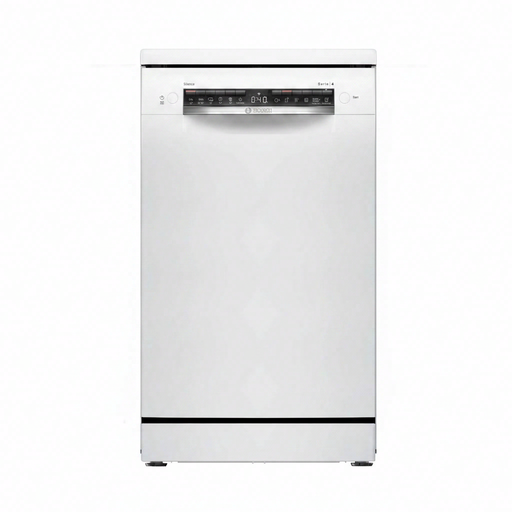
Bosch SPS4HKW49E Series 4, freestanding, 45 cm, white
A freestanding 45 cm model to compare if that width suits your kitchen layout. This version is listed with Slimline VarioFlex racks and an Extra Dry option; check whether the racks suit the dimensions of your bowls.
View at Joybuy
 No image available
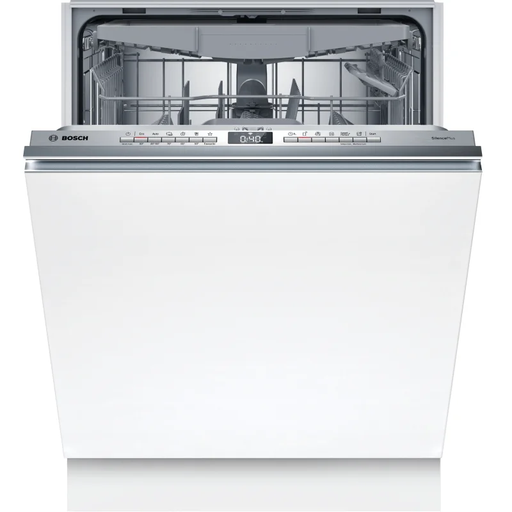
Bosch SMV4EVX08E Series 4, fully integrated, 60 cm
This standard-size model is an alternative if your kitchen has room for a 60 cm integrated dishwasher; it isn’t a slimline model. Check the dimensions of the built-in space and door panel before considering this option.
View at Joybuy
 No image available
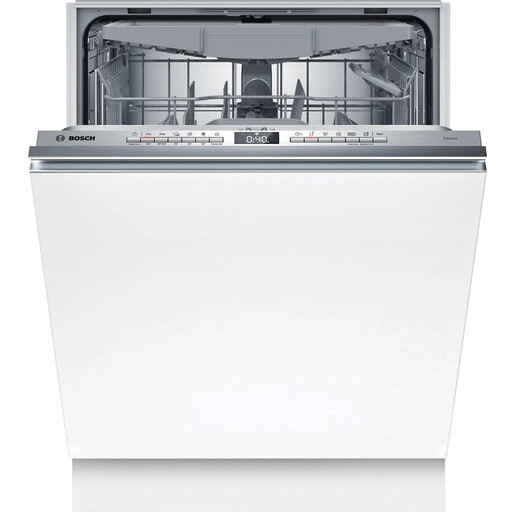
Bosch SMV4HVX03E, fully integrated, 60 cm, 13 place settings
This 60 cm integrated dishwasher is a standard-size option for a kitchen with enough space. The stated number of place settings isn’t a count of deep breakfast bowls; check the rack layout with your own crockery.
View at Joybuy
 No image available
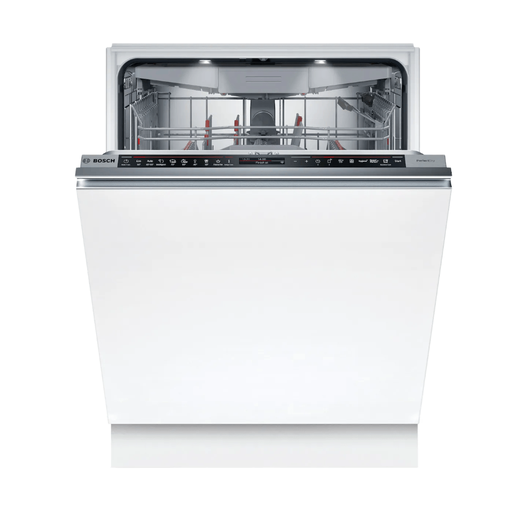
Bosch SMD8TCX04E, fully integrated, 60 cm, 14 place settings
This 60 cm integrated model suits a kitchen where a standard-size dishwasher can be built in, rather than a slimline space of around 45 cm. Check the rack layout with your own breakfast bowls instead of using place settings as a measure of bowl capacity.
View at Joybuy
Frequently asked questions
Can I install a freestanding slimline dishwasher without renovating?
Yes, if the available space, water supply and drainage are suitable. Measure the height and depth too: 45 cm refers to the width category, not the full installation space required.
Is a short programme suitable if I need the bowls again straight away?
Check the details of the specific programme before planning around it. According to the Consumentenbond, short programmes often skip or shorten the drying phase, so the stated wash time alone won’t tell you when the bowls will be ready to use again.
How can I use my dishwasher efficiently?
Run a full load on eco whenever your schedule allows. Milieu Centraal advises only switching on the dishwasher when it’s completely full; assess a short programme separately, as energy label figures are based on the eco programme.
Does a food safety plan apply to a commercial cooking workshop?
According to the NVWA, a business that prepares, processes or sells food must work with an HACCP food safety plan; the relevant hygiene code can be used for this. Whether a particular workshop counts as that kind of business activity depends on how it’s actually run. A dishwasher with a ‘hygiene programme’ doesn’t replace the plan.


