Who is a slimline dishwasher suitable for?

Weekend cook with lots of plates

Wants to fit dinner plates, serving dishes and cutlery in after lunch without automatically planning a second wash. The Dutch Consumers' Association recommends looking at the rack layout and cutlery storage as well as the number of place settings.

Buyer with a narrow kitchen space

Has limited width or an existing narrow alcove. Only compare freestanding and integrated models once you’ve checked the appliance, alcove and door-panel dimensions, along with the connections.

Regular user with smaller loads

Uses the machine during the week as well as at weekends and wants to weigh up eco-mode consumption against the amount of washing up usually done in one go. Milieu Centraal emphasises the importance of loading a dishwasher properly.

What should you look for when choosing one?

Slimline freestanding dishwasher

Suitable for: a kitchen without a suitable built-in alcove, but with a suitable space and connections.

Consider: the Dutch Consumers' Association says slimline models typically hold 9 to 10 place settings; large plates and serving dishes won’t necessarily fit together.

Slimline fully integrated dishwasher

Suitable for: a kitchen with a suitable narrow alcove and a compatible kitchen door panel.

Consider: check the door-panel and hinge dimensions as well as the alcove; width alone isn’t enough.

Standard 60 cm dishwasher

Suitable for: a kitchen with 60 cm of available width, where lunches or everyday washing up often result in a large load.

Consider: the machine takes up more kitchen space. Milieu Centraal links its benefits in use to loading the dishwasher properly.

Compact tabletop dishwasher

Suitable for: situations where a taller slimline dishwasher won’t fit and a smaller capacity is acceptable.

Consider: the Dutch Consumers' Association says these models hold around 6 place settings, compared with the 9 to 10 typical of slimline models. Milieu Centraal highlights consumption in relation to the amount of washing up, as well as possible limitations in cleaning results and ease of use.

Concern What to look for Who should pay extra attention?
Will plates and lunch dishes fit? Compare your largest plates with the rack space, and check the adjustable upper rack, supports and cutlery layout of the exact model. If I want to load plates and serving dishes together after lunch, I’ll want to compare the racks with my own crockery. Around 36% of consumers have this particular capacity requirement.
Will the machine fit in the space? Measure the height, width and depth. For an integrated model, also check the alcove, door panel, hinges and required connections. If you have a narrow space or an existing alcove, you’ll want to know in advance whether the appliance and connections will fit. Around 29% of consumers prioritise positioning and fit.
How much electricity and water does it use? Compare kWh per 100 eco cycles and litres per eco cycle on the same label basis, and consider whether you can usually fill the capacity you choose. If I use the machine during the week too, I’ll want to weigh up its consumption against the loads I usually do. Around 21% of consumers prioritise running costs.
How will the machine fit into everyday life? Check the noise information, programme duration, and the programmes and drying functions of the exact model. If you want to run the machine around a busy lunch or put the washing up away quickly, pay particular attention to noise, programme duration and drying. Around 14% of consumers say these practical considerations come first.

Which buying mistakes can you avoid?

  • Assuming the number of place settings guarantees a good fit

    The place-setting capacity doesn’t tell you whether your large dinner plates, serving dishes and pans will all fit in the racks at the same time.

    Measure your largest pieces of crockery and compare them with the rack layout of the exact model.

  • Measuring only the width for an integrated model

    The height, depth, door panel and door system must also fit the alcove.

    Measure the alcove and check the installation information and door-panel dimensions for your chosen model before ordering.

  • Comparing a short programme with eco-label figures

    The energy and consumption figures on the label are based on the eco programme and aren’t directly comparable with a short cycle.

    Compare label figures on the same eco basis, and check the information for individual programmes if you want a quicker wash.

Brands to compare

Beko

The freestanding slimline BDFS26046XQ is worth considering if you want to compare a 10-place-setting capacity and a cutlery drawer.

  • Beko lists energy class C, 8,9 litres per cycle and 44 dBA for this model.
  • The descriptions of AquaIntense and SelfDry come from the manufacturer; check for yourself whether the rack space suits your lunch crockery.

Bosch

The freestanding Serie 4 SPS4EMI17E is a 45 cm model with VarioFlex racks and VarioLade.

  • Bosch lists energy class B and 8,7 litres per eco cycle for this model; the model description mentions automatic opening for drying.
  • These specifications apply to this model, not all Bosch dishwashers. Check the exact capacity and rack layout of the version you’re considering.

ETNA

The freestanding VWV147SWIT is a slimline model with an adjustable upper rack and cutlery basket.

  • ETNA lists 9 place settings, a width of 44,8 cm, energy class E and 47 dB(A).
  • Check the cutlery basket and stated capacity against your own plates and serving dishes, especially if you want to load a lot at once.

AEG

The fully integrated FSE74507P is a slimline built-in model for a suitable alcove.

  • AEG lists 10 place settings, energy class C, 45 dB and built-in dimensions of 820–900 × 450 × 550 mm for this model.
  • Check that the alcove, kitchen door panel and hinges are compatible with the model. Claims about glass protection come from the manufacturer.

Siemens

The fully integrated SR85E802LE is another slimline built-in option, with adjustable racks.

  • Siemens lists dimensions of 815 × 448 × 550 mm, energy class B and 8,7 litres per eco cycle for this model.
  • Check that the alcove and rack layout suit your kitchen and crockery; the listed features apply to this model.

Joybuy products for a narrow kitchen space

This Joybuy selection focuses on freestanding dishwashers around 45 cm wide.
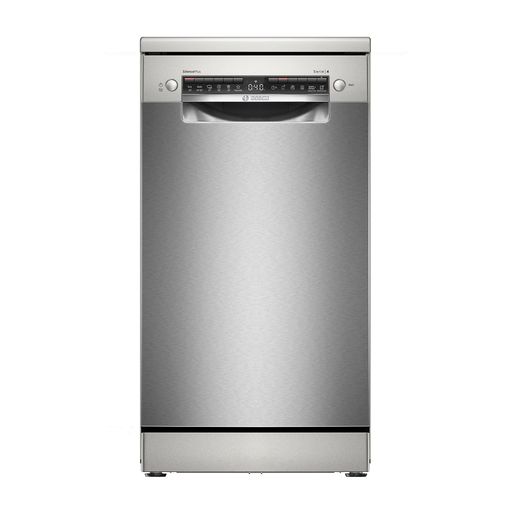
Bosch SPS4EMI17E freestanding dishwasher

Bosch SPS4EMI17E

The 45 cm freestanding model is a good option if you’re looking for a narrow space-saving appliance; compare the racks with your own dinner plates.

The product title mentions EcoSilence Drive and AquaStop. The stated capacity doesn’t guarantee that large plates and serving dishes will fit at the same time.

Joybuy

Bosch SPS4HKW49E Serie 4 freestanding dishwasher, white

Bosch SPS4HKW49E Serie 4, white

This freestanding model is worth comparing if you’re looking for a slimline dishwasher; check the layout against your own lunch crockery.

The product title states a width of 45 cm and a white finish. Check the full appliance and connection dimensions for the space you have in mind.

Joybuy

Frequently asked questions

Are 10 place settings enough for a weekend lunch?

It depends on the combination of dinner plates, serving dishes, pans and cutlery. The Dutch Consumers' Association says a slimline model typically holds 9 to 10 place settings, so compare the racks with the dimensions of your largest crockery.

What should I check before connecting a dishwasher?

Measure the space or alcove and follow the installation information for the exact appliance. Bosch lists the waste, mains water and electrical connections, among other things; check the connections required for your chosen model.

Should I rinse plates first?

According to Milieu Centraal, pre-rinsing by hand is rarely necessary; do scrape off food first. A properly loaded machine on the eco programme can be a suitable option if it cleans the dishes well.

What does the energy label tell me about my bill?

The EU energy label lists information including energy use per 100 eco cycles, water use per cycle, programme duration and noise. It gives you a basis for comparing the eco programme, but not a fixed cost for other programmes or your energy tariff.
