First, choose a dishwasher that fits the available space and can be connected to your plumbing; then compare the rack layout with the dimensions of your lunchboxes and separate lids. A slimline freestanding model needs a suitable spot, while an integrated model requires a suitable niche and kitchen door panel. A tabletop model is an alternative if you don’t have room for a full-height machine. Follow the care instructions for each item from the lunchbox manufacturer, and place delicate plastic items in the top rack as advised by the Consumers’ Association.
Who is this relevant to?
Buyer with a narrow space in the kitchen
You want the convenience of automatic dishwashing, but have little room for a standard-width machine. The Consumers’ Association describes slimline dishwashers as 45 cm wide. Before deciding where to put one, also measure the height, depth, door clearance and connection points.
User of reusable lunchboxes
You wash containers, lids or inserts and want to know whether they fit in the racks and can be cleaned according to their own care instructions. The Consumers’ Association advises placing delicate plastic items in the top rack; Mepal’s guidance applies specifically to Mepal on-the-go products.
Buyer comparing running costs
You want to compare capacity, energy and water consumption on a like-for-like basis, and consider how often you’ll be able to run a sufficiently full load. Milieu Centraal recommends using a full dishwasher and the eco programme as a starting point for more efficient use.
What should you look for when choosing?
Slimline freestanding dishwasher
Choose this option if: you have a suitable space with access to a water supply and drain, and want to wash several lunchboxes with your usual dishes.
Bear in mind: the floor or cupboard space required, as well as the clearance needed to open the door. Freestanding doesn’t automatically mean the appliance will fit under a worktop.
Slimline integrated dishwasher
Choose this option if: your kitchen has a suitable slimline niche and a compatible kitchen door panel.
Bear in mind: the niche dimensions, installation and door movement. Also check whether the racks have enough room for separate containers and lids.
Compact tabletop model
Choose this option if: a full-height slimline dishwasher won’t fit, but you have a suitable surface to put a tabletop model on.
Bear in mind: the smaller loading space, and check that your lunchboxes fit the rack in both height and shape.
| What to consider |
What to look for when buying |
Who is this important to? |
| Placement and connection |
Measure the space or niche, the clearance for the open door, and the distance to the water supply and drain. Compare these measurements with the appliance’s exact dimensions. |
If I have a compact kitchen, I first want to know whether the machine will fit in the intended spot and can be connected. Around 36% of consumers give placement and connection top priority. |
| Lunchbox parts and drying |
Check the instructions for each item and make sure the container, lid and inserts fit securely in the rack, with room for water to drain away. |
If I wash containers and separate lids, I want to know whether I can load and dry them according to their own instructions. Around 29% of consumers prioritise whether lunchbox parts are suitable. |
| Usable loading space |
Compare your usual load with the rack layout, and look for an adjustable upper rack and consider where the cutlery basket or drawer is positioned. |
If I want to wash lunchboxes with my usual dishes, I want to see how the two loads fit together in the racks. Around 21% of consumers make how lunchboxes fit alongside other dishes their top priority. |
| Energy, water and noise |
Compare kWh per 100 eco cycles, water per eco cycle, programme duration and noise level using the same label basis. Also consider your usual load size. |
If I compare models by consumption, I want to look at figures based on the same eco cycle and consider how often I can run a sufficiently full machine. Around 14% of consumers prioritise comparable consumption figures. |
Common buying mistakes
-
Measuring the width only
The height, depth, clearance for the open door and connection points can also determine whether the chosen spot is suitable.
Measure the entire installation space and compare it with the appliance dimensions and connection points before buying.
-
Assuming place settings indicate how many lunchboxes will fit
The number of place settings doesn’t tell you exactly how many lunchboxes will fit. The shape and height of containers and lids determine how much rack space they take up.
Compare the dimensions of your own items with the rack layout and adjustability.
-
Assuming dishwasher-safe means suitable for any position
Instructions can vary from one item to another. Delicate plastic can warp from the heat in the bottom rack.
Check the guidance for each item and place plastic that’s suitable for dishwashing in the top rack. Let items dry before putting them away.
-
Treating label figures as the consumption of every programme
The energy and water figures on the EU label relate to eco use and don’t automatically show the consumption of other programmes.
Compare models on the same eco basis, and consider your usual load and programmes when making your choice.
Brands to compare
Beko
Beko describes the BDFS26046XQ as a slimline freestanding dishwasher; the Consumers’ Association lists the model on its page about compact dishwashers.
- Beko states that the BDFS26046XQ has a capacity of 10 place settings.
- That capacity doesn’t prove that specific lunchboxes or lids will fit in the racks.
Inventum
Inventum positions the VVW4530AW as a slimline freestanding model with an adjustable upper rack.
- Inventum lists 10 place settings, energy class D and six programmes for this model.
- Check the dimensions of your containers and lids against the usable rack space.
ETNA
ETNA describes the VWV147SWIT as a freestanding slimline model with an upper rack and cutlery basket.
- ETNA’s specification sheet lists nine place settings, five programmes and a half-load option.
- These specifications don’t tell you whether a particular lunchbox item will fit or dry properly.
Bosch
Bosch offers slimline freestanding models; placement and rack layout remain key when it comes to lunchboxes.
- Bosch Netherlands lists dimensions of 845 × 450 × 600 mm and 6.7 litres of water per eco cycle for the SPS4EMW61E.
- These model details don’t prove better cleaning performance or that the racks will have enough room.
Siemens
Siemens describes the SR73EX25ME as a 45 cm fully integrated dishwasher.
- The Dutch manufacturer lists a varioHinge for this model.
- A fully integrated model requires a suitable niche and installation. Also check the usable rack space.
Joybuy products
This selection includes 45 cm freestanding dishwashers and compact tabletop models. Compare the space you have and the stated capacity with the dimensions of your lunchboxes and other everyday dishes.
 Image unavailable
AIRMSEN Portable Countertop Dishwasher, 5+1 Wash Cycles
The product name lists a built-in water tank and 5+1 wash cycles.
View at Joybuy
 Image unavailable
Bosch SPS4EMI17E, 45 cm
A 45 cm freestanding model; the product name lists a capacity of 13 place settings.
View at Joybuy
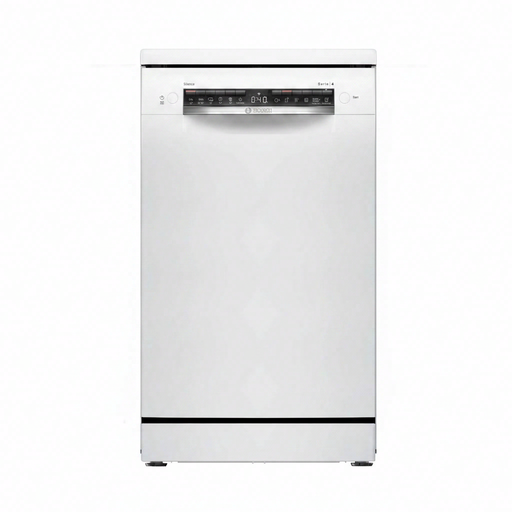 Image unavailable
Bosch SPS4HKW49E Series 4, 45 cm, white
The product name lists a freestanding model with a width of 45 cm.
View at Joybuy
 Image unavailable
AIRMSEN Tabletop Dishwasher, 37 × 50 cm
The product name lists a built-in 5-litre water tank, nine wash programmes and dimensions of 37 × 50 cm. The stated capacity is four place settings, so compare the loading space with your lunchboxes and other dishes.
View at Joybuy
 Image unavailable
Heinrich's HTG 8855
The product name lists a capacity of three place settings, seven programmes and a digital display. Bear in mind the smaller loading space if you want to wash lunchboxes with other dishes.
View at Joybuy
Frequently asked questions
Can every dishwasher-safe lunchbox go in an intensive programme?
No. Check the instructions for each container, lid and insert. The Consumers’ Association advises placing delicate plastic items in the top rack to prevent them warping from the heat in the bottom rack. Mepal’s guidance applies to Mepal on-the-go products and not automatically to other brands.
How can I stop water collecting in containers and lids?
Place items with rims at an angle, and position containers so water can drain away. Only put items away once they’re dry. For its on-the-go products, Mepal advises storing the lid and container separately.
What should I look out for when installing a freestanding model?
Check the appliance’s full dimensions and make sure the space is close enough to the water supply and drain. A freestanding dishwasher won’t necessarily fit in a niche under the worktop.
What can I compare on the EU energy label?
The European Commission states that the label shows, among other things, energy use per 100 eco cycles, water consumption per eco cycle, programme duration, capacity and noise. Compare models using the same label basis; usage and load size can vary.
What can I do if the dishwasher turns out to be faulty?
If you buy as a consumer in the Netherlands, you’re entitled to a product that works properly, according to the Dutch government, and should report any problem to the seller. A manufacturer’s guarantee doesn’t replace this legal right.


