
People with a small shared kitchen
You want to check in advance whether a slimline dishwasher will fit the available space and connections. The Consumers’ Association recommends deciding on the type and size first.


First, choose between a freestanding and an integrated slimline dishwasher based on the space and connections available. An integrated model also needs a suitable niche and door fitting. Then check that your open lunch boxes and separate lids fit in the racks, and follow the dishwasher instructions for each item. If you’ll be sharing the appliance, also compare noise levels and consumption on the same eco basis.
You want to check in advance whether a slimline dishwasher will fit the available space and connections. The Consumers’ Association recommends deciding on the type and size first.
You want to know whether the containers and separate lids will fit in the racks and can be washed according to their own care instructions. The Netherlands Nutrition Centre points out that dishwasher instructions can vary from one item to another.
You want to take noise, programme duration and consumption into account when other people are using the kitchen. The European Commission explains what consumption and noise information appears on the energy label.
First, decide whether there’s a suitable spot for a freestanding model or a suitable niche for an integrated one. Then check your lunch boxes and lids, and compare the information that matters when sharing the appliance.
| What to consider | What should you check? | Who is this important for? |
|---|---|---|
| Positioning and connections | Measure the available space and check the exact model’s dimensions and connection instructions. For an integrated model, also check the niche and door system. | If I first want to know whether there’s room and the appliance can be connected, I look at positioning. This is the top concern for around 33% of consumers. |
| Lunch boxes and rack layout | Check the instructions and dimensions for each container and lid, and compare them with the usable rack space. Look out for any guidance on the upper rack or temperature. | If you mainly use the machine for lunch boxes, you’ll want to know whether the containers and lids fit comfortably in the racks. Around 27% of consumers put this concern first. |
| Noise and times of use | Compare the stated noise levels and eco programme durations of the models. Think about when the group can run the machine. | If I share the kitchen with others, I want to be able to coordinate noise and running time. This is a top concern for around 20% of consumers. |
| Consumption in use | Compare energy use per 100 eco cycles and water use per eco cycle on the same label basis. Also consider how often the group can run a sufficiently full load. | Consumers who mainly want to consider ongoing electricity and water use make up around 20% of the group. |
The permitted rack position or temperature may vary from one item to another. So, dishwasher instructions for the container don’t automatically apply to the lid.
Check the instructions for the container and lid separately before choosing a programme.
The niche and door system are separate requirements for installation; a slimline dishwasher won’t necessarily fit every kitchen.
Measure the niche and check the installation and panel instructions for the exact model.
The number of place settings doesn’t tell you directly whether wide containers and separate lids will fit in the racks at the same time.
Compare your own containers with the rack layout, and check whether the racks are adjustable and where the cutlery goes.
Load size and how often you use the machine affect its actual consumption; energy label figures are based on a standard eco measurement.
Compare the label figures on the same basis and agree with the other users how often you can run a sufficiently full load.
The Dutch product information for the VVW4530AW is useful if you’re looking for a freestanding model.
The Dutch product information includes both a freestanding and a fully integrated 45 cm model.
According to the Dutch product information, the SR61HX17KE is a fully integrated 45 cm dishwasher.
The Dutch 45 cm category includes integrated models such as the FSE74507P and FSE73407P.
According to ETNA, the VW47SM is a 45 cm integrated dishwasher.
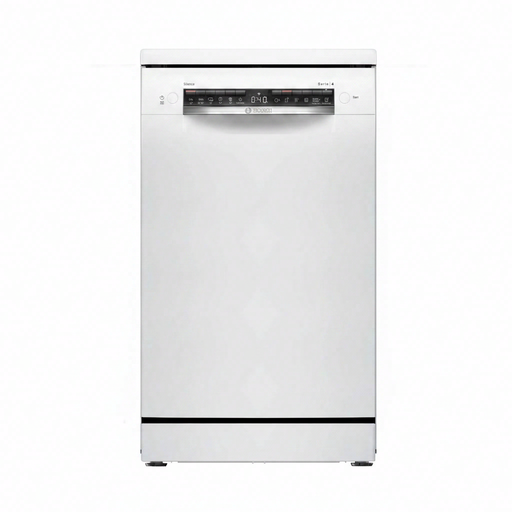
These Joybuy picks are suited to anyone looking for a slimline freestanding dishwasher.
 No image available
A 45 cm freestanding model for anyone looking for a slimline freestanding option. Measure the available space and check that the racks suit your lunch boxes.
Not necessarily. Check the instructions for the lid too, as well as any guidance on using the upper rack or a lower temperature. The Netherlands Nutrition Centre explains that dishwasher instructions may include these kinds of restrictions.
Check the dimensions and positioning in the installation manual for your chosen model, as well as the drain, water supply and electrical connection. For an integrated model, the niche and door system also need to be suitable.
When choosing, compare the energy and water figures on the EU energy label, which relate to the eco programme. Milieu Centraal recommends using the eco programme and only running the machine when it’s full.
No. The Dutch government says there’s no fixed statutory guarantee period in the Netherlands. You’re entitled to a product that works properly; what you can expect depends, among other things, on its expected lifespan and the circumstances of the purchase. A manufacturer’s guarantee is separate from your statutory rights.
According to the European Commission, the EU label includes the energy class on the A–G scale, energy use per 100 eco cycles, water use per cycle, capacity and noise. This product information doesn’t prove that your particular lunch boxes will come out of the machine clean or dry.