
Shopper with a narrow kitchen space
You want to tackle the weekend washing-up in a machine, but first need to choose between a suitable spot for a freestanding model and a fitted housing unit that will accommodate an integrated one.


Start by choosing a freestanding or integrated model that genuinely fits the available space. Then check whether you can position your lunch boxes and loose lids without blocking the spray arms. An adjustable rack can help with mixed loads, while plastic items may still be damp when a programme ends. A slimline dishwasher isn’t automatically the most economical choice if you can usually fill a full-size model.
You want to tackle the weekend washing-up in a machine, but first need to choose between a suitable spot for a freestanding model and a fitted housing unit that will accommodate an integrated one.
You wash containers and loose lids alongside everyday dishes, so you’re particularly interested in a rack layout that suits your items. Place settings are only a rough guide.
You want to put your lunch boxes away once the programme has finished, so you’ll want to look at the drying options. Plastic may still be damp after washing.
A good fit if: you have a suitable spot near the water supply and drain, and don’t need a cabinet door on the front.
Bear in mind: check the appliance’s full dimensions and whether your largest lunch box will fit beneath the upper rack.
A good fit if: you have a suitable narrow housing unit and a matching kitchen door.
Bear in mind: width alone isn’t enough; housing depth, space for pipework, the plinth and the door hinge all matter too.
A good fit if: your kitchen has enough space and, as well as lunch boxes, you regularly have enough washing-up for a full load.
Bear in mind: the appliance needs more space. According to the Consumentenbond, a full-size model is more economical if you can usually fill it.
| What to consider | What to look for | Who it matters to |
|---|---|---|
| Will the appliance fit? | Measure the space and compare it with the appliance’s full dimensions. For an integrated model, also check the housing unit, space for pipework and door clearance. | If my kitchen space is tight, I want to know first whether the appliance and connections will fit. Around 36% of consumers say that fit is their top priority when buying. |
| Space for containers | Compare the rack height with your largest containers and loose lids. Once loaded, check that the spray arms can rotate freely. | With a mixed load, I want to fit in my containers and lids without squeezing out everyday dishes. Around 29% of consumers put layout and loading first. |
| Drying plastic | Check the drying technology on the exact model and allow for the possibility that you may need to dry items further before putting them away. | If I want to put plastic containers away straight away, I look at how much extra drying may be needed. Around 21% of consumers say drying plastic is their top priority. |
| Consumption with mixed loads | Compare kWh per 100 eco cycles, water per eco cycle, programme duration and capacity on the same label basis. Check whether a half-load option is available on the exact model. | If I can’t always fill the machine, I want to estimate its consumption based on how I use it. Around 14% of consumers put running costs first. |
The EU energy label includes information such as electricity consumption per 100 eco cycles and water consumption per eco cycle. These figures relate to the eco programme; consumption can vary on other programmes.
A place setting means the tableware for one person for a meal. Containers and loose lids take up space differently, so the number of place settings doesn’t tell you how many lunch boxes will fit.
Use place settings as a rough guide to capacity, and compare the racks with the dimensions of your own lunch boxes.
The depth of the housing unit, space for pipework and hinge system also determine whether the machine and kitchen door will fit properly.
Before buying, compare the installation diagram with the measurements of the housing unit and existing kitchen door.
If the housing unit, plinth or door arrangement doesn’t fit, you may need to modify your kitchen.
A claim about a specific product range doesn’t automatically apply to every slimline model from the same brand. Plastic may still be damp after a wash.
Check the drying technology on the exact model and allow for the possibility that you may need to dry items further.
According to the Consumentenbond, your decision partly depends on how often you can fill a full-size model. A smaller machine may be a better fit if you can rarely fill a full-size one.
Compare your usual load with the eco figures for specific models before deciding based on size or energy rating.
These brands offer models to suit different slimline and integrated dishwasher options. The features mentioned apply to the specific models below, not automatically to the whole brand.
Beko lists the freestanding BDFS26046XQ as having 10 place settings, a cutlery tray and a height-adjustable upper rack.
According to Inventum, the freestanding VVW4530AW has 10 place settings, an adjustable upper rack, a removable cutlery basket and a half-load option.
According to Bosch, the fully integrated SPH4HL802E is a slimline model with a Vario Flex rack system and a heat exchanger drying system.
ETNA describes the freestanding VWV147SWIT as having nine place settings, an adjustable upper rack and a half-load setting.
Whirlpool describes the WH6IB10BS7LA0 as a slimline integrated dishwasher.
This selection includes freestanding dishwashers, with slimline models as well as a full-size option for those with enough space.
 Image unavailable
A freestanding model to consider if you’re looking for a slimline installation option and want to compare capacity too.
The product name lists a width of 45 cm and 13 place settings.
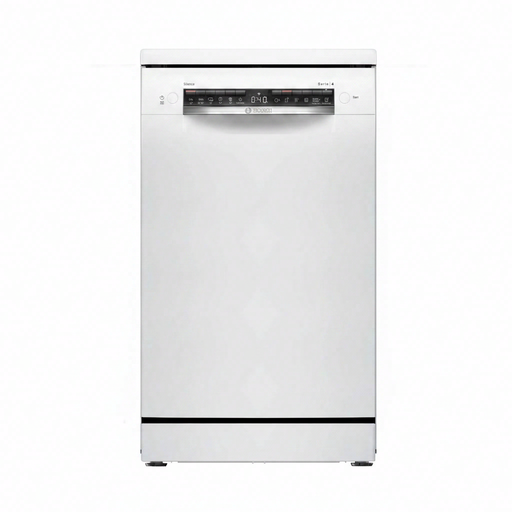 Image unavailable
A freestanding slimline model to compare if you need a narrow space.
The product name lists a width of 45 cm and a white finish.
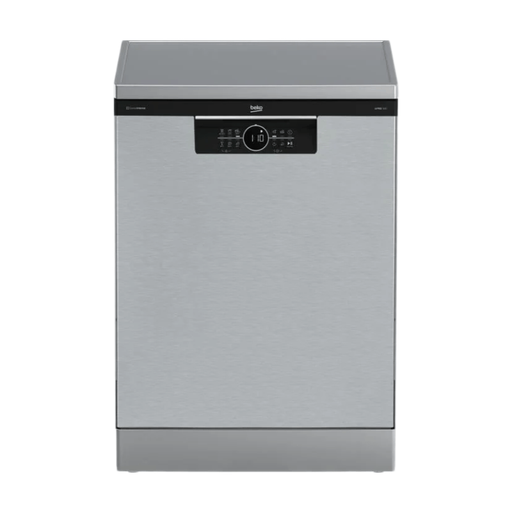 Image unavailable
This full-size option is only worth considering if your kitchen can accommodate the extra width.
Check the appliance dimensions and compare the layout with your usual weekend load.
No. Check the care instructions for the specific container and its lid. The IKEA 365+ lunch box mentioned here is labelled as dishwasher-safe, including its lid; that doesn’t apply to other lunch boxes.
Remove any loose food and check that the spray arms can rotate freely before starting the cycle. Check the filter regularly and follow the user manual when cleaning; Voedingscentrum recommends referring to it.
No. The EU label includes information such as kWh per 100 eco cycles and water consumption per eco cycle. Use these figures, your expected number of cycles and current tariffs to make your own estimate; the label figures relate to the eco programme, not every other programme.
According to ACM ConsuWijzer, if a product is faulty despite normal use, the seller must resolve the issue by repairing or replacing it, or sometimes by refunding you. Your statutory guarantee isn’t simply limited to any manufacturer’s guarantee offered; contact the seller first to make a guarantee claim.
The label gives information including energy consumption, water consumption and programme duration. The European Commission explains the A-to-G scale for dishwashers and the information shown on the label; compare figures on the same basis.