What should you look for when choosing?
First, decide whether the machine can stand freestanding or needs to fit into an existing space. Then compare the cutlery layout and programme instructions with the time between workshop sessions.
| Buying concern |
What to look for |
Who is this most relevant to? |
| Having cutlery ready in time |
Check the duration and instructions for the programme you plan to use, and make sure the cutlery basket or drawer suits your sets. Place settings are not the same as individual pieces of cutlery. |
If you need fresh cutlery between workshop sessions, plan wash cycles around breaks and the spare sets you have available. Around 33% of consumers are most concerned about turnaround time when buying. |
| Size and installation |
Choose between a freestanding and integrated model and measure the space available. For an integrated model, also check the specified niche, door-front and hinge dimensions. |
If the machine needs to fit in a small kitchen, the space you actually have is what matters, not just the stated width. Around 25% of consumers prioritise a suitable size and fit. |
| Cleaning and reuse |
Check any temperature or rack-position restrictions for your cutlery, as well as the instructions for the programme you choose. Keep used and clean sets separate during the workshop. |
If you reuse cutlery, you’ll want to know which instructions apply to the material and whether your cleaning process is suitable for how it will be used. Around 25% of consumers make cleaning and careful reuse their main buying concern. |
| Energy and water use for repeated washing |
Compare like with like: the EU energy label shows, among other things, electricity use per 100 eco cycles and water use per eco cycle. These figures do not necessarily apply to other programmes. |
If you’ll be running several wash cycles, factor energy and water use, as well as installation, into your choice. Around 17% of consumers are most concerned about the running costs of repeated washing. |
Joybuy slimline dishwasher products
These 45 cm freestanding dishwashers are worth considering if you have limited kitchen space and want to wash cutlery between workshop sessions. Compare the layout and programme instructions with your own schedule; a quick programme listing alone does not guarantee hygiene.
 No image available
Bosch SPS4EMI17E, freestanding, 45 cm
This 45 cm freestanding model is worth comparing if you have a narrow space. Check that the cutlery layout suits the sets you use for each session.
The product information lists 13 place settings, six programmes, an adjustable upper basket, a Quick programme and a VarioDrawer for cutlery and utensils. Check the manual for the duration and instructions for the programme you need.
View at Joybuy
 No image available
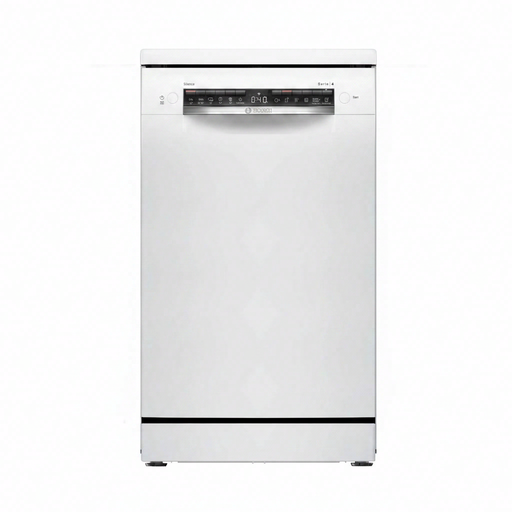
Bosch SPS4HKW49E Series 4, freestanding, 45 cm, white
This freestanding model is worth considering if you have a narrow space and want to wash cutlery in batches. Compare the basket layout with the amount of cutlery you use.
Bosch lists 10 place settings, a quick programme and a noise level of 44 dB(A). According to Bosch, the eco programme takes 3 hours and 40 minutes; this duration does not automatically apply to other programmes.
View at Joybuy
Frequently asked questions
Can I wash dishwasher-safe cutlery on any programme?
Not without checking the instructions for both the cutlery and the programme first. According to the Netherlands Nutrition Centre, some dishwasher-safe materials may only be washed in the top rack or at a lower temperature.
Is the number of place settings the same as the number of cutlery sets you can wash between sessions?
No. According to Inventum, a place setting includes the tableware for one person and one meal, so it’s more than just cutlery. Check the machine’s actual layout and count how many sets you use for each workshop session.
How do I compare electricity and water use?
Compare eco programmes using the kWh per 100 cycles and litres per cycle shown on the EU energy label. These figures don’t necessarily apply to other programmes, so check the model’s manual for details.
Does a cookery workshop in the Netherlands have to follow an HACCP plan or hygiene code?
If a business prepares, processes or sells food, the Netherlands Food and Consumer Product Safety Authority says it must follow an HACCP food safety plan. An applicable, approved hygiene code can be used for this purpose. Whether these requirements apply to a particular private workshop depends on the circumstances. A dishwasher programme is no substitute for such a plan.


