What should you look for when choosing one?
First check that installation and connection are feasible. Then consider the rack layout, noise level and how the machine will fit into your shared washing-up routine.
| What to consider |
What to check |
Who should pay particular attention? |
| Space and connections |
Measure the height, width and depth, as well as the space needed to open the door. Check the water, waste and electricity connections, along with the installation instructions for the exact model; Bosch Nederland recommends checking the required installation measurements in the manual. |
If I’m putting a machine in a shared kitchen, I want to make sure the space and connections are suitable before choosing a type. Around 33% of consumers consider fitting the machine their top priority. |
| Bowls and shared dishes |
Check the rack layout and whether it can be adjusted, and make sure the largest bowls, mugs and housemates’ cutlery will fit. Don’t rely on the place-setting capacity as a guarantee that your crockery will fit. |
If we’re washing breakfast dishes belonging to several housemates together, I want to know whether the bowls will fit comfortably in the racks. Around 27% of consumers consider shared loads their top priority. |
| Noise |
Compare the stated decibel rating and noise class of the exact models. Energielabel.nl lists noise as a figure to compare; it’s also worth agreeing when the machine will run. |
If housemates use the kitchen or an adjoining room, I want to take the noise into account and agree suitable times to run the machine. Around 20% of consumers consider peace and quiet their top priority. |
| Energy use and washing times |
Compare kWh per 100 eco cycles and litres per eco cycle on the energy label. Milieu Centraal recommends using the eco programme and running the dishwasher when full; eco-cycle figures don’t describe the energy use of every other programme. |
If we don’t need clean bowls straight away, I want to avoid unnecessary small loads without making our agreed routine impractical. Around 20% of consumers consider energy use and washing frequency their top priority. |
A Joybuy product for a shared kitchen
This product selection is a 45 cm freestanding dishwasher for a kitchen where you don’t want a suitable slimline built-in niche to be a requirement. Before buying, check that the space, connections and rack layout are right for your household.
 No image available
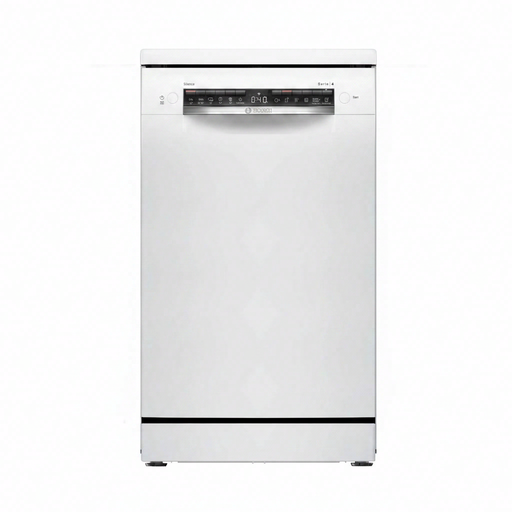
Bosch SPS4HKW49E Series 4 freestanding dishwasher, 45 cm, white
The freestanding design could be suitable if you have enough space and the necessary connections are available.
From the product name: 45 cm, freestanding and white.
Joybuy
Frequently asked questions
Is 45 cm wide automatically enough for all breakfast bowls?
No, the width doesn’t tell you whether your bowls will fit in the racks. The Consumentenbond generally describes slimline machines as models with 9 to 10 place settings; a place setting is standard crockery for one person. Check how your own bowls fit in the racks of the exact model.
What should you check before installing a dishwasher in a shared rented kitchen?
Check the installation instructions for the exact model and the available water, waste and electricity connections. According to the Rijksoverheid, you don’t need your landlord’s permission for changes to a rented home that can be reversed without too much expense; permission may be needed for other changes. Whether your installation counts as a change depends on how it’s carried out.
How can you make everyday use more efficient?
Milieu Centraal recommends wiping away food scraps rather than rinsing dishes with hot water, running the dishwasher when full and using the eco programme. In a shared kitchen, agree who will load the machine and when a wash will start.
What running costs and consumer rights should you consider after buying?
For energy use, compare the figures per eco cycle on the Dutch energy label and take the number of washes into account. ACM ConsuWijzer explains that the seller is responsible for offering a suitable solution if a product breaks down sooner than you could reasonably expect under normal use; this is separate from any manufacturer’s guarantee.


