
Washing up after a small breakfast
You often only have a few bowls, mugs and spoons. You want to weigh up whether to save the washing up, run a small load or wash it by hand.


A slim dishwasher is most suitable if you have a space around 45 cm wide and can usually wait until you have a worthwhile load. If you generally only wash a few bowls, consider washing them by hand in a washing-up bowl too. For a dishwasher, check the full installation dimensions, basket layout and eco programme information.
You often only have a few bowls, mugs and spoons. You want to weigh up whether to save the washing up, run a small load or wash it by hand.
A standard dishwasher doesn’t fit well, so you need to choose between a freestanding model and a slimline machine that fits the available space and kitchen cabinetry.
You expect to use the machine regularly and want to take its eco consumption and your loading habits into account when choosing.
Choose this if: you don’t have a suitable built-in space, but do have room for the appliance and its connections.
Trade-off: the appliance takes up floor space and room for the door to open. Whether half-load is available depends on the model and programme.
Choose this if: you have a suitable built-in space and kitchen door, and want the machine hidden from view.
Trade-off: width alone isn’t enough; check the height, depth, door and installation diagram for the exact model too.
Choose this if: your kitchen has the space and you regularly collect enough washing up to fill the machine properly. Milieu Centraal recommends filling the machine and choosing the eco programme.
Trade-off: if you only have a few breakfast bowls, a larger appliance is often left partially filled.
Choose this if: a regular dishwasher won’t fit and worktop space matters to you.
Trade-off: capacity is smaller. Milieu Centraal advises against mini dishwashers because of their relatively high electricity consumption and often disappointing test results.
Choose this if: you usually only have a few bowls and spoons, and need them again straight away.
Trade-off: you’ll have to do the work yourself. According to Milieu Centraal, washing up in a bowl is usually more economical than using an average dishwasher, provided you use little hot water and don’t leave the tap running.
| Consideration | What to look for | Who should prioritise this? |
|---|---|---|
| Small loads | Check that your bowls and mugs fit comfortably in the baskets, and see whether a half-load option is available with the programme you want to use. | If you only have a few bowls after breakfast, you’ll want to know whether it’s better to save them up or wash them straight away. Around 36% of consumers say small loads are their main consideration. |
| Installation | Measure the available space, including room for the door to open; for integrated models, check all the appliance dimensions and the installation diagram. | If your kitchen has limited space, the chosen appliance type and full dimensions need to fit. Around 29% of consumers put finding a suitable fit first. |
| Consumption and running costs | Compare electricity consumption per 100 eco cycles, water consumption per eco cycle and programme duration on the same label basis. | If you plan to run the machine often, you’ll want to know how much it uses and how your loading habits affect this. Around 21% of consumers focus mainly on running costs and consumption. |
| Noise | Compare the noise figures for the exact models and think about when you’ll run the machine. | If your kitchen is small or open-plan and the dishwasher runs while you’re having breakfast or working, noise could be your deciding factor. Around 14% of consumers prioritise quiet operation. |
A slimline dishwasher still has room for several place settings. A few bowls won’t necessarily fill the machine.
Work out how often you collect a worthwhile load, and consider washing up in a bowl if you usually only have a few bowls.
With an integrated model, the height, depth and fit with the kitchen door can also determine whether the machine will fit. A freestanding model needs a different type of space.
Measure the full space available and check the installation diagram for the exact model before buying.
Available options vary by model and programme. The presence of a function doesn’t show how much a cycle with a few bowls will use.
Check the programme table and only compare consumption figures when they’re given for the same programme.
The freestanding VVW4530AW is a slimline option to consider if you’re looking for an adjustable upper basket.
The BDIS38040Q is a fully integrated slimline option if you have a suitable built-in space.
The fully integrated SPV2HMX02E is a 45 cm model for a slimline fitted kitchen.
The fully integrated SR61HX17KE is another slimline built-in model to compare for its dimensions and layout.
The KEAF2100L is a slimline built-in option if 9 place settings are enough for the washing up you collect.
This selection includes slimline freestanding dishwashers and table-top models, so you can compare a regular slimline machine with a more compact alternative.
 No image available
A slimline freestanding model to consider if you don’t have a suitable built-in space.
45 cm wide; 13 place settings.
 No image available
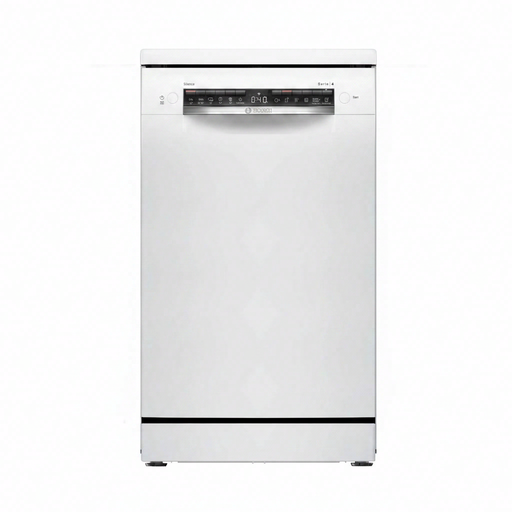
A freestanding model to compare if you’re looking for a slimline dishwasher.
45 cm wide; white.
 No image available
A table-top model to consider if you’re looking for a compact alternative to a freestanding dishwasher.
5+1 wash programmes; built-in 5-litre water tank.
 No image available
A table-top model to compare if you have limited space for a standard dishwasher.
Built-in 5-litre water tank; 9 wash programmes; 37 × 50 cm; energy class D.
 No image available
A mini or table-top model to consider if its smaller capacity suits your washing up.
3 place settings; 7 programmes; 56,3 dB; energy class C.
No. A half-load option doesn’t guarantee that a cycle with a few bowls will use little energy or water. Inventum describes this option for the VVW4530AW; Electrolux says the function isn’t available on some programmes. Compare consumption figures on the same programme basis.
According to Milieu Centraal, pre-rinsing by hand is rarely necessary. Scrape off food first, and also follow the instructions for the dishwasher you choose.
Check the dimensions, water supply, drainage and electrical requirements in the manual for the exact model. The manual for the Inventum VVW4530AW specifies an earthed socket; check the instructions for every other model separately.
According to the Dutch government, there’s no fixed statutory guarantee period in the Netherlands; if there’s a fault, contact the seller. When you buy a similar new appliance for private use, you can also use the free take-back scheme for your old appliance, including for online purchases. Arrange how to hand over the old appliance in advance.
The EU energy label for dishwashers includes electricity consumption per 100 eco cycles, water consumption per eco cycle, capacity, programme duration and noise. Compare models using the same label basis; old A+++ labels aren’t directly comparable with the current A to G classes.