What should you look for?
Freestanding, around 45 cm
Choose this option: if you have a narrow space, don’t want to fit a kitchen door and have suitable connections available.
Bear in mind: there’s less room for dishes than in a standard model; 9 or 10 place settings don’t tell you whether your large bowls will fit.
Integrated, around 45 cm
Choose this option: if you have a suitable narrow niche and the model works with your kitchen door and door system.
Bear in mind: as well as the width, the niche height, hinge and space for pipes all need to be right.
Standard model, around 60 cm
Choose this option: if your kitchen has room for the width and you often want to wash a larger load after visitors have been round.
Bear in mind: you’ll need more width in your kitchen. Milieu Centraal says a standard model is the most energy-efficient when properly loaded; that condition matters.
Measure your dishes and the available space first; then compare consumption and noise using the same programme.
| What to consider |
What to look for |
Who should pay extra attention? |
| Fit for your dishes |
Measure your tallest and widest bowls; check the basket positions and space for cutlery. |
If I want to load mostly bowls and cups in one go after a family gathering, I’ll check the layout using my own dishes. Around 36% of consumers put this fit first. |
| Space and installation |
Measure the available width; for an integrated model, also check the niche, kitchen door, hinge and space for pipes. |
When the space in my kitchen determines my choice, I want to know which type of appliance will actually fit there. Around 29% of consumers give installation and kitchen space top priority. |
| Consumption in use |
Compare kWh per 100 eco cycles and litres per eco cycle; also check how long the programme takes. |
If I wash dishes often, I want to compare electricity and water consumption for the same programme. Around 21% of consumers prioritise ongoing consumption. |
| Noise and timing |
Compare the stated noise level and the length of the programme you plan to use. |
If the machine is close to my living space or I need my dishes again quickly, I’ll pay attention to noise and timing. Around 14% of consumers prioritise these points. |
Dishwashers at Joybuy
This selection includes freestanding slimline dishwashers and a standard-width integrated model for anyone considering a wider space in the kitchen too. For each model, check that the baskets can accommodate your dishes and that it will fit your kitchen.
 Image unavailable
Bosch SPS4EMI17E, 45 cm, 13 place settings
A freestanding 45 cm model to consider if you have a narrow space and want an adjustable upper basket and cutlery tray.
The product details list six programmes, 44 dB(A), 8.7 litres per cycle and 51 kWh per 100 cycles.
View at Joybuy
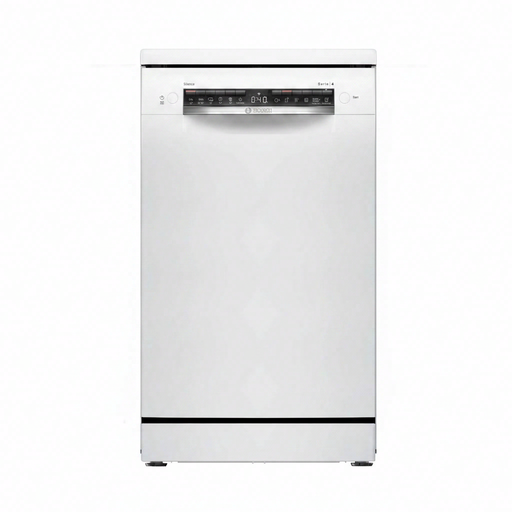 Image unavailable
Bosch SPS4HKW49E Series 4, 45 cm
A slimline freestanding model with adjustable baskets and a VarioDrawer for cutlery and kitchen utensils.
Bosch lists 10 place settings, 44 dB, energy class E and 76 kWh per 100 eco cycles for this model.
View at Joybuy
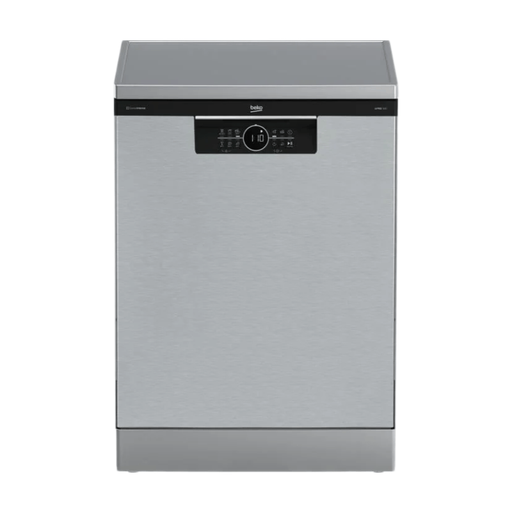 Image unavailable
Beko BDFN26442XC CornerIntense, fully integrated
A standard-width integrated model to consider only if your kitchen has enough space for installation and the kitchen door is compatible.
The product details list a width of 59.8 cm, 14 place settings, energy class C, 75 kWh per 100 eco cycles and 42 dB(A).
View at Joybuy
Frequently asked questions
Do 10 place settings mean all my breakfast bowls will fit in one load?
No, there’s no guarantee. Place settings are based on standard dishes; the shape and size of your bowls also determine what will fit in the baskets. Measure your dishes and check the layout.
What should I check before installation?
For an integrated model, measure the niche and check the door system, kitchen door and space for pipes. For a freestanding model, check where the water supply, drain and a suitable electrical connection will go. Follow the installation instructions for your chosen model when connecting it.
How do I maintain the dishwasher after a busy breakfast?
Remove food scraps and clean the filter according to your machine’s manual. Bosch recommends cleaning the filter in its dishwashers after every wash.
Does a two-year manufacturer’s warranty cover all my rights?
No. ACM ConsuWijzer says that your statutory guarantee exists alongside any manufacturer’s warranty. If a product breaks sooner than you could reasonably expect with normal use, the retailer is responsible for providing an appropriate remedy free of charge; in the Netherlands, the statutory guarantee does not have a fixed two-year term.
Does a new dishwasher in the Netherlands need an energy label?
Yes. The Dutch government lists dishwashers as appliances that must have an energy label. Check the label for the exact model; the European Union says that labels for products covered by the rules must also be clearly displayed when sold online.


