Start by deciding where the dishwasher will go, then check that the available space, door clearance and connections suit the exact model. Next, compare the basket layout with your lunchboxes and separate lids: a slimline dishwasher generally offers more loading space than a tabletop model, but place settings won’t tell you whether your containers will fit. Check the instructions for every plastic item, too, and compare consumption figures on the same eco-label basis.
Who is a slimline dishwasher suitable for?
Everyday lunchbox user
You want to load containers and separate lids alongside the rest of your washing-up. The dimensions of your lunchboxes, the basket layout and the instructions for each item are more useful here than the place-setting capacity alone. The Netherlands Nutrition Centre points out that some plastic items can only be put in the top basket or washed at a low temperature.
Resident of a small rented kitchen
You’ll need to weigh up whether you have space on the floor or worktop, and check that the necessary connections are within reach. For a built-in solution, you’ll also need to consider the cabinet opening, kitchen door panel and whether you have permission to make any alterations.
Shopper looking to compare consumption
Compare the stated eco-programme consumption with the capacity you need for your own washing-up. Noise and how well plastic items dry may also matter in a shared kitchen.
What should you look for when choosing?
Freestanding slimline model
Choose this if: you have floor space and the water inlet, drain and power supply are accessible as specified in the manual.
Bear in mind: the machine takes up floor space. As well as the width, check the depth, height and clearance needed when the door is open.
Slimline built-in dishwasher
Choose this if: you have a suitable cabinet opening and kitchen door panel, and your tenancy allows installation.
Bear in mind: the cabinet opening and door system must suit the specific model; kitchen alterations aren’t always easy to reverse.
Compact tabletop model
Choose this if: you don’t have floor space, but do have enough worktop space and a suitable connection.
Bear in mind: a tabletop model generally has less capacity than a slimline freestanding model. Check that your containers and lids fit in the basket.
| What to consider |
What to look for |
Who should consider this? |
| Lunchbox fit |
Measure your largest container and lid; check the basket height and how small items can be positioned securely. |
If you want to load containers and separate lids alongside other washing-up every day, a usable basket is essential. Around 25% of consumers prioritise lunchbox fit. |
| Space and connections |
Measure the full installation space and door clearance; check the model manual and discuss any permanent changes to a rented kitchen. |
If your kitchen has limited floor or worktop space, you’ll want to know in advance whether the machine will fit and can be connected. Around 25% of consumers prioritise installation and connections. |
| Eco consumption and capacity |
Compare electricity per 100 eco cycles and water per eco cycle on the EU label, alongside capacity. |
If you want to weigh consumption against the amount of washing-up you can actually load, you’ll need to compare the same eco measurements. Around 20% of consumers prioritise consumption and usable capacity. |
| Drying plastic items |
Check the drying technology of the exact model and follow the instructions for your container; you may need to dry it by hand afterwards. |
If you want to put plastic containers away straight from the dishwasher, bear in mind that you may need to dry them afterwards. Around 15% of consumers prioritise how well plastic items dry. |
| Noise in a shared space |
Compare the stated noise level in dB(A) for the exact models and agree on when the machine will run. |
If the kitchen, living area and sleeping area are close together, operating noise may influence your choice. Around 15% of consumers prioritise keeping a shared space peaceful. |
Common pitfalls
-
Focusing only on width or place settings
A slimline machine can still be too tall or too deep for your kitchen. The place-setting capacity doesn’t confirm whether your lunchboxes will fit securely in the basket.
Measure the available space, door clearance and your largest container. Check the basket layout for the exact model before you choose.
If a container doesn’t fit properly in the basket, you may have to wash it by hand.
-
Assuming dishwasher-safe means suitable for every programme
A container, lid or separate part may have its own restrictions, such as only being suitable for the top basket or a low temperature.
Check the instructions for the container and lid separately before choosing a programme.
-
Assuming the energy label shows consumption for every wash
The stated label values are based on the eco programme. A different mix of programmes or load won’t necessarily use the same amount of energy or water.
Compare models on the same eco basis, and factor in your chosen programmes and load when considering how you’ll use the machine.
-
Treating a product title as confirmed model specifications
Bosch lists 10 place settings for the Bosch SPS4EMI17E, while a Joybuy product title states 13. This conflicting title information therefore doesn’t confirm the capacity.
Check the full model code and key specifications with the manufacturer before comparing models.
Brands to consider
Inventum
The freestanding VVW4530AW is a slim model worth comparing if an adjustable top basket and a half-load option are important to you.
- Inventum lists this model as 45 cm wide, with 10 place settings, energy class D and a noise level of 45 dB.
- These details don’t confirm whether a particular lunchbox will fit in the basket or come out dry.
Beko
The freestanding BDFS26046XQ is worth comparing if basket layout and stated eco consumption are important to you.
- Beko lists this model as having 10 place settings, energy class C, water consumption of 8.9 litres per cycle, a noise level of 44 dB(A) and an adjustable upper rack.
- Beko’s claims about intensive cleaning and automatic drying aren’t independent confirmation of how well it handles lunchboxes.
Bosch
The freestanding SPS4EMI17E is worth comparing if a 45 cm model with energy class B and its stated drying technology suit your needs.
- Bosch lists this model’s dimensions as 845 × 450 × 600 mm, with 10 place settings, 8.7 litres of water per eco cycle and EfficientDry with a heat exchanger.
- The product specifications don’t tell you how dry a particular plastic lunchbox will be. Bosch lists 10 place settings; don’t treat a conflicting listing of 13 as a confirmed feature.
ETNA
The freestanding VWV147SWIT is a slim model option with a stated capacity of nine place settings.
- ETNA lists this model as 44.8 cm wide, with an adjustable top basket, half-load option, energy class E and a noise level of 47 dB(A).
- The stated number of place settings doesn’t confirm whether your lunchboxes will fit in the basket.
Siemens
The 45 cm built-in range is only relevant if your kitchen has a suitable cabinet opening and door panel, and any alterations are permitted.
- Siemens lists built-in models including the SR73EX25ME and SR61HX17KE.
- The specifications or performance of one model don’t automatically apply to the whole built-in range.
Products at Joybuy
This selection includes freestanding slimline dishwashers and compact tabletop models for small kitchens. Check whether each model’s dimensions, basket and connection options suit your needs.
 No image available
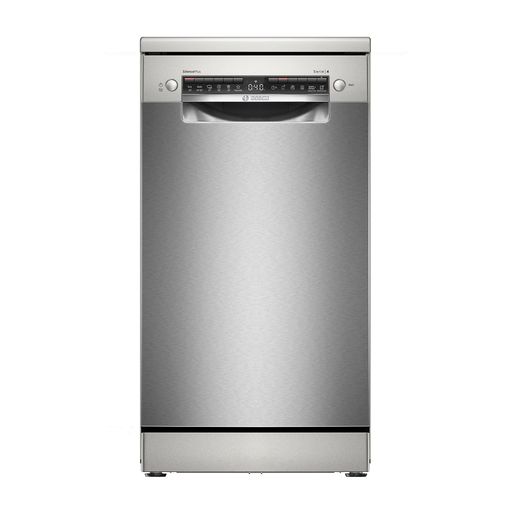
Bosch SPS4EMI17E freestanding dishwasher
A freestanding slimline model to consider if you have floor space and an adjustable top basket suits your washing-up.
According to Bosch: 45 cm wide, 10 place settings, energy class B and 8.7 litres per eco cycle. Bosch lists EfficientDry with a heat exchanger; this doesn’t guarantee a particular drying result for your plastic containers.
View at Joybuy
 No image available
Bosch SPS4HKW49E Series 4 freestanding dishwasher
A freestanding model to consider if you’re looking for a slimline dishwasher and have suitable space available.
The product name lists a width of 45 cm and a white finish.
View at Joybuy
 No image available
AIRMSEN tabletop dishwasher with built-in water tank
A tabletop model to compare if you have limited floor space but room on your worktop.
The product name lists a built-in 5 L tank, 9 programmes, dimensions of 37 × 50 cm and energy class D.
View at Joybuy
 No image available
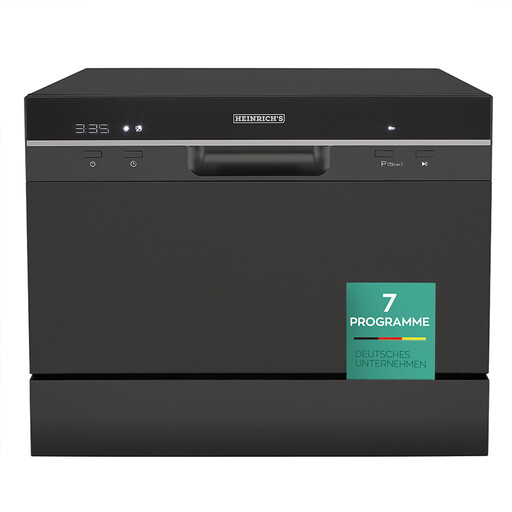
Heinrich's HTG 8840 Schwarz tabletop dishwasher
A tabletop model to consider if its compact footprint suits your kitchen.
The product name lists 6 place settings, 7 programmes, 47 dB and energy class D.
View at Joybuy
 No image available
Heinrich's HTG 8855 tabletop dishwasher
A mini tabletop model to consider if its limited capacity suits your everyday washing-up.
The product name lists 3 place settings, 7 programmes, 56.3 dB and energy class C.
View at Joybuy
Frequently asked questions
Can every part of a dishwasher-safe lunchbox go in every programme?
No. Check the container, lid and separate parts individually. The Netherlands Nutrition Centre says that some items are only suitable for the top basket or a low temperature; a microwave-safe symbol doesn’t automatically mean an item is dishwasher-safe.
Can I connect a freestanding dishwasher without checking anything else?
No. Follow the manual for the exact model and check in advance that the necessary connections are accessible. For its dishwashers, Bosch specifies, among other things, a suitable mains water and drainage connection and a correctly installed earthed socket. These instructions don’t automatically apply to every brand or model.
Do I need my landlord’s permission?
It depends on the work involved. According to the Dutch Government, you don’t need permission for a minor alteration that can be undone without much expense; you do need your landlord’s permission for renovations or changes that aren’t easy to reverse.
How do I compare electricity and water consumption?
Compare the figures on the EU label on the same eco basis: electricity per 100 eco cycles and water per eco cycle. The European Commission also lists programme duration, capacity and noise emissions. Your own consumption will also depend on how often you use the machine and how full it is.
Why are clean plastic containers sometimes still wet?
Plastic can still be wet after a dishwasher programme because it absorbs little heat. Bosch explains this for plastic items; check the drying function of the exact model and allow for the possibility that you may need to dry items by hand afterwards.


