
Anyone who wants to keep their worktop clear
A slimline freestanding model or built-in dishwasher can free up worktop space, provided you have a suitable spot and connection. The Consumentenbond describes slimline dishwashers as around 45 cm wide.


If you have a suitable spot on the floor or a suitable built-in recess, a slimline dishwasher around 45 cm wide will keep your worktop clear and generally offer more loading space than a tabletop model. Choose a cutlery drawer or removable cutlery basket to suit the way you load and unload the dishwasher. Before buying, also measure the height and depth, check there’s room to open the door and make sure the connections are accessible. A tabletop model is only an alternative if you’re happy to give up worktop space.
A slimline freestanding model or built-in dishwasher can free up worktop space, provided you have a suitable spot and connection. The Consumentenbond describes slimline dishwashers as around 45 cm wide.
You want to know whether a cutlery drawer or removable basket is better suited to what you wash at once and how you unload the machine. According to the Consumentenbond, a drawer leaves room below for other dishes, while you can lift a cutlery basket out of the machine.
If you don’t have much washing up, it’s important to match the capacity to what you usually wash and consider whether you can usually fill the machine. The Consumentenbond says slimline dishwashers typically hold 9 to 10 place settings.
A good fit if: you have around 45 cm of floor space and accessible connections, and don’t need a built-in recess.
Bear in mind: also check the height and depth, and allow space for the door to open.
A good fit if: you have a suitable recess or are adapting your kitchen for a built-in model.
Bear in mind: the recess, door panel, fittings and connection must all be suitable for the exact model.
A good fit if: you don’t have a suitable spot on the floor or a recess, and don’t have much washing up.
The trade-off: worktop space. According to the Consumentenbond, a tabletop model generally has less capacity than a slimline freestanding dishwasher.
| What to consider | What to check before buying | Who should pay particular attention? |
|---|---|---|
| Space and installation | Measure the width, height, depth and door clearance. For a built-in model, also check the recess dimensions and connection route. | If I want to keep my worktop clear, the appliance needs to fit in the available space without blocking a walkway or doorway. Around 36% of consumers say installation is their main concern when buying. |
| Cutlery arrangement | Check the full model number to see whether it has a cutlery drawer, removable basket or both. | I want to load cutlery easily without unnecessarily losing space for other dishes. Around 29% of consumers say the cutlery arrangement is their top priority. |
| Capacity and consumption | Compare the place settings and eco programme information on the energy label. Consider whether you can usually fill the machine. | If I don’t have much washing up, I want to match the capacity to my household and compare consumption on a like-for-like basis. Around 21% of consumers say finding an appliance with suitable consumption is their main concern when buying. |
| No space on the floor or in a recess | First check whether a freestanding or built-in option really won’t fit. Then measure the available worktop space. | If there’s no space on the floor or in a recess, a tabletop model may be the answer, but I’ll need to accept losing worktop space. Around 14% of consumers say not having a suitable spot on the floor or in a recess is their main concern. |
An appliance around 45 cm wide won’t necessarily fit the available height and depth. A built-in model also needs a suitable recess.
Measure the whole space, including clearance for the open door and the route to the water supply and waste outlet. Follow the installation instructions for the exact model.
An unsuitable spot may mean you need to adapt your kitchen or connections.
The models we looked at differ: some have a drawer, while others have a cutlery basket. The layout affects how much room is left for other dishes and how you unload the machine.
Check the cutlery arrangement against the full model number, and choose the option that suits your washing up.
A tabletop model sits on the worktop and, according to the Consumentenbond, generally has less capacity than a slimline freestanding dishwasher.
First check whether a freestanding model or suitable built-in option is possible. Consider a tabletop model only if those options won’t fit and you’re happy to give up worktop space.
You’ll lose some usable worktop space.
Bosch Netherlands lists 10 place settings for the Bosch SPS4EMI17E, while a Joybuy product title says 13. So the figures don’t match.
Before buying, check the model number and the official product information sheet. Don’t assume the higher capacity is correct without checking.
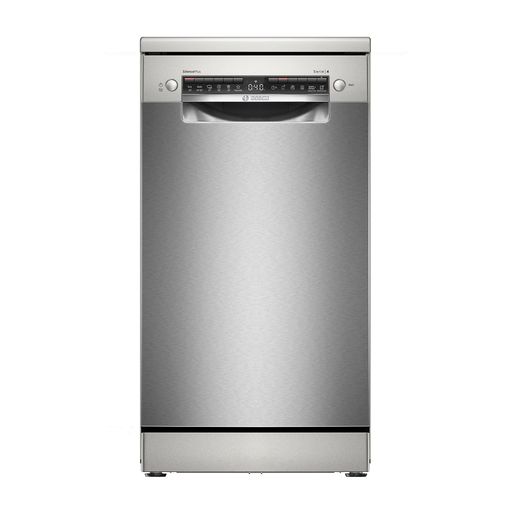
The freestanding SPS4EMI17E is a slimline model with a cutlery drawer, designed for anyone who wants to keep their worktop clear.
The freestanding VVW4530AW is a slimline model with a removable cutlery basket.
The fully integrated BDIS38040Q is a slimline model for a suitable built-in recess.
The freestanding VWV147SWIT has a cutlery basket rather than a cutlery drawer.
The freestanding WH6FB10BS7A0X is a 45cm model worth comparing if you have space on the floor.
This selection includes slimline freestanding dishwashers and compact tabletop models. A tabletop model may suit you if there’s no space on the floor or in a recess, but it will take up worktop space.
 No image available
A slimline freestanding model with a cutlery drawer, designed for anyone who wants to keep their worktop clear.
Bosch Netherlands lists a width of 450 mm and energy class B. Bosch Netherlands says it holds 10 place settings, while the Joybuy product title says 13, so check the capacity of the exact version.
 No image available
A slimline freestanding model to consider if you have space on the floor and want to keep your worktop clear.
The product title states that it is 45 cm wide and white.
 No image available
A tabletop model to consider if a freestanding or built-in dishwasher won’t fit and you have worktop space to spare.
The product title states that it has a built-in 5-litre water tank.
 No image available
A compact tabletop model for anyone without a suitable spot on the floor who’s happy to use some worktop space.
The product title states dimensions of 37 × 50 cm, a 5-litre water tank and energy class D.
 No image available
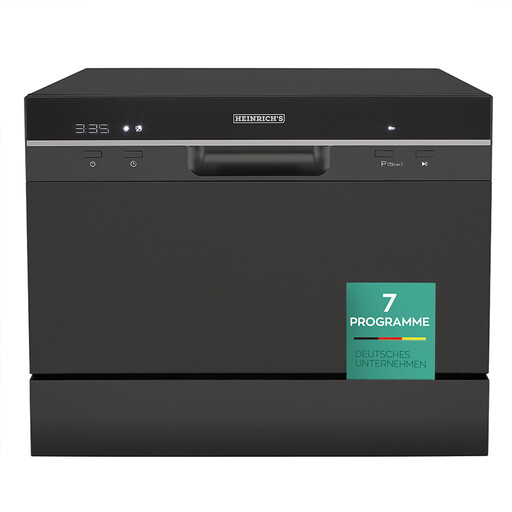
A tabletop model with a cutlery basket to consider if you don’t have much washing up and can spare some worktop space.
The product information states that it holds 6 place settings, has 7 programmes and is energy class D.
No, it depends on how you load and unload the dishwasher. According to the Consumentenbond, a cutlery drawer leaves room below for other dishes, while you can lift a cutlery basket out of the machine.
Measure the full space and allow room for the door to open. Check that the water supply and waste outlet are accessible. For built-in models and connections, follow the installation instructions for the model you choose.
Milieu Centraal recommends running the dishwasher when it’s full and choosing the eco programme. When buying, compare the kWh per 100 eco cycles and litres per eco cycle shown on the EU energy label for the exact models.
It depends on the work involved. According to the Rijksoverheid, you don’t need your landlord’s permission for changes that can be reversed without too much cost, but you do need permission for a renovation. Check whether the specific changes to your kitchen meet these conditions.
The European Commission describes an energy label with an A to G scale and information such as energy consumption per 100 eco cycles, water consumption per eco cycle, capacity and noise. Compare the information for the exact models on a like-for-like basis.