
Student looking to stock up
Wants to buy pre-sliced breakfast cake when moving in and is thinking about whether the pack size suits how quickly they’ll get through it.


For your student room, choose a pre-sliced pack that you expect to finish, so you can quickly grab a slice without needing a knife. When choosing between plain and wholemeal varieties with no added sugar, compare the sugar and fibre per slice. Also check the ingredients and allergen information on the label. The wording on the front of the pack doesn’t tell you the whole story.
Wants to buy pre-sliced breakfast cake when moving in and is thinking about whether the pack size suits how quickly they’ll get through it.
Wants to compare the nutritional value per slice of plain and wholemeal varieties, including packs labelled ‘no added sugar’.
Needs the ingredients list and allergen information for the specific pack, for example when avoiding rye, other gluten-containing cereals, milk or nuts.
Start with how much you can get through and the convenience of pre-sliced portions. Then compare the nutritional information for varieties that suit you. If you need to avoid allergens, checking the current label comes before making that comparison.
| What to consider | What to check when buying | Who is this important for? |
|---|---|---|
| Stock and quantity | Check the pack weight and, if stated, the number of slices. Choose an amount you expect to finish. | When setting up my room, I want enough slices in the cupboard without leaving an opened pack for too long. Around 29% of consumers put having the right amount of stock first. |
| Sugar and fibre | Compare sugar and fibre per serving using the same serving weight, and check the ingredients list too. | When comparing plain with wholemeal and no added sugar, I want to know what each slice contains. These nutritional values are the main consideration for around 36% of consumers. |
| Convenience of pre-sliced portions | Check whether the cake is sliced and how to reseal the pack after opening. | In my new room, I want to be able to grab a slice without a knife or chopping board. Around 21% of consumers prioritise this convenience. |
| Allergens and ingredients | Check the current label for rye, other gluten-containing cereals and any ‘may contain’ statements. | If I need to avoid certain ingredients, I want to know what the pack says before eating it. For around 14% of consumers, this is their first concern. |
According to Peijnenburg’s product information, its wholemeal variety with no added sugar contains 1.4 g of sugar per 28 g slice. So the label doesn’t mean that the cake contains no sugar.
Compare the nutritional values per serving and read the ingredients list, even when looking at two varieties from the same brand.
Ingredients and allergen information can vary between products or change over time. This matters if you need to avoid rye, other cereals, milk or nuts, for example.
Before eating it, check the label on the pack you’ve actually bought.
The Netherlands Nutrition Centre says that bakers aren’t required to use baker’s salt. So don’t assume a product contains added iodine just because of its category.
If you want to know whether a particular breakfast cake contains baker’s salt, check the ingredients list on the pack.
Offers sliced plain and wholemeal varieties that you can compare by nutritional value per slice.
Offers sliced plain and wholemeal breakfast cake under its own brand, including a 475 g pack of sliced plain breakfast cake.
ALDI describes a 485 g pack of pre-sliced wholemeal breakfast cake from Koek & Bakker.
Offers a 485 g pack of sliced plain breakfast cake for anyone considering a larger pack.
Lists products including Peijnenburg sliced plain breakfast cake, 345 g, with 12 slices, so you can compare the weight and number of slices.
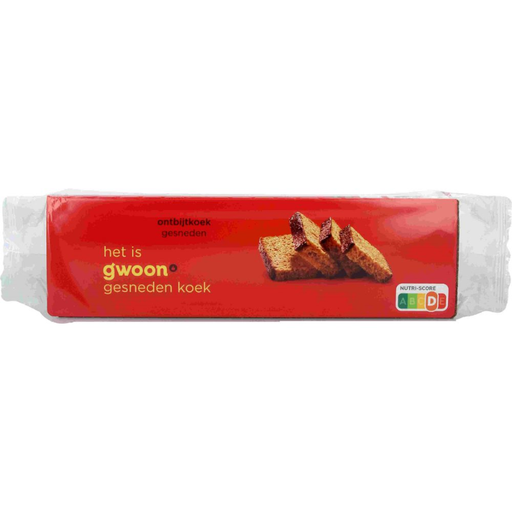
This 485 g pack of sliced breakfast cake is a good fit if you want to grab a slice in your student room without needing a knife. Compare the quantity with how much you expect to get through.
 No image available
For anyone who wants to keep a supply of pre-sliced breakfast cake in their student room. The pack contains 485 g; seal it well after opening.
If you need to avoid certain cereals, check the allergen information on the pack. You can also compare the sugar and fibre per 100 g or per serving there, if they’re important to your choice.
No. Peijnenburg lists 1.4 g of sugar per 28 g slice for its sliced wholemeal variety with no added sugar. Read both the nutritional information and the ingredients list; this variety also contains the sweetener xylitol.
Store the pack in a cool, dark place and seal it well after opening, as PLUS advises for its sliced plain breakfast cake. Before eating it, check that the cake is still in good condition and follow the instructions on your pack.
Yes. If you need to avoid certain allergens, the label on the specific breakfast cake is what matters. The varieties described may contain rye or other gluten-containing cereals; some also state that they may contain traces of milk or nuts.
No, don’t assume that it does. According to the Netherlands Nutrition Centre, bakers aren’t required to use baker’s salt. If you want to know whether baker’s salt has been used in a particular breakfast cake, check the ingredients list.
No. Don’t assume that one slice is a substitute for a complete meal. Breakfast cake is a cake product; the Netherlands Nutrition Centre suggests wholemeal bread as one possible base for breakfast.