What should you look for when choosing?
First decide whether you’re looking for an everyday breakfast staple or something different for a change. Then compare the nutritional information and check for allergens before letting the convenience of pre-sliced pieces influence your choice.
| What to consider |
What to check when buying |
Who is this most important for? |
| Everyday breakfast staple |
Consider how breakfast cake fits alongside bread and other parts of breakfast; compare fibre per 100 g. |
If I’m looking for an everyday breakfast staple, I don’t want to use breakfast cake as a bread replacement just because of its name. For around 36% of consumers, an everyday staple is the main priority. |
| Sugars and sweeteners |
Compare sugars per 100 g and per portion; check added sugars and any polyols separately. |
When my child enjoys breakfast cake, I want to know what the difference between plain and zero means on the label. For around 29% of consumers, this comparison matters most. |
| Allergens and packed food |
Read the latest ‘contains’ and ‘may contain’ statements, and ask about the childcare provider’s or school’s policy. |
If my child has a diagnosed dietary restriction, I need to know whether this variety and the childcare provider’s rules are compatible before packing it. For around 21% of consumers, this check is the top priority. |
| Pre-sliced portions |
Check the number of slices and the weight per slice; ‘sliced’ doesn’t mean there’s a standard slice thickness. |
On a busy morning, I want to be able to grab a slice and still know how much I’m giving my child. This practical consideration comes first for around 14% of consumers. |
Sliced breakfast cake on Joybuy
You can consider these pre-sliced varieties as an alternative for your toddler’s breakfast. The term ‘wholemeal’ doesn’t automatically tell you what portion is suitable or whether it’s safe for someone with an allergy.
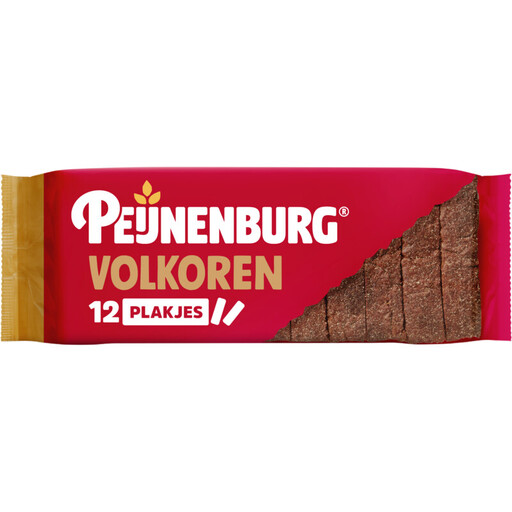 Image unavailable
Peijnenburg wholemeal sliced breakfast cake, 345 g
A pre-sliced option if you’d like to give your child breakfast cake occasionally. Check the weight per slice and the latest allergen information on the pack.
To check claims about added sugars, compare the ingredients list with the nutritional information on the pack: the available product information mentions glucose-fructose syrup alongside a contradictory claim.
View on Joybuy
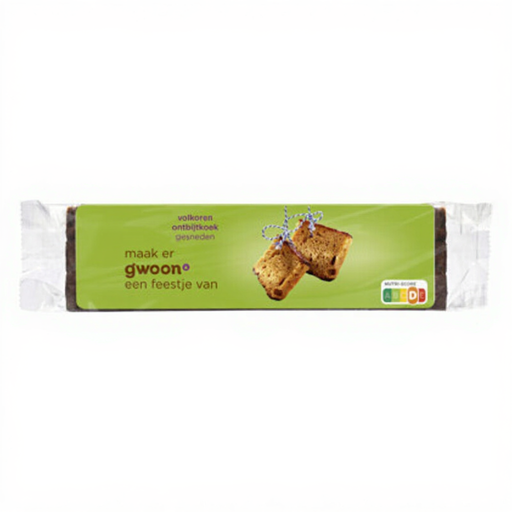 Image unavailable
g'woon wholemeal sliced breakfast cake, 485 g
A pre-sliced option if you’re looking for breakfast cake as a change. Check the number of slices and the weight per slice on the pack before deciding on a portion.
The product information contains conflicting allergen statements. If your child has an allergy, don’t rely on a general product description; read the latest allergen information on the pack.
View on Joybuy
Frequently asked questions
Can sliced breakfast cake replace a slice of bread every day?
Don’t assume that it can. The Netherlands Nutrition Centre describes bread as part of breakfast for children aged 1 to 3; consider breakfast cake as a change within the whole breakfast, not an equivalent replacement based on the product name.
Is zero-sugar breakfast cake automatically a better choice for a toddler?
No. The term ‘zero’ doesn’t answer every question about ingredients, portions and allergens. For its Zero variety, PLUS lists 4,9 g of sugars and 21,7 g of polyols per 100 g, among other details. Compare the full nutritional information and ingredients for the variety you’re considering.
Can I pack breakfast cake for childcare or school if it contains gluten?
That depends on which allergens are relevant to your child and on the local food policy. Check the latest packaging and ask the childcare provider or school what rules apply. If you suspect a food intolerance, the Netherlands Nutrition Centre recommends speaking to your GP or child health clinic.
Can I rely on breakfast cake for iodine instead of bread?
Don’t assume they provide the same amount of iodine. The Netherlands Nutrition Centre describes bread made with iodised baker’s salt as an important source of iodine in the Netherlands; the name ‘breakfast cake’ doesn’t tell you the iodine content of a particular variety.


