What should you look for when choosing?
Decide which feature matters most for your everyday bread meals. Then check that the type of bread, quantity and slice thickness actually suit your needs.
| What to consider | What to check | Who it matters to |
|---|
| Type of bread |
Check whether the bread is wholemeal or brown, and look at the ingredients and nutrition information; don’t judge by the thickness of the slices. The Netherlands Nutrition Centre includes wholemeal bread and most brown breads in the Wheel of Five. |
If I eat bread every day, I want to choose the type without having to judge by the slice. For around 27% of consumers, this is the top priority. |
| Quantity and storage |
Compare a whole loaf with a half loaf, and think about how many slices you use. The Netherlands Nutrition Centre advises freezing bread in portions straight away if you won’t eat it immediately. |
When I only use a few slices a day, I want to stop the rest from going stale or mouldy; using it all up is the main concern for around 33% of consumers. |
| Slicing and convenience |
Check that the bread is sliced the way you want, and that your preferred type is available as a half loaf too. |
For a small lunch, I want to be able to take one or a few slices without having to cut them myself. Convenience is the top priority for around 27% of consumers. |
| Baker’s salt |
Check the label to see whether baker’s salt has been used, or ask the baker. According to the Netherlands Nutrition Centre, its use is not compulsory. |
If I want to know whether my bread was made with iodised baker’s salt, I don’t rely on the name of the bread as proof. For around 13% of consumers, checking this is the top priority. |
A bread option for smaller meals on Joybuy
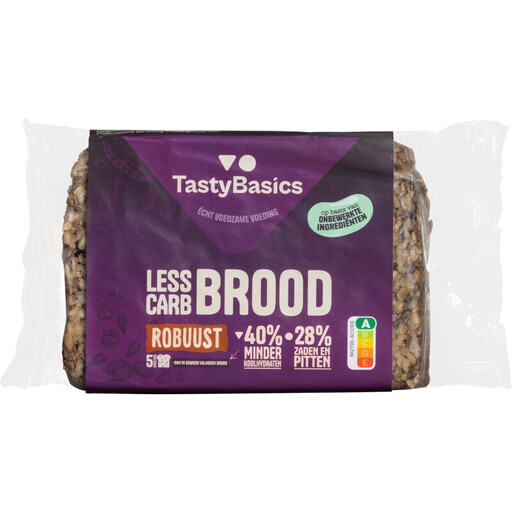
This five-piece pack is an option to consider if you’re looking for a small amount of bread for one person. Check separately that the type of bread and how it’s sliced suit your preferences.
 No image available
TastyBasics Rustic Bread, 5 pieces
The pack of five may suit you if you don’t use much bread at a time.
Before buying, check how the bread is sliced and look at the current packaging for the type of bread, ingredients, allergens and use of baker’s salt.
View on Joybuy
Frequently asked questions
Does medium-sliced tell you anything about the nutritional value of bread?
No, it describes how the bread is sliced, not the type of bread. For everyday bread choices, check the ingredients and nutrition information; the Netherlands Nutrition Centre includes wholemeal bread and most brown breads among the choices in the Wheel of Five.
How should I store bread if I live alone?
Freeze any bread you won’t eat soon in portions as soon as you buy it, and take out only what you need. For opened brown bread, the Netherlands Nutrition Centre recommends keeping it in a kitchen cupboard for two to four days or in the freezer for one to three months; its quality may decline if stored for longer.
Is Dutch bread always made with iodised baker’s salt?
No, according to the Netherlands Nutrition Centre, using baker’s salt in bread is not compulsory. Check the label to see whether it has been used, or ask the baker; don’t try to work it out from the type of bread or how it’s sliced.
Is knowing the type of bread enough if I need to check for allergens?
No, check the allergen information for the specific bread and don’t rely on its name alone. Albert Heijn points out that product information can change, so check the packaging again even if you’ve bought the same bread before.


