
Vandaag of morgen in huis

Kwaliteit gegarandeerd

Welkomstaanbiedingen ontgrendelen: GRATIS bezorging | Tot 80% korting | Gratis 30 dagen JoyPlus-proefperiode
Download de app
Skechers trainers are popular for commuting, walking, light training and casual outfits. But a soft insole or sporty look doesn’t automatically mean a style will suit your feet or how you plan to use it. The right choice starts with the material, fit and care.
Some trainers with Memory Foam have a soft insole, but that doesn’t necessarily mean the shoe offers enough room, stability or ventilation. A footbed may feel comfortable when you try it on, but the shoe could feel too hot or narrow on longer walks.
So be sure to check:
The name Arch Fit trainers refers to a particular construction or insole within the range. It doesn’t guarantee that every style will suit every foot shape. Check the stated fit, width and size advice.
A supportive insole is also no substitute for personal footwear advice if you have foot problems. This guide looks only at verifiable product features and use cases.
A common mistake is to assume that a size 38 fits the same in every Skechers style. Product details may say that some styles fit as expected, while others come up large or small. Some women’s styles are recommended in a size smaller, while the Flex Glow for children is described as coming up small.
If possible, measure your foot at the end of the day and compare its length with the size chart on the product page. Also check the width: a regular fit in width D feels different from a style in width G.
For breathable trainers, mesh, engineered mesh and knitted mesh are practical materials to look out for. Mesh panels can improve airflow, but they don’t make a shoe waterproof. A standard mesh trainer is therefore less suitable for rainy bike rides or wet walks.
Synthetic leather can be sturdier and easier to wipe clean. Styles that combine synthetic materials with mesh often offer a balance of structure and ventilation.
Look out for the following:
Read claims about comfort or ventilation as information from the product description. According to Skechers’ own research, certain technologies may support comfort or airflow, but the experience varies depending on your feet, socks and how long you wear the shoes.
A rubber sole with tread is better suited to walking and light training than a very smooth casual sole. Also check the weight, flexibility and whether the heel or toe has a reinforced construction.
For everyday trainers, versatility is often more important than a specific sports feature. If you regularly go on longer walks, look for styles with a padded collar, a treaded sole and plenty of room around the toes.
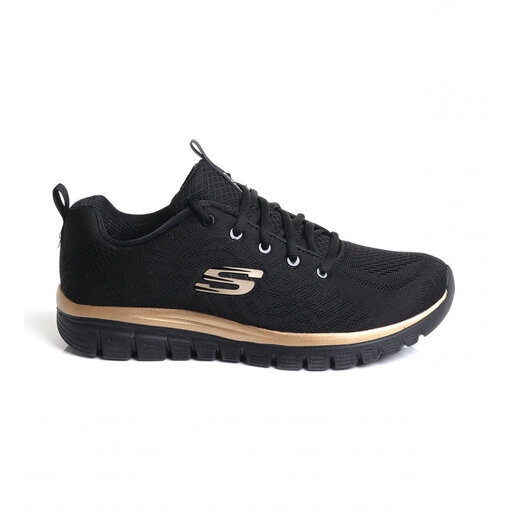
Why it suits this profile: This black style is designed for everyday wear and combines a textile upper with a lace-up fastening and pull loops for easy entry.
The product details list a regular fit, width D and a sole approximately 2 centimetres thick. Be sure to check the size advice, though: this style comes up large.
Textile upper, Memory Foam insole and lace-up fastening.
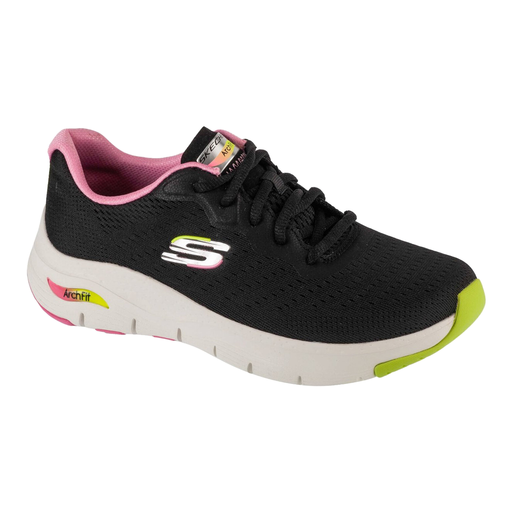
Why it suits this profile: A women’s style with an Arch Fit insole and textile upper, in black for everyday wear.
The product information says the insole is removable. This makes it easier to check and replace than a fixed footbed.
Removable insole, rubber sole, lace-up fastening and regular fit.
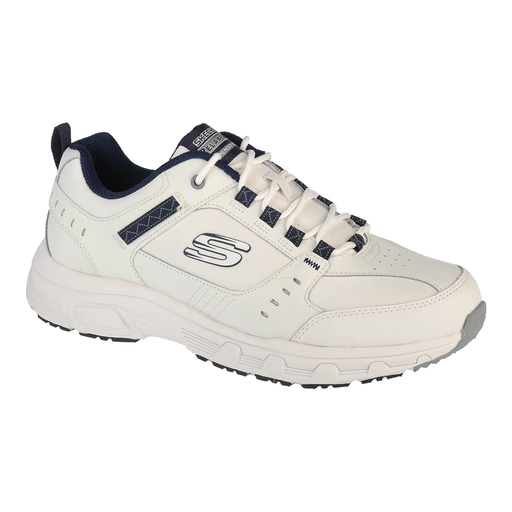
Why it suits this profile: This walking and training shoe is a good choice if you’re looking for a sturdier style for longer walks and an active everyday routine.
The product description mentions a rubber treaded sole, stabilising inserts and a padded collar. These are more specific indications that the shoe is suitable for walking than a sporty look alone.
Relaxed Fit, Memory Foam insole and flexible rubber outsole with tread.
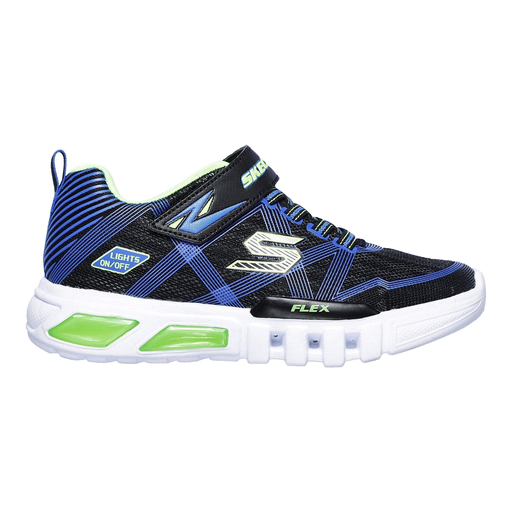
Why it suits this profile: These children’s trainers have a mesh upper, elastic laces and a hook-and-loop fastening for quick and easy wear.
The size advice says this style comes up small. Check this before buying rather than automatically choosing the usual size.
Technical mesh, elastic laces, hook-and-loop fastening and lights in the sole.
How long Skechers shoes last depends on the distance you walk, the surfaces you walk on, your body weight, the materials and how well you care for them. After a wet walk, let your shoes dry at room temperature and keep them away from direct heat. For textile uppers, use a soft, damp cloth and mild soap. Always check the care instructions: according to the product description, some styles can be washed on a delicate cycle, while others should only be cleaned with a cloth.
If you wear your shoes every day, alternate between pairs. This gives the materials time to dry between wears and makes it easier to spot signs of wear on the sole, stitching or insole.
We’ve put together a complete, up-to-date list of products that meet these strict selection criteria and the applicable European safety regulations.
It depends on the style. Look for a treaded sole, flexible rubber outsole, sturdy heel construction and a fit that doesn’t pinch. Casual styles with a soft sole may be suitable for everyday walks, but they aren’t necessarily designed for long distances or intensive training.
The fit varies from one style to another. Product details may say that a style fits as expected, comes up large or comes up small. Always check the specific size chart and sizing advice. Also check the width, such as D or G.
In most cases, use a soft, damp cloth and mild soap. Leave the shoes to air-dry and don’t use bleach or a tumble dryer. Only wash a suitable style on a cool, delicate cycle if the product page says you can.
