
Vandaag of morgen in huis

Kwaliteit gegarandeerd

Welkomstaanbiedingen ontgrendelen: GRATIS bezorging | Tot 80% korting | Gratis 30 dagen JoyPlus-proefperiode
Download de app
A size 7 basketball is the standard size for players aged around 13 and over, and for many men’s competitions. However, size alone does not tell you everything. A ball may have the correct circumference but still disappoint in practice because of a smooth surface, an inconsistent bounce or an outer layer that wears quickly on asphalt.
For recreational players, junior and senior teams, coaches, schools and sports clubs, three purchasing pitfalls are particularly important:
According to the product information, an official size 7 basketball has a circumference of approximately 29.5 inches, or around 75 cm. This size is generally used by players aged 13 and over, and in matches where the standard men’s size is required.
When buying, pay attention to the difference between size 5 and size 7. At approximately 70 cm, size 5 is smaller and intended for younger players. For an adult training group or a team aged 13 and over, size 7 is usually the logical choice. For an official match, always check the requirements of the governing body, club or organiser.
A PU basketball or ball with microfibre leather is described in product listings as offering a soft touch and good grip. This can be useful when dribbling, passing and shooting. A rubber outer layer is often a practical choice for intensive use on rough courts, but it feels different from leather-like materials.
If you are looking for a basketball for indoor and outdoor use, it is worth checking:
The product pages for the LONGSAIL models below describe the balls as indoor-outdoor models. This is a product claim made by the seller; the actual lifespan depends, among other things, on the surface, playing time and storage conditions.
A basketball with good grip should feel comfortable to hold without requiring you to apply constant extra force. Grip is affected by the surface, the depth of the channels and moisture on the ball. Some models are described as moisture-absorbing basketballs. This is a feature mentioned in the product description and is not a guarantee that the ball will remain dry in all conditions.
The internal construction also matters. According to their product information, the models mentioned have a rubber bladder and a balanced construction. This design is intended to support the ball’s shape and bounce. On receipt, check that the ball is round, stays properly inflated and does not behave noticeably differently when bounced repeatedly.
The recommendations below are based on verifiable information from the product listings: size, material, indoor-outdoor use, channels and care requirements.
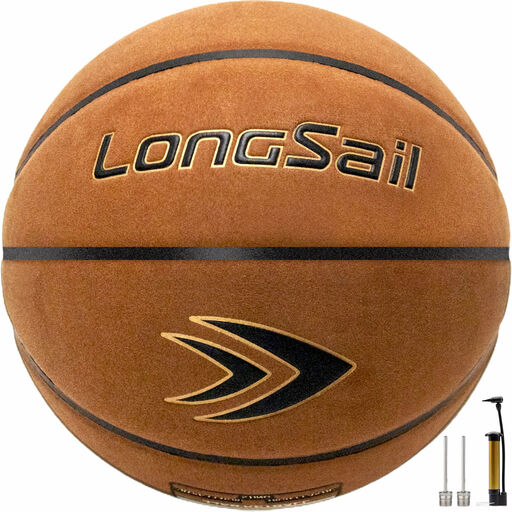
Why it suits this profile: This model combines size 7 with a PU or microfibre leather outer layer and is described as suitable for indoor and outdoor use. That makes it a practical choice for anyone looking for one ball for training and recreational play.
The size, material and indoor-outdoor positioning are clearly stated. The deep channels are designed to support control and a consistent bounce.
Size 7, PU or microfibre leather depending on the selected variant, rubber bladder and care with a soft damp cloth.
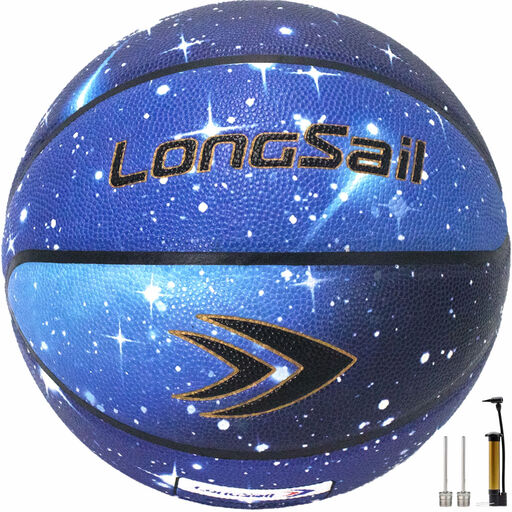
Why it suits this profile: This model is aimed at players who value a moisture-absorbing finish, durability and a standard size for training or match use. These stated features come from the brand’s product description.
The product name and specifications state size 7, PU/composite leather and durability. This allows you to compare the relevant details rather than choosing based solely on colour or appearance.
Size 7, composite leather/PU, reinforced channels and a rubber bladder according to the stated product specifications.

Why it suits this profile: The combination of size 7, moisture-absorbing PU and reinforced channels is well suited to teams, schools and players who use the ball regularly for basketball training and recreational matches.
The product information gives more than just a colour; it also specifies the material, size and construction. This makes it easier to assess whether the ball is suitable for intensive use.
Size 7, PU or microfibre leather, deep channels and a rubber bladder construction according to the product details.
We have compiled a complete, up-to-date list of products that fully meet these strict selection criteria and the applicable European safety regulations.
A durable basketball does not stay in good condition by itself. This simple routine helps minimise unnecessary wear:
A match basketball must also meet the requirements of your competition. The term “standard match ball” in a product name does not automatically mean that every governing body will approve the model. For an official match, check which size, circumference, pressure and any required approval apply.
Usually, yes. A size 7 ball has a circumference of approximately 75 cm and is described in the supplied product information as the standard size for players aged 13 and over. Age categories can vary by competition, so check the rules of your club or governing body.
You can if the product description states that it is suitable for indoor and outdoor use. Bear in mind that asphalt and other rough playing surfaces can put more strain on the outer layer than a wooden sports floor. An indoor-outdoor basketball is therefore practical for varied use, but care and the playing surface remain key factors in its lifespan.
There is no fixed lifespan. It depends on playing hours, surface, storage, air pressure and material. According to the product information, a PU basketball or model with microfibre leather may offer good grip and durability, but check the ball regularly for cracks, deformation, leaks and loosening seams.
