
Vandaag of morgen in huis

Kwaliteit gegarandeerd

Welkomstaanbiedingen ontgrendelen: GRATIS bezorging | Tot 80% korting | Gratis 30 dagen JoyPlus-proefperiode
Download de app
For many remote and office professionals, prolonged sitting is a well-known problem. It can lead to back and neck pain that impacts productivity and well-being. A sit-stand desk, also known as a standing desk, is often seen as the solution. But the market is flooded with models that look great on the surface but fall short in practice.
Before you invest in a new workspace, it's crucial to understand the common pitfalls. Many buyers fall for marketing promises and end up with a product that fails to meet their expectations. These are the three most common mistakes:
To avoid a bad purchase, it's essential to focus on the technical specifications that truly matter. A good electric adjustable desk is an investment in your health and productivity. Therefore, pay attention to the following two components.
The motor is the heart of any electric adjustable desk. The choice between a single or dual motor has a major impact on performance.
The stability of a standing desk is determined by its frame construction. A sturdy frame, typically made of steel, is the foundation. Also, pay attention to the number of segments in the legs (also called 'stages').
A solid frame combined with 3-stage legs minimises wobble at maximum height, which is crucial for a comfortable and productive workday.
Not everyone has the same needs. That's why we've highlighted a few options that suit different user profiles, based on their objective specifications.
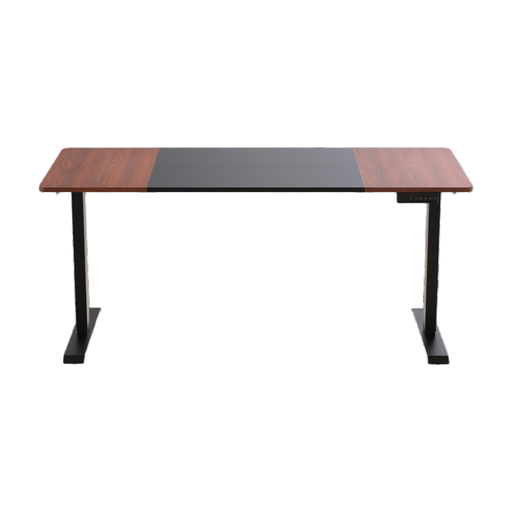
Why This Fits Their Persona: This user is looking for a complete and reliable, hassle-free solution. This desk comes as a full set with a frame and tabletop, allowing you to get started setting up your home office right away.
Equipped with a dual motor, this desk provides smooth and stable height adjustment. The sturdy steel frame and the included spacious tabletop prevent the instability seen in cheaper models.
Complete set (frame + tabletop). Control panel with memory presets for easy height adjustment. Spacious 160x70 cm work surface.
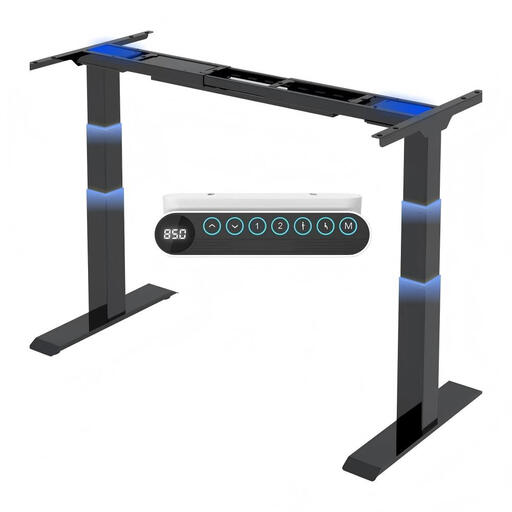
Why This Fits Their Persona: For the professional who uses heavy equipment and demands maximum stability and functionality. This frame is the foundation for a no-compromise workspace, allowing you to choose a tabletop that matches your style.
This frame directly tackles the pitfalls of instability and weak motors. With a load capacity of up to 160 kg, a dual motor, and 3-stage legs, it's built for performance and durability, even at its highest setting.
Very high load capacity (160 kg). Four memory presets and a built-in USB port. Wide height range thanks to the 3-stage legs.
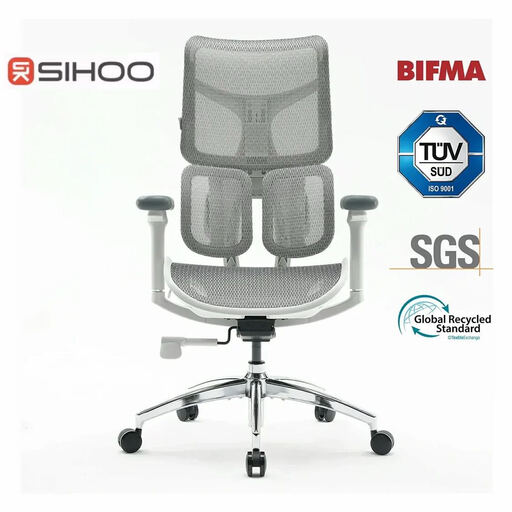
Why This Fits Their Persona: A sit-stand desk is only part of the solution. This user wants to create a fully ergonomic workspace and understands that a good chair is just as important. This chair is designed for long-term comfort and support.
This is not a standard office chair. It avoids the 'one-size-fits-all' trap with a dual dynamic lumbar support system and 4D adjustable armrests that adapt to your body and posture, not the other way around.
Adaptive lumbar support that moves with you. Fully adjustable armrests, seat depth, and back height. Breathable mesh fabric for comfort.
We've curated a complete, up-to-date list of products that meet these strict selection criteria and regional safety regulations.
The load capacity varies greatly. Budget models with a single motor can often only support 70-80 kg. For a stable workspace with multiple monitors and other equipment, it is advisable to choose a model with a dual motor, which typically has a load capacity of 100 kg to 160 kg. Always check the manufacturer's specifications.
For light use with just a laptop, a single-motor model may suffice. However, for a smooth, quiet, and stable experience, especially with a heavier setup, a desk with a dual motor is a much better investment. The price difference is often minimal, while the performance and durability are significantly better.
There's no fixed rule, but alternation is key. A common recommendation is to start with 30 minutes of standing for every 60 minutes of sitting. Listen to your body and find a rhythm that works for you. Using the memory presets on your desk makes changing posture quick and easy, which will encourage you to do it more often.
