
Vandaag of morgen in huis

Kwaliteit gegarandeerd

Welkomstaanbiedingen ontgrendelen: GRATIS bezorging | Tot 80% korting | Gratis 30 dagen JoyPlus-proefperiode
Download de app
Do you work from home often? Then you know the feeling: after a few hours behind your screen, your neck, shoulders and back start to ache. Productivity dips, and you're desperate to stretch your legs. A sit-stand desk can be a practical solution to bring more movement into your workday. By alternating between sitting and standing, you stay more active and can concentrate better.
As a Joybuy Product Recommendation Officer, I'm here to help you get started. In this article, you'll find practical tips and a selection of popular sit-stand desks, so you can find a model that fits your workspace and needs.
An adjustable-height desk is an investment in your workspace. To make the right choice, it's helpful to pay attention to a few key things.
First, measure the available space in your room. Then, consider how much workspace you need. Do you use a single laptop, or do you have a multi-monitor setup? A larger 180 cm desktop offers plenty of room, while a more compact 120 cm model is often sufficient for a simple home office desk setup. Also, ensure there's enough depth (at least 60–80 cm) so your screen can be at a comfortable viewing distance.
An electric sit-stand desk offers convenience, but the details make all the difference. A memory function is very useful: it allows you to save your ideal sitting and standing heights and switch between them at the touch of a button. Also, pay attention to the motor; a quiet motor ensures that your housemates or colleagues won't be disturbed by the adjustments. Extras like built-in USB ports for charging your phone and a good cable management system help keep your workspace neat and organised.
An ergonomic desk must be stable, both at its lowest and highest positions. A frame made of sturdy steel is a good foundation for this. The maximum load capacity, often around 70 kg, indicates how much weight the desk can support. This is important if you place heavy equipment on your desk. Adjustable feet are a plus, as they ensure your desk stands level even on an uneven floor.
Based on specifications and functionality, we've rounded up a few popular choices for you.
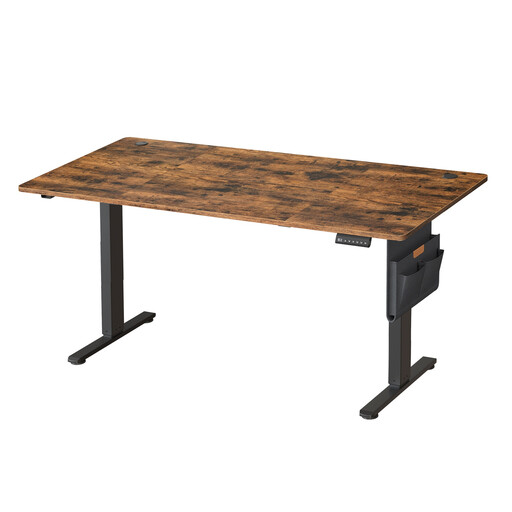
Why this desk stands out: The generous 180 x 80 cm desktop provides an exceptional amount of space. It's ideal for those who work with multiple screens, have many documents on hand or simply love a spacious setup.
Advantages:
Who is this desk for? It's for the professional or creative who needs a large, stable workspace for an extensive setup. The vintage brown finish fits well in both modern and industrial interiors.
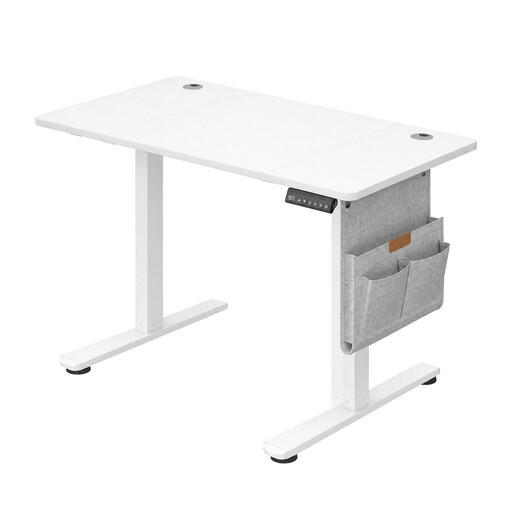
Why this desk stands out: This model combines the benefits of a standing desk with a compact footprint. Measuring 120 x 60 cm, it's an excellent choice for smaller rooms, apartments or a student dorm.
Advantages:
Who is this desk for? It's perfect for students, freelancers or remote workers with limited space. The minimalist white design creates a bright and fresh look in any room.
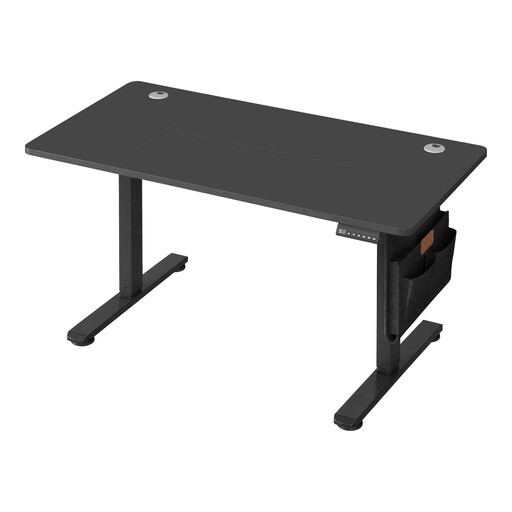
Why this desk stands out: This 140 x 60 cm desk is a versatile middle ground. It offers enough space for a comfortable workspace without dominating the room. The addition of a USB-C port is a modern and practical detail.
Advantages:
Who is this desk for? It's an excellent all-rounder for most home offices. It strikes a good balance between workspace and size, and the sleek black finish fits into almost any interior.
Is an ergonomic desk for work or study not quite what you need? Sometimes a workspace serves multiple purposes, such as a place to get ready in the morning. If you're looking for a piece of furniture with a different function, check out our selection of desks with mirrors and lighting.
1. How long should you stand at a standing desk? There's no hard and fast rule, but many users find it comfortable to change positions every 30 to 60 minutes. The most important thing is to listen to your body. Start with shorter periods of standing and gradually build up. The goal is variation, not to stand all day.
2. Is an electric desk worth the money? An electric desk makes changing height incredibly easy. With a manual crank, you're less inclined to adjust the height. The memory function on an electric model lets you move to your ideal height with a single button press, which lowers the barrier to switching positions more often throughout the day. This convenience can contribute to a more active work posture.
3. What is the ideal height for a sit-stand desk? For a proper sitting posture, set the height so your arms rest on the desk at a roughly 90-degree angle, with your shoulders relaxed. When standing, the ideal height is similar: your elbows at a 90-degree angle and your wrists straight. Most electric desks have a wide adjustment range (often 72-120 cm), which is sufficient for most people to find a comfortable posture.
