
Vandaag of morgen in huis

Kwaliteit gegarandeerd

Welkomstaanbiedingen ontgrendelen: GRATIS bezorging | Tot 80% korting | Gratis 30 dagen JoyPlus-proefperiode
Download de app
A sink strainer catches food scraps before they go down the drain. It’s handy after cooking, washing up, or rinsing vegetables. However, not every sink strainer fits every drain, and a very fine mesh isn’t always practical for daily use.
Many buying mistakes come down to three common pitfalls:
Measure the drain opening before you order. A model with a diameter of 8 cm, like the stainless steel set below, isn’t automatically suitable for every sink. Also check whether the strainer sits flat on the drain or drops into the opening.
For a rack that sits over the sink, different measurements matter. A telescopic model that extends from 29 to 44 cm can fit several sink widths, but always check the available rim space and stability.
A reusable sink strainer made from stainless steel can be rinsed after use and put back in place. This suits households that want to keep fewer consumable items on hand. Pay attention to the mesh size: very fine mesh catches more small particles, but can clog up more quickly.
Disposable filters are handy when you want to remove food scraps quickly without cleaning a strainer. The total cost depends on how often you cook and how many filters you use each week. A pack of 100 or 500 gives you stock, but doesn’t automatically mean a lower overall cost.
Product pages often mention stainless steel, stainless steel and chrome-plated metal. So check the full product specification, not just the title. A filter with smooth metal is usually easy to rinse; food residue and grease can still build up in small openings.
According to the product information, some models are dishwasher-safe. If washing by hand, use a mild washing-up liquid and a soft sponge. Dry metal parts after cleaning to reduce limescale and water marks. Throw loose food scraps in the bin rather than rinsing them down the drain with lots of water.
A strainer doesn’t prevent grease from building up in your pipes. So don’t pour oil, gravy or large amounts of fat down the sink. A sink strainer for food scraps is a tool for solid particles, not a complete solution for every drain problem.
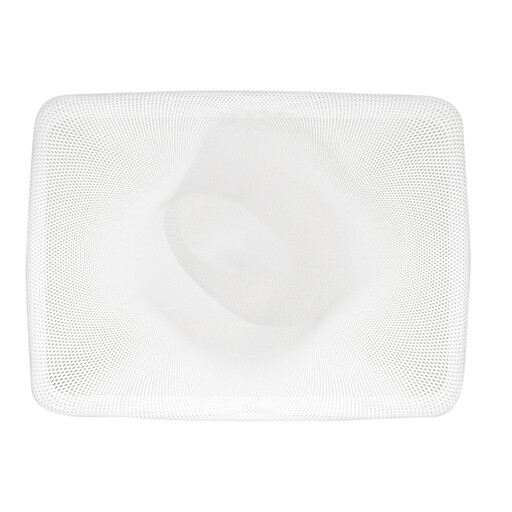
Why this fits the profile: The pack of 100 filter nets is suitable for households that cook regularly and want to remove solid scraps quickly.
You don’t have to buy a durable metal model straight away. Just bear in mind the ongoing costs and check whether the size fits your drain.
100 pieces per pack; designed as a disposable filter for solid scraps.

Why this fits the profile: This medium-sized model is designed for daily washing, draining and temporarily storing vegetables, fruit or dishes.
The extendable design reduces the risk of choosing the wrong fixed size. Before use, check that the rack is fully extended and sits securely.
304 stainless steel; extends from 29 to 44 cm; dimensions 42.6 × 21 × 6.9 cm according to the product information.

Why this fits the profile: The spacious design is aimed at home cooks who want to drain larger quantities of vegetables, fruit or dishes over the sink.
The adjustable length means you’re not relying on a single fixed size. You will need to check your sink width and weight capacity beforehand.
304 stainless steel; adjustable from 29 to 44 cm; width 21.2 cm and height 10.5 cm according to the product specification.
We’ve put together a full, up-to-date list of products that meet these strict selection criteria and comply with current European safety regulations.
First, clear the drain opening of any debris, then place the strainer flat over or into the opening, depending on the design. After that, check that the water drains normally and the strainer doesn’t shift. A strainer that’s too small can let scraps through around the edge.
The lifespan depends on the material, how much it’s used, and how well it’s maintained. Rinse off food scraps after use, remove grease with washing-up liquid, and regularly check for bent edges or damaged mesh. Replace the strainer when it no longer sits securely or shows visible damage.
A reusable stainless steel sink strainer mainly has a one-off purchase price and needs cleaning. With disposable filters, you pay again when the pack runs out. So compare not just the price per pack, but also the number of pieces, how often you cook, and how much time you want to spend on cleaning.
