
Vandaag of morgen in huis

Kwaliteit gegarandeerd

Welkomstaanbiedingen ontgrendelen: GRATIS bezorging | Tot 80% korting | Gratis 30 dagen JoyPlus-proefperiode
Download de app
A sink drainer may seem simple, but the wrong size or poor drainage can quickly become frustrating. In a small Dutch kitchen, every centimetre counts. At the same time, you want wet plates, glasses, vegetables and fruit to drain securely without leaving your worktop wet.
When comparing products, do not just look at photos or phrases such as “extra sturdy”. Above all, check the dimensions, material and how the water is drained away. This helps prevent buying a rack that does not fit in the sink, wobbles or is difficult to clean.
An adjustable sink drainer or expandable colander will not automatically fit every sink. Measure the usable width of the bowl, including the rim on which the rack rests. Also check whether the tap, sink divider or any protruding edge could obstruct placement.
A rack that adjusts from 29 to 44 cm offers greater flexibility, but the minimum and maximum dimensions still need to suit your situation.
A rack suspended above the sink can let water run straight into the bowl. A rack for the worktop often needs a sink drainer with drip tray instead. Without a collection tray, puddles can form underneath plates and cutlery.
Check whether the product description mentions a separate drip tray, water outlet or raised base. On some models, the drip tray can be removed, making cleaning easier.
“Rust-proof” or “sturdy steel” does not always tell you which grade has been used. 304 stainless steel, also known as 18/8, is a commonly used type of steel for kitchen products. This does not mean the product can never develop marks or discolouration. Residual water, salt and limescale can affect its appearance.
Rinse the rack after use, use a mild washing-up liquid and dry it regularly. Avoid wire wool and harsh abrasive cleaners.
Measure the following before buying:
A compact sink drainer is useful in a flat, but often has less room for large plates or pans. A wider model offers greater capacity, but may be impractical in a narrow sink.
A stainless-steel sink drainer is generally suitable for daily contact with water and kitchenware. Product information for 304 stainless steel often refers to a corrosion-resistant finish. Also check whether the handles, feet and drip tray are made from the same material.
Steel racks can be sturdy, but may contain plastic parts. This is not necessarily a problem, provided you know which parts come into contact with water and how they should be cleaned. A plastic drip tray is lightweight and easy to remove, but may develop scratches over time.
A sink colander is mainly intended for washing and draining vegetables, fruit, rice or pasta. A worktop dish drainer usually has sections for plates, cups and cutlery. Multifunctional models combine both uses.
Pay attention to the openings in the base. Fine mesh holds smaller ingredients more securely, while larger drainage holes remove water more quickly. For everyday washing-up, separate holders for cutlery and glasses are practical.
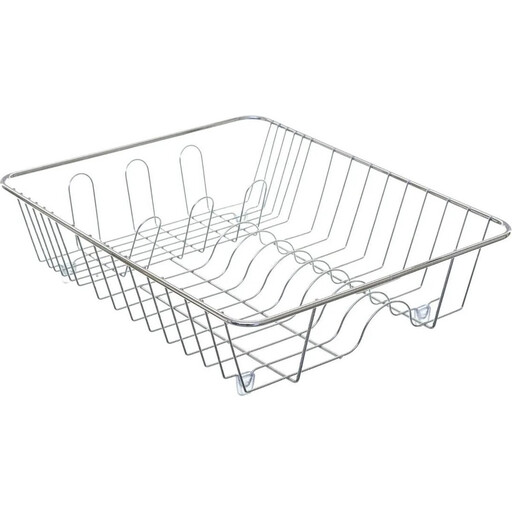
Why it suits this profile: This model provides a straightforward, well-organised solution for everyday washing-up, whether at home or, for example, on a camping trip.
The dimensions and capacity are clearly stated. According to the product description, the raised rim helps keep water inside the rack.
Steel construction, cutlery basket and space for up to eight items according to the product specifications.

Why it suits this profile: This large adjustable model is designed for households that want to drain both kitchenware and larger quantities of vegetables and fruit.
The telescopic frame extends from 29 to 44 cm. This allows you to adjust the size to your sink before use.
304 stainless steel, dimensions of 29–44 × 21.2 × 10.5 cm and a raised mesh base for drainage into the sink.

Why it suits this profile: Ideal if you are looking for an expandable colander for washing vegetables, rinsing fruit and draining kitchenware.
The evenly distributed drainage holes and adjustable length are clearly described. However, check that 42.6 cm fits your sink.
304 stainless steel, expandable design, dimensions of 42.6 × 21 × 6.9 cm and suitable for use directly above the sink.
Only place an adjustable model once it has been fully extended and is resting securely on both sides. Distribute heavy plates across the surface and do not place small glasses where they could topple over. Do not use a rack above the sink as a chopping board or cooking surface.
A stainless-steel colander and dish drainer are easier to keep clean when you remove food residue straight away. Rinse with lukewarm water after use, use a mild cleaner and dry the joints, feet and handles. If the model has a drip tray, empty it regularly to prevent stagnant water.
We have put together a complete, up-to-date list of products that fully meet these strict selection criteria and the applicable European safety regulations.
No. Measure the width of the section where the rack will rest. An adjustable model may be suitable for a double sink, but also check the position of the divider and tap.
A model above the sink saves worktop space and drains water directly away. A dish drainer with a drip tray is more convenient if you do not have space above the sink or want to move the rack regularly.
Its lifespan depends on the material, load and maintenance. A 304 stainless-steel rack may be suitable for daily use, but prolonged exposure to water, salt and harsh cleaning products can cause marks or wear. Check the welds, edges and non-slip feet regularly.
