
Comparing reports
You want to read an energy publication alongside your notes or a second window. The layout and readability on a single screen are therefore important factors in your choice.


Start by deciding whether you want a built-in screen or a desktop with one monitor of your choice. An all-in-one combines the computer and screen; with a separate computer, you choose the screen yourself, but remember to check which other components and connections you might need.
You want to read an energy publication alongside your notes or a second window. The layout and readability on a single screen are therefore important factors in your choice.
You often read at a fixed workstation and want to adjust the screen position, lighting and text size to suit your needs. Specific employer rules apply only to work covered by regulations for display screen equipment.
You’re comparing an all-in-one with a separate computer and exactly one monitor. Think ahead about the components you already own and what you’ll need for future use.
First, choose a screen layout that keeps your report and table easy to read. Then consider your workspace, the complete setup and how you’ll use it over the longer term.
| Consideration | What should you check? | Who is this important for? |
|---|---|---|
| Readable documents | Compare screen size and native resolution. Try your usual PDF, table and window layout on one screen. | If you want to read reports alongside tables or notes, each window needs to remain usable. Around 36% of this group put readability first. |
| Adjustable workspace | Check the height, tilt and reflections on the model you’re considering; adjust the text size and lighting to suit your desk. | When reading for long periods, you’ll want a screen position and text size that feel comfortable. Around 29% of this group prioritise an adjustable workspace. |
| Complete setup | Check that you have one usable screen, the right connection, input devices and any software you need. | If you don’t already own all the components, you’ll want to know what else you need before choosing a computer. Around 21% of this group are mainly concerned with having a complete setup. |
| How long you’ll use it and power consumption | First, check whether your current computer or monitor still meets your needs. Compare power consumption figures only under the same usage conditions. | If you want to use your equipment for longer and care about energy management, you could also consider an existing computer or monitor. Around 14% of this group have that priority. |
Microsoft Support explains how to snap windows side by side in Windows. Try the layout with your own documents to see whether they remain readable on screen; a window feature won’t make text clearer if it’s displayed too small.
For prolonged display screen work, Arboportaal highlights factors such as legible characters and reducing reflections. The specific rules for employers do not automatically apply to every home workspace.
Milieu Centraal recommends using computers for as long as possible. This is not a comparison of models: without like-for-like measurements of complete computer-and-screen setups, you can’t use this information to rank their power consumption.
The Dutch all-in-one models included in the research have both FHD and QHD screens. Screen size alone therefore doesn’t tell you how much screen space you’ll have for documents and tables.
Check the resolution of the exact model and try your usual window layout and text size.
A separate computer isn’t a complete setup if you still need a monitor or input devices. The Lenovo ThinkCentre Neo 50t Gen 5 base configuration included in the research doesn’t list a keyboard or mouse.
For each model, note which components are included and which you already own, and check that the connections are compatible with your one monitor.
A research report covers a specific reporting period. The availability date of an announced computer model may also be later than the date on which you’re viewing the information.
Check the reporting period in any reports. Apple said the iMac M6 would be available from 6 November 2026; don’t assume it’s available before then.
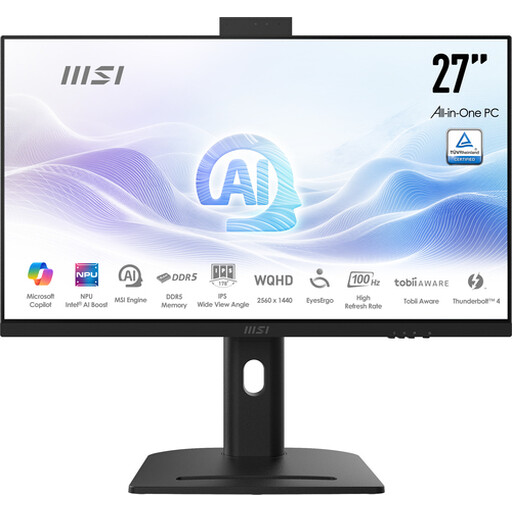
The Dutch OmniStudio 27-cy0673nd included in the research combines a computer with a built-in screen.
The models included in the research range from an IdeaCentre all-in-one to a ThinkCentre tower for a separate computer-and-screen setup.
The Aspire C27-195ES included in the research is an all-in-one with a built-in 27-inch screen.
The Mac mini is a compact computer for use with a screen chosen separately; the iMac has a built-in screen.
This selection includes all-in-ones with a built-in screen and a mini desktop for which you’ll need to choose one separate monitor. For the mini desktop, check which components you already own and which connections you need.
 No image available
An all-in-one with a built-in screen for anyone who wants to combine the computer and screen in one desk setup.
27 inches, 2560 × 1440 pixels, Intel Core Ultra 5 125H, 16 GB DDR5-SDRAM and a 1 TB SSD.
 No image available
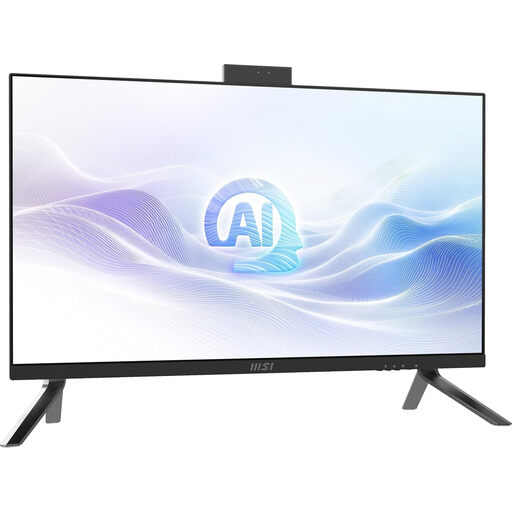
This all-in-one could be a good fit if you want an integrated screen; check that the software you use is compatible with Windows 11 Pro.
27 inches, 2560 × 1440 pixels, Intel Core Ultra 7 155H, 32 GB DDR5-SDRAM, 1 TB SSD and Wi-Fi 6E.
 No image available
An all-in-one for a dedicated reading workspace; the product description says the screen can be adjusted for height and tilt.
27-inch QHD, 120 Hz, Intel Core Ultra 7 255H, 16 GB LPDDR5X, 1 TB SSD and Windows 11 Home.
 No image available
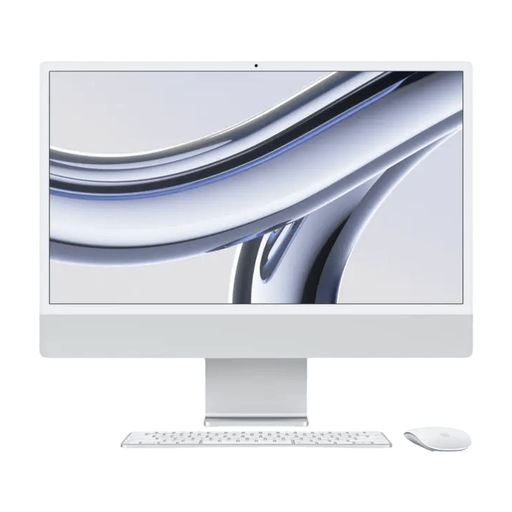
An all-in-one with a built-in screen; bear in mind that the screen is 24 inches when planning your layout.
16 GB memory and 512 GB storage.
 No image available
A mini desktop for anyone who wants to choose a separate monitor; you’ll need that monitor too for a complete single-screen setup.
16 GB LPDDR4X, 512 GB SSD and Windows 11 Pro. The description lists HDMI 2.0, DisplayPort 1.4b and USB-C video outputs.
In Windows, you can snap windows to the sides of the screen or choose a layout. Microsoft Support explains these features; try them with your own PDF and table to check that both windows remain readable on your screen.
Adjust your workspace to suit your body, keep text readable, reduce reflections and take breaks from screen work. Arboportaal offers practical advice and also explains rules for employers and employees; these don’t automatically apply to every private buyer.
Only if you don’t already have a suitable screen for your setup. Check what’s included in the configuration you choose and whether its connection is compatible with your monitor; the Lenovo ThinkCentre Neo 50t Gen 5 base configuration included in the research also doesn’t list a keyboard or mouse.
No. According to the Dutch government, there’s no fixed legal guarantee period in the Netherlands: you’re entitled to a product that does what you could reasonably expect it to do. If there’s a fault, contact the retailer; any manufacturer’s guarantee is in addition to this.
No. The European Commission distinguishes between the rules for computers and those for monitors; monitors are also subject to EU energy labelling. In September 2026, the Commission published a preparatory study into a possible new energy label for computers. The study doesn’t mean that such a label is already compulsory.