
Cooking with a small soup pan
You cook one small portion at a time and want to simmer it gently once it has come to the boil. The size of the pan base and how easily you can adjust the heat matter more than the maximum wattage alone.


Choose a hob with a cooking zone that suits the base of your soup pan, and let you turn the heat down once the soup has come to the boil. Induction requires a compatible pan, while a cast-iron hotplate retains residual heat; ceramic-glass radiant heat is another type of hob. The number of heat settings alone cannot guarantee that soup will simmer gently and evenly in your pan.
You cook one small portion at a time and want to simmer it gently once it has come to the boil. The size of the pan base and how easily you can adjust the heat matter more than the maximum wattage alone.
You want to keep using your current soup pan. First check its base and size, then decide which type of electric heat is suitable.
You’re looking for an extra cooking zone and need to make sure there’s enough space, a suitable cable and socket, and a safe place to keep an eye on the hob.
Start with the pan: check that its base is suitable for your chosen heat source and cooking zone. Then consider how you can turn down the heat, as well as the space and connection available to you.
Suitable for: a soup pan with a magnetic base that falls within the hob’s permitted pan size.
Bear in mind: a temperature setting doesn’t measure the soup in your pan. A timer may switch the hob off before dried beans are cooked through.
Suitable for: anyone who wants to use an existing pan without first having to check whether its base is magnetic.
Bear in mind: cast iron retains residual heat. Turn the heat down in good time and let the hotplate cool before cleaning it.
Suitable for: anyone looking for a smooth cooking surface and wanting to match the size of a heating ring to their pan.
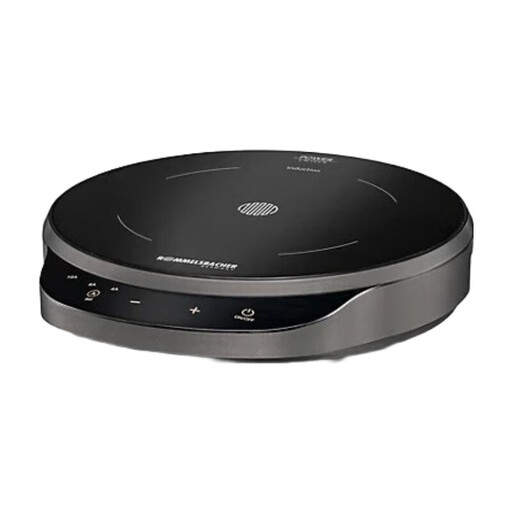
Bear in mind: this isn’t induction. The manufacturer of the Rommelsbacher CT 2203/TC lists 140 and 210 mm heating rings and a residual-heat indicator.
| What to consider | What to look for when buying | Who is this important for? |
|---|---|---|
| Gentle simmering | Check the heat settings and timer, but don’t treat them as proof of a specific soup temperature or an even simmer. | If I want my soup to simmer gently after coming to the boil, I need to be able to turn down the heat and judge the result in my own pan. Around 33% of consumers prioritise controllable heat for a small portion. |
| Pan compatibility | For induction, test the base of the pan with a magnet and compare its size with the model specifications. | If I want to keep using my current soup pan, I need to know in advance whether its base is suitable for the heat source and cooking zone. Around 27% of consumers prioritise using a pan they already own. |
| Space and connection | Measure the available space and check the plug, connection details and other appliances on the same circuit. | If I’m looking for an extra cooking zone in a small space, I need to know whether the hob can be positioned there safely and used with my connection. Around 20% of consumers prioritise the installation space and connection. |
| Supervision and residual heat | Check whether the specific model has a timer or residual-heat indicator; neither is a substitute for supervision. | If the soup is on the hob for longer, I want to stay nearby and know when a cooking zone may still be hot. Around 20% of consumers prioritise supervision and managing residual heat. |
A ceramic-glass surface doesn’t automatically tell you which heating technology the hob uses. Check the full model number and the manufacturer’s description before deciding whether your pan is suitable.
Compare the heating technology with the base of your pan, rather than choosing based on the appearance of the surface alone.
Manufacturer settings don’t measure the temperature in your pan. A timer may switch the hob off while dried beans are still undercooked.
Follow the cooking instructions for dried beans, then check how the soup simmers in your own pan and stay nearby.
The connection and power rating vary by model. Using other appliances at the same time on the same circuit may also be a factor.
Check the plug and connection details for the specific model and make sure they’re suitable for your set-up.
The KI120T is a freestanding induction hob with one cooking zone. Check that the base of your pan fits the stated size.
The KP 1091 and KP 1071 use different heating technologies, so features of one model don’t automatically apply to the other.
The IK-6178 is a freestanding induction hob with an adjustable cooking time.
The CT 2203/TC is a freestanding ceramic-glass radiant hob, offering an alternative to induction or cast iron.
These Joybuy product picks are freestanding, single-zone induction hobs. Check the pan size and controls for each model to find the right fit for preparing your soup.
 No image available
The heat settings and timer may be useful if you want to adjust the heat and cooking time after bringing the soup to the boil.
The product information lists 2000 W, 10 settings and a timer of up to 240 minutes with automatic switch-off. Use a pan that’s suitable for induction.
 No image available
The product title describes a portable, single-zone induction hob. Check pan compatibility before choosing it for your soup pan.
The product information lists 1000 W and five heat settings. These settings don’t measure how gently a particular pan will simmer.
 No image available
The stated cooking-zone size and settings can help you compare the hob with your pan and preferred controls.
The product information lists 2000 W, a zone for pans measuring 12–26 cm, 10 settings and a timer of up to three hours. Use a pan that’s suitable for induction.
 No image available
The stated pan size and heat levels are worth considering if you use a small pan and want to adjust the heat in steps.
The product information lists up to 1800 W, nine levels and cookware measuring 12–20 cm in diameter. Use flat pans that are suitable for induction.
 No image available
The stated cooking-zone size and timer can help you compare the hob with your pan and preferred cooking time.
The product information lists a 12–23 cm cooking zone, 10 settings, a 180-minute timer and a residual-heat indicator. Use a pan with a ferromagnetic base that’s suitable for the stated zone.
According to the Voedingscentrum, dried pulses need to be cooked for a long time before they’re tender. Beans in jars, tins or pouches are already cooked and only need reheating, so adjust the cooking time to the beans you’re using rather than relying on the hob’s timer alone.
Use a magnet to check whether the pan’s base is magnetic, then compare its diameter with the permitted pan size for the specific model.
Stay near the hob and keep flammable materials away; this is the advice from Brandweer Nederland. A timer is no substitute for supervision.
Cool leftovers quickly, seal them well and put them in the fridge or freezer. The Voedingscentrum advises not leaving leftovers out of the fridge for longer than two hours.
The NVWA states that CE marking is compulsory for electrical products placed on the market in the Netherlands. Check this for the specific model; the presence of a CE mark alone doesn’t show how well soup will simmer on the hob.
Contact the seller. According to ACM ConsuWijzer, a product must meet reasonable expectations. Depending on the circumstances, the seller must repair the fault free of charge, replace the product or refund you. A manufacturer’s warranty doesn’t replace your statutory rights.