
Film archive viewer
You want to check first whether the film you’re after will play on the shared TV. Eye Film Player explains how to watch via HDMI or cast from Chrome, so these are practical options to start with.


For silent films on a shared TV, you may not need a new streaming box: Eye Film Player explains how to watch using a laptop connected via HDMI, or cast from Chrome. Choose a stick if the shared wireless network is usable; casting may fail on a restricted Wi-Fi network. A box with Ethernet may be a good fit if there’s a network socket by the TV, but it won’t automatically fix casting detection issues. If you want to listen to the film’s soundtrack privately, check the headphone options supported by your chosen player too.
You want to check first whether the film you’re after will play on the shared TV. Eye Film Player explains how to watch via HDMI or cast from Chrome, so these are practical options to start with.
You may be sharing a network that prevents devices from finding each other, so you want to weigh up casting, a direct HDMI connection and a box with Ethernet before choosing.
You want to enjoy the film’s soundtrack without filling the shared room with TV audio, so you check which headphones work with your chosen player.
Start with the film you want to watch and how you’ll connect to the TV. Then compare the player, network and listening options.
A good fit if: your laptop and TV have compatible HDMI ports. Eye Film Player describes this way of watching.
Bear in mind: you’ll need to keep the laptop on while watching, and both devices must be suitable for connecting together.
A good fit if: you’re looking for a compact player and the shared wireless network is usable. Xiaomi lists an HDMI display and a wireless connection as requirements for its TV Stick 4K (2nd Gen).
Bear in mind: check that your intended way of watching works with Eye Film Player. A stick won’t make a restricted network suitable for casting.
A good fit if: there’s a usable network socket by the TV. Google lists a built-in Ethernet port on the Google TV Streamer (4K).
Bear in mind: Ethernet won’t automatically fix casting detection issues. Google also notes that the HDMI cable is sold separately.
The percentages in the table show which buying concern matters most to consumers in this situation.
| Buying concern | What to look for | Who is this important to? |
|---|---|---|
| Access to films | Check the title you want and how you’ll play it. Eye Film Player describes watching via HDMI and casting from Chrome. | I want to check first whether the film I’m after will play on the TV; around 31% of consumers prioritise access to films. |
| Shared network | Check whether devices can connect to each other over the household Wi-Fi and whether there’s Ethernet by the TV. Google Help explains that AP or client isolation can prevent casting. | If the household Wi-Fi blocks devices from communicating with each other, I want to know which connection will work; around 25% of consumers prioritise network access. |
| Existing equipment | Check the ports on your laptop and TV, and see which cables you already have before adding a separate player. | I want to make use of what I already have and check whether my laptop will do the job; around 25% of consumers prioritise existing equipment. |
| Listen without disturbing others | Check that your chosen player works with your headphones; Bluetooth and audio-sharing features vary between devices. | I want to listen to the film’s soundtrack without disturbing my housemates; around 19% of consumers prioritise listening quietly. |
Whether a film is available and how you play it on your TV are two separate things.
Check the specific title and first try a playback option recommended by the provider.
Google Help explains that AP or client isolation can prevent devices from communicating, which may stop casting from working.
Check whether devices can find each other on the household network, or choose a suitable direct HDMI connection. Check Ethernet as a separate option.
Higher output resolution requires compatible content and equipment. Xiaomi says you’ll need a compatible router to benefit from Wi-Fi 6.
For this viewing setup, prioritise access to the film and a working connection first.
The Google and Apple boxes reviewed list an HDMI cable as a separate purchase.
Check which cables you already have and what’s included with the model you’re considering.
The Google TV Streamer (4K) is a box worth considering if you want a standalone player with Ethernet.
The TV Stick 4K (2nd Gen) is a compact Google TV stick for an HDMI display and a usable wireless connection.
The Apple TV 4K may be worth considering if connecting headphones or using personal audio is important to you.
The LEAP-S3+ is a Google TV box to compare with sticks and other boxes.
Joybuy picks for a standalone media player for TV streaming.
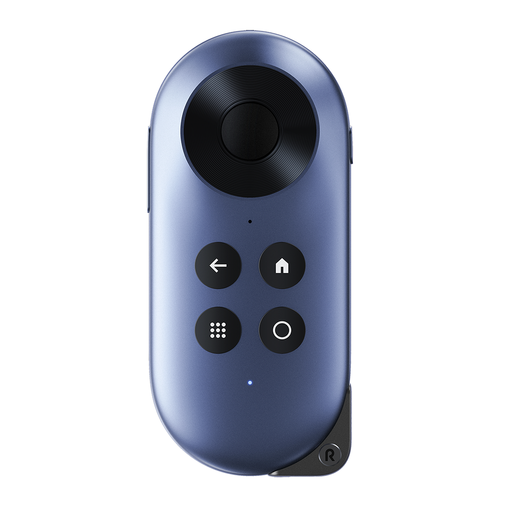 Image unavailable
A portable media player for anyone looking for a standalone Android TV solution.
The product information lists Google certification. Netflix is not currently supported.
Yes. Eye Film Player describes an HDMI connection, provided both your laptop and TV have the right ports. Then select the correct HDMI input on your TV.
According to Google Help, AP or client isolation can prevent devices from communicating with each other. Check your network settings and the Chrome casting option described by Eye Film Player. Google says Chromecast Guest Mode is no longer supported.
According to ACM ConsuWijzer, in the Netherlands you have a legal guarantee, in addition to any manufacturer’s warranty, if the product doesn’t perform as you could reasonably expect under normal use. The seller must then provide an appropriate solution at no cost; there isn’t one fixed legal guarantee period that automatically applies to every player.
No. The Dutch government says that downloading from an illegal source is prohibited, and that you must not distribute a copyright-protected work without permission. Use a legitimate way of watching it.