Start by deciding how you want to watch the films on your TV: Eye Film Player describes casting from Chrome on a computer or Android device, as well as connecting a computer directly via HDMI. A stick or dongle takes up little shelf space, but remember to allow for the HDMI port, power supply and cables. A separate box may offer connections such as Ethernet, but that doesn’t guarantee Eye Film Player will work on it.
Who is this viewing option suitable for?
Silent-film viewer with a small TV area
Wants to watch films from a specialist collection on the TV, but has no shelf space for a streaming box. How you play the films matters more than a long list of video formats. Eye Film Player and Eye Filmmuseum describe the available content and viewing options.
Viewer who casts from a computer or Android device
Wants to start a film in Chrome and play it on the TV. Eye Film Player lists the browser, device and Wi-Fi requirements.
Viewer who wants a wired connection
Would prefer Ethernet or a standalone TV interface, and can make room for a box or dongle. Strong, Google and Apple list connection options for specific product ranges.
What should you look for when choosing?
Google Cast stick or dongle
Choose this option if: you want to cast from Chrome on a computer or Android device, and have room for the power supply and cables.
Bear in mind: Eye Film Player describes a Chromecast option, but check that the specific device works with the film service you want. Strong lists Google Cast for the LEAP-NEVE.
Separate streaming box
Choose this option if: you have room for a box and connections such as Ethernet are important to you.
Bear in mind: a box needs space and may require a separate HDMI cable. A standalone interface doesn’t confirm that Eye Film Player will work on it.
Fire TV Stick
Choose this option if: you’ve already confirmed that the specific device supports the film service you want.
Bear in mind: storage space and 4K support don’t, by themselves, prove that Eye Film Player will play on the stick.
Computer connected directly via HDMI
Choose this option if: you already have a suitable computer and HDMI connections, and don’t want to buy an extra media player.
Bear in mind: you’ll need to connect and operate the computer, and may still need a cable.
| What to consider |
What should you check? |
Who is this important for? |
| Access to the films you want |
Check the film title, service and playback option before choosing based on resolution or storage. Eye Film Player describes casting from Chrome and connecting a computer via HDMI. |
If I want to watch a particular silent film, I want to know first whether I can play it on my TV through Eye Film Player. Around 29% of consumers say access to the films they want is their top purchasing priority. |
| Space around the TV |
Check the HDMI port, the space next to other plugs and the route to a power socket. Compare the complete setup, not just the device’s dimensions. |
If I have limited space, I want to avoid a stick, power supply or cable getting in the way. Around 29% of consumers give physical placement top priority. |
| Connection and control |
Decide whether you want to cast from a computer or Android device, use Ethernet or navigate with a remote control. Check support for the film service and the required Wi-Fi connection. |
If I want to cast or need a wired connection, I want to know which option works with my device and service. Around 24% of consumers give connection or control top priority. |
| Total viewing costs |
Check which accessories are included in the box and whether the film you want is free or needs to be rented. Eye says there’s no subscription, but films are available to rent for a fee; this doesn’t apply to other services. |
If I want to keep my total viewing costs down, I want to know which cables I already have and whether my film is free or needs to be rented. Around 18% of consumers give additional costs top priority. |
Which purchasing mistakes can you avoid?
-
Assuming 4K or plenty of storage means you can access silent films
Eye Film Player describes specific browser, casting and HDMI options. Resolution or storage alone doesn’t tell you whether the film service you want is available.
Check the film title and playback option first, then compare resolution and storage.
-
Measuring only the stick
The HDMI connection and power supply also need room. Xiaomi lists accessories for its specific TV Stick 4K; Apple says that the Apple TV 4K version reviewed requires a separate HDMI cable.
Consider the ports, cable route, power socket and box contents together.
A missing cable or awkward place for the power supply may mean you need to adjust your setup.
-
Assuming similar model names refer to the same product
One Joybuy listing names a Fire TV Stick 4K Max version with “2025”, while another product listing reviewed describes an international version. This means the exact product identity hasn’t been established.
Compare the full model number, version and key specifications before treating product listings as equivalent.
Which brands and product ranges are relevant?
Xiaomi
The TV Stick 4K is a compact HDMI option if you’d rather not put a box on a shelf.
- According to Xiaomi Netherlands, this specific TV Stick 4K measures 106.8 × 29.4 × 15.4 mm; the box includes a power adapter and HDMI extension cable.
- These specifications don’t confirm that Eye Film Player works on the stick. Don’t confuse this model with the TV Stick 4K (2nd Gen).
Strong
The LEAP-NEVE is a Google TV dongle for anyone who wants Google Cast and, according to the manufacturer, Ethernet.
- Strong lists Google Cast, Ethernet and 8 GB of storage for the LEAP-NEVE.
- These specifications aren’t a test of Eye Film Player. Remember to allow for the connected power supply and cables when planning your setup.
Google
The Google TV Streamer (4K) is a box option if Ethernet and a standalone TV interface are important to you.
- Google lists Ethernet, HDMI and 32 GB of storage.
- The HDMI cable is sold separately. The specifications don’t confirm that there’s an Eye Film Player app or that playback has been tested on this box.
Apple
The specified Apple TV 4K is a box for a setup with room for the device and an HDMI cable.
- Apple lists Ethernet for this version.
- An HDMI cable is required separately. Eye mentions Apple TV in its FAQ, but this doesn’t specifically confirm that this Apple TV 4K version works with Eye Film Player.
Joybuy product selection
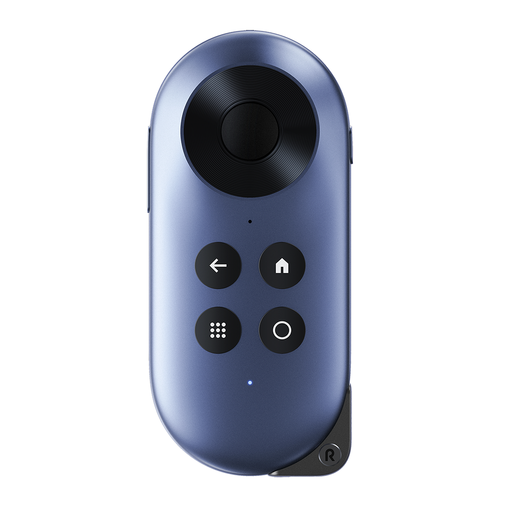
A Joybuy product pick for anyone considering a portable Android TV device. Before buying, check that the device suits your TV connection and the playback option for Eye Film Player.
 No image available
Rokid Station, portable Android TV device
A portable Android TV setup may suit you if you’re looking for a media player, but compatibility with Eye Film Player on this specific model hasn’t been confirmed.
Android TV interface; remote control; built-in battery.
View at Joybuy
Frequently asked questions
Can you open Eye Film Player directly as an app on any streaming stick?
Don’t assume you can. Eye Film Player describes watching in a browser, casting from Chrome on a computer or Android device, and connecting a computer via HDMI. Check app or browser support on the specific device you’re considering.
Why doesn’t the Cast icon appear?
Eye Film Player specifies Chrome on a desktop computer or Android device, and requires the source device and Chromecast to be on the same Wi-Fi network. Eye says this Chromecast option doesn’t work from Chrome on iOS.
Do you need a subscription for Eye Film Player?
No, Eye Film Player doesn’t offer a subscription. According to Eye, some films are free to watch; you’ll need a free account to rent films, and the rental period is 48 hours. Check the terms for the film you want to watch.
What rights do you have when buying a streaming device online?
When you buy from a business at a distance, you’re generally entitled to a 14-day cooling-off period, although there are exceptions. The Netherlands Government distinguishes between buying from a business and buying from a private individual. The cooling-off period is also separate from your rights if a product is faulty.
What should you look for in the product documentation?
Check the documentation for the exact version being offered, including information about the power supply and the EU Declaration of Conformity. The Netherlands Government’s Business Portal and the Netherlands Enterprise Agency provide information about the applicable product rules; a retailer’s description alone doesn’t establish compliance.


