
Vandaag of morgen in huis

Kwaliteit gegarandeerd

Welkomstaanbiedingen ontgrendelen: GRATIS bezorging | Tot 80% korting | Gratis 30 dagen JoyPlus-proefperiode
Download de app
A Siku toy car might seem like a straightforward purchase at first. However, models can vary considerably in their materials, size, play value and suitability for young children. A metal toy car may feel sturdy, for example, but small parts or a delicate tow hitch don’t automatically make it suitable for every age group.
Parents often focus on colour and recognisable car brands, while family members are usually looking for a fun gift. Collectors, on the other hand, consider scale, finish and display value. This buying guide helps you compare Siku models using verifiable specifications, so you’re less likely to pay for features that add little in practice.
Many models have a metal body, while the chassis, interior, windows and couplings are made of plastic. That’s normal for a die-cast model car. Always check the materials listed, and look out for delicate parts such as a tow hitch, trailer or opening door.
A Volkswagen toy car might be designed for pushing along and imaginative play, or it might be better suited as a collector’s model. Check the age recommendation, scale, moving parts and any accessories. A VW T1 bus with a caravan offers different play possibilities from a compact Siku toy car without a trailer.
A visible CE mark is useful product information, but you should also check the recommended age and any warnings. The Siku models mentioned are generally intended for children aged 3 and over. Small parts may present a choking hazard. Supervise young children, especially when a model includes a trailer, boat or other loose parts.
For regular play, a combination of metal and plastic is practical. The metal body often gives the car a solid feel, while plastic is needed for details and connections. For a toy vehicle intended for children aged 3 and over, check that there are no loose parts that could come off easily.
A model with rubber tyres will usually roll smoothly over a flat surface. That doesn’t mean every vehicle is suitable for a racetrack: some Siku models are specifically not designed for one. Think about how the toy will actually be used: pushing it along, collecting it, combining it with other vehicles or acting out work scenarios.
The dimensions determine whether a Siku model car is easy for small hands to hold and how much space it takes up. Models in this selection, for example, range from around 7.8 to 17.1 cm. A 1:50 scale is appealing if you want to display several vehicles side by side, while a larger vehicle is more eye-catching during play.
Consider the dimensions of a combination, too. A Siku camper van or toy car with a caravan takes up more space than a car on its own. Also check whether the product description says the tow hitch and trailer can be combined with other vehicles.
The recommended age is a helpful guide, but it doesn’t replace supervision. Models without batteries are easy to use: your child pushes the vehicle along, and there’s no charger to worry about. Clean metal and plastic parts with a soft, slightly damp cloth. Don’t immerse models in water, especially if they have stickers, metal parts or cardboard packaging.
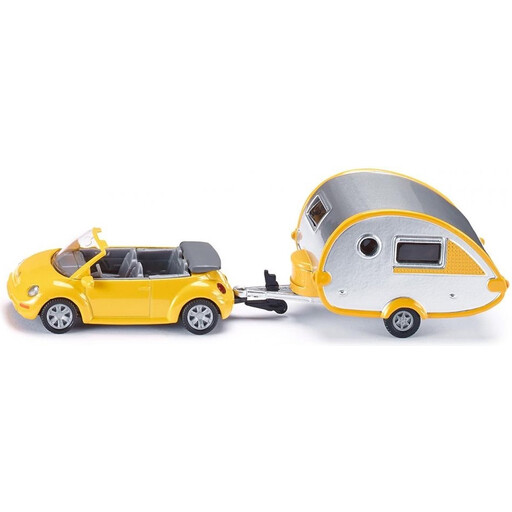
Why it suits this profile: This Volkswagen model pairs a recognisable car with a caravan and, according to the product information, is suitable for children aged 3 and over. It doesn’t need batteries, so it’s ready for pushing along and imaginative play straight away.
The product description specifies a metal body, rubber tyres and a tow hitch. This means you can see which play features are included before buying, rather than relying on the Volkswagen badge alone.
16.4 cm long, no assembly required, includes a caravan and is ideal for imaginative play involving combinations and camping.
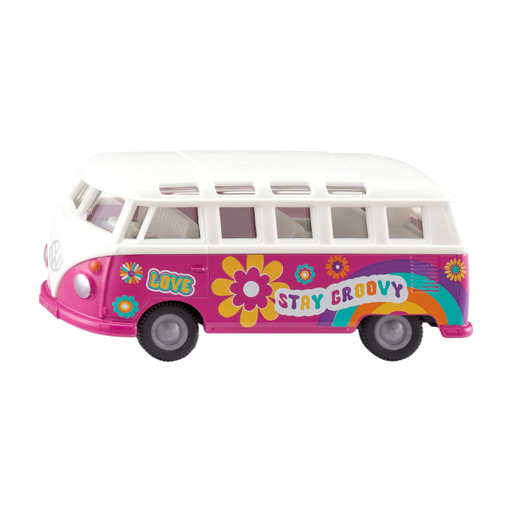
Why it suits this profile: The Flowerpower edition is aimed at fans of the classic Volkswagen T1. Its striking colour scheme makes it a great gift and a standout addition to a collection, while the mix of metal and plastic also makes it suitable for imaginative play.
The product page clearly lists the materials, the age recommendation of 3 and over, and that no assembly is required. This makes it easier to decide whether the model is intended for play or display.
VW T1 Samba bus, 15.5 cm according to the product listing, metal and plastic parts, and a tow hitch for combining with other vehicles.
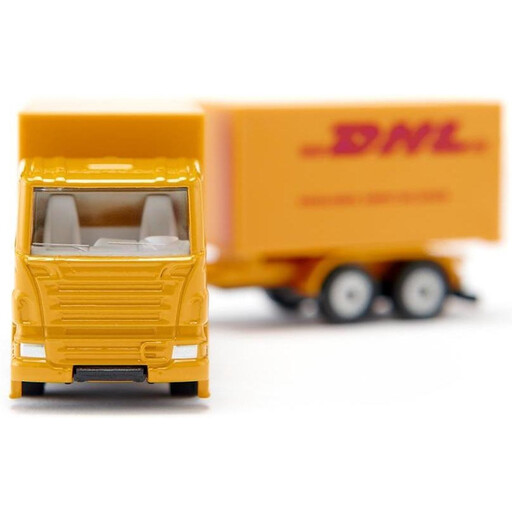
Why it suits this profile: This Siku truck is ideal for children who enjoy acting out transport and delivery scenarios. The detachable trailer and opening rear doors give it a clear purpose during play.
The key moving features are listed upfront: the rear doors open and the trailer can be detached. This makes it clear what the vehicle can actually do.
15.2 cm long, operated by hand, no batteries required and comes with a detachable trailer.
We’ve put together a complete, up-to-date list of products that meet these strict selection criteria and current European safety regulations.
Many models in this selection have a recommended minimum age of 3 years. Always check the product page and packaging. Trailers, caravans and other small parts need extra supervision. A model for adult collectors, such as a 1:36 Volkswagen T1 with a pull-back function, may have a higher age recommendation, so it isn’t automatically suitable for young children.
The Siku vehicles mentioned are operated by hand. You push them along, and they don’t need batteries. That makes them easy to get ready for play and avoids the ongoing cost of replacement batteries. Do check the latest product information, as features may vary between models.
Use a soft, dry or slightly damp cloth. Avoid immersing the car in water, using abrasive materials or applying harsh cleaning products. Store a die-cast model car in a dry place, and regularly check that the coupling, wheels and any loose parts are secure on vehicles with a tow hitch.
