
Vandaag of morgen in huis

Kwaliteit gegarandeerd

Welkomstaanbiedingen ontgrendelen: GRATIS bezorging | Tot 80% korting | Gratis 30 dagen JoyPlus-proefperiode
Download de app
A sideboard is often more than just a storage cabinet. It's a central piece of furniture in your living room, dining room, or hallway that must be both functional and stylish. The search for the perfect model can be overwhelming due to the vast array of styles, materials, and sizes. This article serves as a practical guide to help you make an informed decision, free from marketing jargon. We'll focus on the specifications and functionalities that truly matter.
Before making a choice, it's wise to consider a few key points. This will help you find a sideboard that is not only beautiful but also a practical fit for your home.
The style of the sideboard largely determines the atmosphere of the room. A wooden sideboard brings warmth and a natural feel, fitting into many interiors. Within this category, there are many variations:
The material is not just a matter of taste but also of maintenance and durability. MDF is a commonly used and affordable material, while solid wood is a more authentic and often more expensive option.
Think carefully about what you want to store. Do you have many small items? Then a sideboard with drawers is a practical choice. For larger items like dinnerware or books, cabinets with doors are more suitable. A sideboard with sliding doors is a smart, space-saving solution, ideal for a smaller room or a narrow hallway where hinged doors would get in the way.
Measure the available space accurately. A 100 cm sideboard is a popular width that fits well in many living rooms without being overpowering. If you have a narrow hall or limited space, a narrow sideboard (with a shallow depth) can be the perfect storage cabinet for the living room or hallway.
Based on functionality, material, and design, we have compiled a list of popular choices for you.
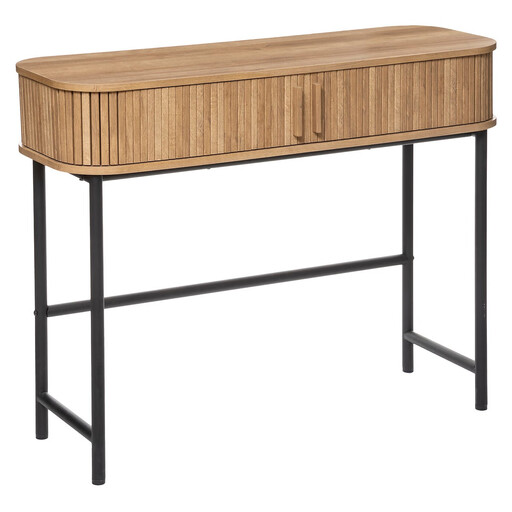
Why It Stands Out This sideboard combines a Scandinavian style with a highly practical feature: sliding doors. The combination of a light wood colour and a sleek design makes it a versatile piece of furniture.
Key Features
Who It's For Ideal for those looking for a compact and stylish Scandinavian sideboard for the living or dining room. Especially useful if you have limited space and appreciate the functionality of sliding doors.
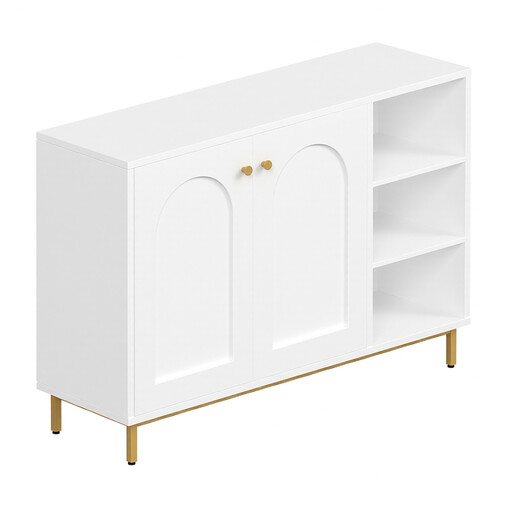
Why It Stands Out This piece distinguishes itself with its modern and luxurious appearance, featuring a combination of white and gold-coloured metal details. The rounded doors give it a soft and elegant look.
Key Features
Who It's For Perfect for lovers of a modern, sophisticated style. Although it could also fit in a bathroom, its dimensions and appearance make it an excellent, stylish sideboard for the living or dining room.
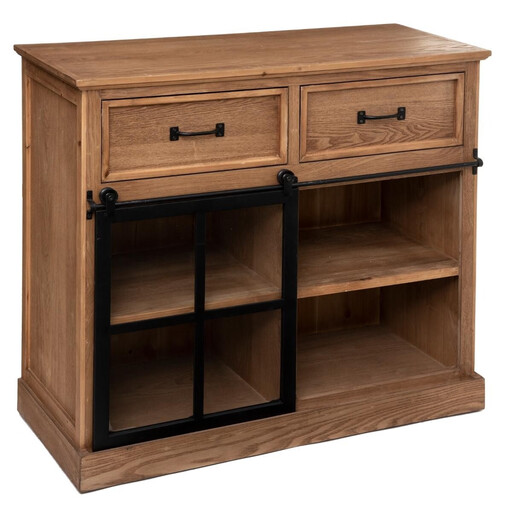
Why It Stands Out The Danik sideboard is a piece with character that combines the warmth of wood with the bold look of an industrial sideboard. The sliding door made of tempered glass and iron is a real eye-catcher.
Key Features
Who It's For This sideboard is an excellent choice for those who want to make a statement and love the industrial or rustic interior style. It offers a great balance between aesthetics and practical storage options.
Haven't found your ideal sideboard yet? Everyone has different needs when it comes to dimensions, style, and budget. Fortunately, a wide range of options is available. If you want to explore more styles, from classic to modern, take a look at our full collection.
Explore all sideboards and buffets here
What is the average height of a sideboard? The height of a sideboard typically varies between 70 and 90 centimetres. The models in this article, such as the Atmosphera Colva sideboard (80.5 cm) and the Danik sideboard (85 cm), fall within this standard range. This height is practical because the top surface is at a comfortable level for placing items, and the proportions are well-balanced in most living rooms.
What is the difference between a sideboard and a buffet? In practice, the terms 'sideboard' and 'buffet' are often used interchangeably and refer to the same type of low storage cabinet. Originally, a buffet was a piece of furniture in the dining room for setting out dishes, while a sideboard offered more general storage. Today, there is no longer a functional distinction.
How do I choose the right size sideboard for my living room? Measure the wall where you plan to place the sideboard. Ensure you leave at least 15-20 cm of space on either side of the furniture. This prevents the room from looking crowded and cramped. Also, pay attention to the depth, especially in narrow spaces or walkways. A narrow sideboard of about 35-40 cm deep is often a good choice.
