
Vandaag of morgen in huis

Kwaliteit gegarandeerd

Welkomstaanbiedingen ontgrendelen: GRATIS bezorging | Tot 80% korting | Gratis 30 dagen JoyPlus-proefperiode
Download de app
Choosing a side table seems simple: find a narrow table, pick a colour that suits your interior and place it against the wall. In practice, problems often only become apparent after you’ve bought it. A table may be too deep for your hallway, wobble on an uneven floor or offer less storage than the product photo suggests.
So don’t just focus on looks. The dimensions, load capacity, materials and construction all affect how well a side table works day to day. Read on to find out what to look for and which styles suit different needs.
A side table in your entrance or hallway shouldn’t block the way through. Measure the available space from the wall to the point where you can walk past comfortably. A narrow side table around 30 to 40 cm deep is often more practical in a hallway than a wider style.
Check the height, too. A hallway table around 75 to 80 cm high is suitable for keys, post, a lamp or decorative items. Behind a sofa, a lower sofa table may make more sense, depending on the height of the backrest.
Open shelves are handy for books, baskets, plants and decorative items. They also help the space feel airy. However, everything on them stays in view. If you want to keep everyday odds and ends out of sight, look for a side table with storage, doors or drawers.
Pay attention to the difference between the number of shelves and the space you can actually use. A photo with vases and accessories may make a table look spacious, even if the shelves are shallow or close together in reality.
An industrial-style design with a metal frame may look sturdy, but the joints, legs and adjustable feet are just as important. Small differences in floor height can cause wobbling, whether you have a wooden, tiled or older floor.
So check:
Before ordering, note the maximum width, depth and height. For a narrow hallway, depth is especially important. In a living room, if the table is going behind the sofa, you’ll also need to consider the height of the sofa in relation to the table.
The maximum load capacity isn’t a guide to how much weight you can place on each level without limit. The stated capacity usually applies when the weight is evenly distributed and the furniture is assembled correctly. So don’t place all your heavy equipment, books or ceramics on one small section of a shelf.
Many side tables and console tables are made from particle board, MDF and steel. Particle board is a commonly used material for tops and shelves. MDF is often used for back panels or parts that need a smooth surface. Steel frames can provide an industrial look and added support.
A wooden side table may be made from solid wood, but “wood-effect” or “rustic brown” doesn’t automatically mean solid wood. Always read the material specifications. For engineered wood, check the finish and care instructions, too. It’s best to wipe up spills straight away, especially if the edges or joints are susceptible to moisture.
A multi-tier console table gives you space to display photo frames, plants or decorative items. Drawers and doors are more useful for keys, cables, toys and other things you don’t want to see all the time.
If you also want to use a piece of furniture as a TV stand, bar or storage shelf, check the space you’ll need and the weight of your equipment beforehand. A sideboard or dresser usually offers more concealed storage, but often takes up more space than an open console table.
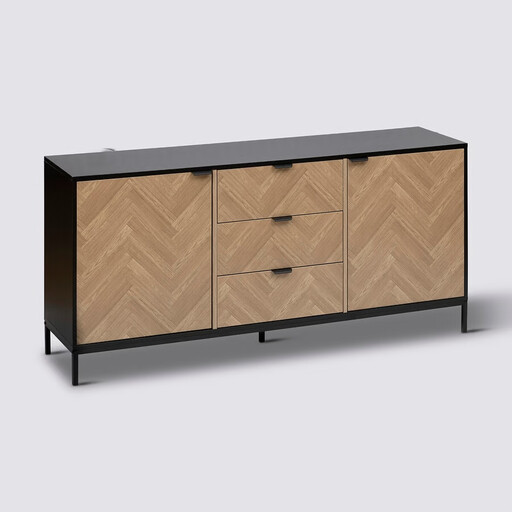
Why it suits this type of buyer: This wide model combines a tabletop with two doors and three drawers. It’s a good fit if you want to store both decorative items and everyday essentials in your living or dining room.
The closed storage keeps your belongings out of sight. The stated dimensions and maximum load capacity of 55 kg make it easy to check whether you have enough space for it.
160 x 40 x 75 cm, two doors, three drawers, steel legs, FSC certification and a statutory guarantee of at least two years.
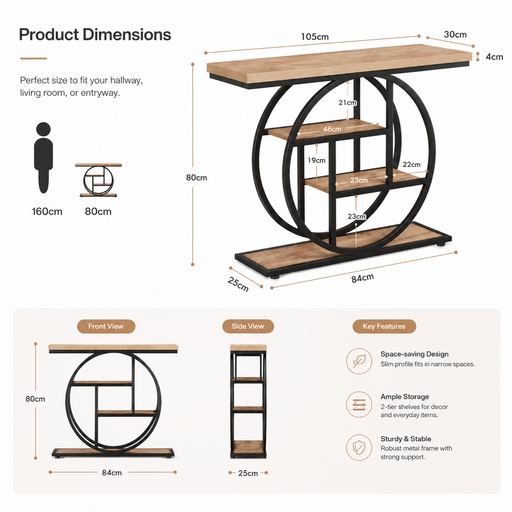
Why it suits this type of buyer: Its narrow design, four tiers and circular metal frame make it a good fit for a modern industrial-style hallway or living room where display space matters.
The product description mentions adjustable feet for uneven floors and a tabletop that’s 4 cm thick. Check the stated load capacity against how you plan to use it.
30 x 105 x 80 cm, four staggered tiers, a metal frame and a design for your hallway, living room or behind the sofa.
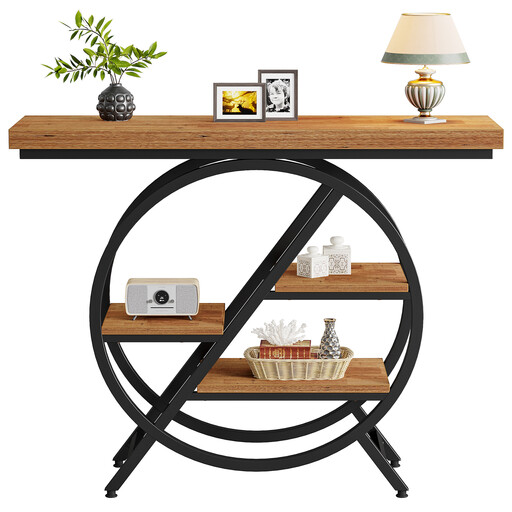
Why it suits this type of buyer: This model is designed for flexible use as a console table, sofa table, TV stand or storage shelf. It’s a good choice for households looking for a table that can serve several purposes.
According to the product description, this model has a 4 cm thick top, a metal frame and four adjustable feet. The stated capacity of up to 150 kg is a manufacturer’s claim; use the furniture in line with the assembly and safety instructions.
Three staggered shelves alongside the tabletop, adjustable feet and a versatile design for your living room, entrance, hallway or home office.
We’ve put together a comprehensive, up-to-date list of products that meet these strict selection criteria and the applicable European safety regulations.
Place the furniture on a stable, level surface and spread heavy items across several tiers. Don’t put a tall or narrow side table somewhere children could pull on it, or where it could block doors and walkways. If you have a wide, sideboard-style cabinet, securing it to the wall can provide extra stability, where this is possible according to the assembly instructions.
Tighten the screws and connectors carefully after assembly. Check them again later, especially if the table is used frequently or has heavy objects on it. For care, use a soft, slightly damp cloth and follow the manufacturer’s instructions.
Start by measuring the clear walkway. A model around 30 cm deep takes up relatively little space. A depth of 40 cm gives you more tabletop and storage space, but you’ll need a wider hallway or entrance. Remember to allow for skirting boards, doors and radiators, too.
Yes. A sofa table behind the sofa can hold lighting, books, plants or decorative items. Compare the table height with the backrest and make sure sockets, cables and ventilation aren’t obstructed. An open design is handy if you want to grab things quickly.
Its lifespan depends on the materials, assembly, load and care. A correctly assembled metal frame with well-maintained engineered wood can last for years, but moisture, overloading and loose connections can shorten its lifespan. So check the material specifications, load capacity and guarantee before ordering.
