
Vandaag of morgen in huis

Kwaliteit gegarandeerd

Welkomstaanbiedingen ontgrendelen: GRATIS bezorging | Tot 80% korting | Gratis 30 dagen JoyPlus-proefperiode
Download de app
A side table may seem like a simple purchase, but small differences in dimensions, stability and storage can determine whether it’s comfortable to use every day. A table that looks spacious in a product photo may be too big for the walkway in a typical UK living room. A round side table without extra compartments can quickly become cluttered with remote controls, books and chargers.
That’s why it’s worth looking beyond colour and style. Check the dimensions, weight capacity, materials and assembly method in particular. Below, you’ll find the key things to consider, along with a few product options for different needs.
A table that’s 40 to 50 cm wide may seem compact, but it also needs room to be positioned and used beside a sofa or bed. Measure not only the space where the furniture will go, but also the available walking space around it.
For a living room side table, height is particularly important. A tabletop that’s much higher or lower than the sofa arm can make it awkward to put down a cup of coffee or place a lamp. For a bedroom side table, you’ll also need to consider the bed’s height and the space available for a bedside table.
A product with a basket, drawer or shelf won’t necessarily offer enough room. Check the individual dimensions. A side table with a storage basket is handy for blankets, magazines or small accessories, but a fabric basket isn’t the same as a closed drawer.
If you want to keep your belongings out of sight, look for a model with drawers or a closed compartment. A table with storage is especially practical if you can still reach its contents easily.
Maximum weight capacity usually applies only under certain conditions. Don’t assume you can put heavy plants, stacks of books or equipment on a table just because its stated capacity seems high. Check whether the weight limit applies to the tabletop, a shelf or the whole unit.
Adjustable feet can help on uneven floors. If you have laminate, vinyl or wooden flooring, it’s also worth checking that the frame won’t put direct pressure on or damage the floor.
Before ordering, make a note of:
A round side table has no sharp corners, which can make it a good choice beside an armchair or bed. For a long, narrow wall, a narrow console table is often a more practical choice than a compact round model.
Many affordable tables combine particleboard and steel. This can be a practical choice if the frame fits together well and the table is placed on a flat surface. Check the product information for the materials used, the type of legs and whether the feet are adjustable.
A wooden side table may be made from solid wood, veneer or wood-effect particleboard. These terms don’t mean the same thing, so always check the materials description rather than judging by appearance alone.
Check the maximum load in kilograms and what that figure applies to. For example, a model with several shelves may list a separate weight limit for each one. If you’re assembling the table yourself, follow the instructions and tighten the fastenings evenly. Once assembled, check that the frame doesn’t wobble.
A product listing may mention features such as stability, durability or ease of use. Treat these as claims made by the brand, and compare them with verifiable details such as materials, dimensions, weight capacity and warranty.
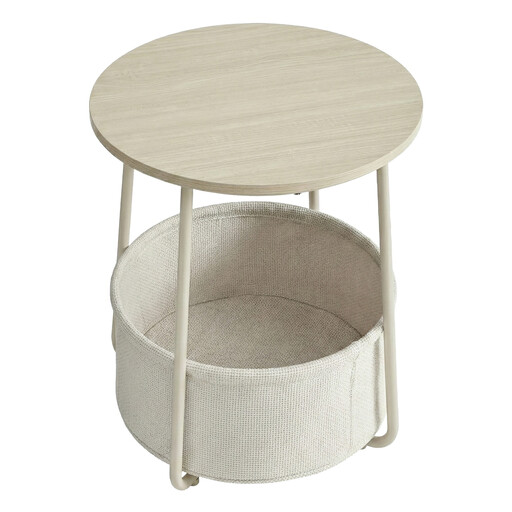
Why it suits this need: Its round shape and compact 45 x 50 cm dimensions make it a good fit beside a sofa, armchair or bed. The fabric basket offers a simple place to keep magazines, blankets or accessories.
The product information gives the dimensions of both the table and the basket. This makes it easier to judge how much space the table and its storage will really take up.
45 x 50 cm; tabletop supports up to 35 kg according to the product information; U-shaped steel legs and four adjustable feet.

Why it suits this need: This bedside table is ideal if you want to keep loose items out of sight. Its two soft-close drawers offer a different storage option from an open basket.
The two drawers give you a clear idea of the storage available, so you don’t have to rely on a vague description such as “extra storage”.
38 x 48 x 50 cm; two drawers; FSC mention; maximum load of 80 kg according to the product information.
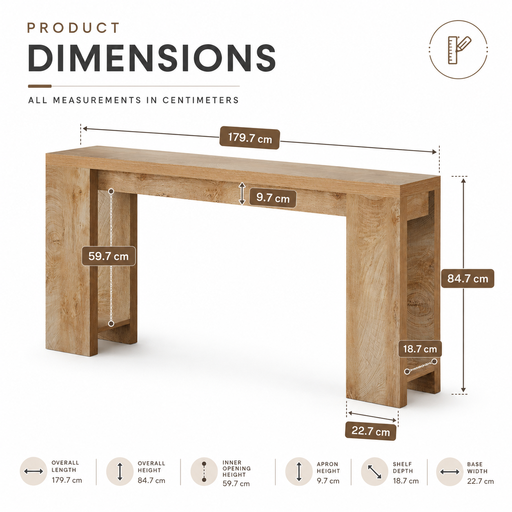
Why it suits this need: This long, narrow console table is designed for a hallway, behind a sofa or against a long wall. At 160 cm wide and 30 cm deep, it offers plenty of surface space without extending far into the room.
The width and depth are clearly stated, making it easier to plan where to put the table. It also helps you avoid choosing a deep, coffee-table-style option for a narrow passageway.
160 x 30 cm; stated maximum weight capacity of up to 136 kg; can be used as an entrance table, sofa table or decorative accent table.
We’ve put together a complete, up-to-date list of products that meet these strict selection criteria and the applicable European safety regulations.
A side table is usually intended for a lamp, drink, book or remote control beside a seat. A coffee table generally sits in front of a sofa and offers more surface space, but also takes up more room to walk around. A bedside table is designed for use next to a bed and often has drawers or a closed compartment.
In a small home, one compact model can serve several purposes. Just make sure its height, weight capacity and storage work for each use. For example, a modern side table with a fabric basket could sit beside an armchair, but may not be the best choice if you’re looking for enclosed storage.
Compare its height with the furniture you’ll use it alongside. Beside a sofa, a tabletop around the same height as the armrest is often practical. Next to a bed, you can choose a tabletop height to suit the mattress and the items you want to reach from bed.
Its lifespan depends on the materials, assembly, load and maintenance. Keep within the stated weight capacity, avoid prolonged exposure to moisture and check the fastenings after assembly. Particleboard, steel and polyester each need different cleaning methods, so follow the manufacturer’s care instructions.
It can be, as it combines a tabletop with a basket, shelf or drawers. Just choose a layout that suits what you want to store. A basket may be enough for loose throws and magazines, while drawers are more practical for cables, medicines or personal belongings.
