
Vandaag of morgen in huis

Kwaliteit gegarandeerd

Welkomstaanbiedingen ontgrendelen: GRATIS bezorging | Tot 80% korting | Gratis 30 dagen JoyPlus-proefperiode
Download de app
A side table can make practical use of an empty hallway, living room wall or space behind the sofa. However, some models can be disappointing in everyday use. The table may be too deep for the hallway, wobble on an uneven floor or offer less storage space than the product photo suggests.
So look beyond colour and style alone. Below, you’ll find out which dimensions, materials and construction details matter when choosing a side table, console table, hallway table or sideboard.
A narrow side table may seem suitable for a hallway on paper, but just a few extra centimetres of depth can noticeably restrict the passageway. Don’t just measure the available wall space; measure the walking area in front of the table too. Take doors, radiators, skirting boards and any drawers or doors you want to open into account.
For a hallway or entrance, models around 30 to 35 cm deep are often more practical than a wide sideboard. Behind a sofa, a slightly deeper sofa table can be useful, provided it does not extend above the backrest or obstruct the passageway.
A stated weight capacity does not always indicate how stable a table will be in your situation. The flooring, distribution of weight and quality of assembly also play a role. A heavy plant pot, television or collection of books places different demands on the table than a few photo frames.
So check whether the weight capacity applies to the entire piece of furniture, a shelf or just the tabletop. With a side table that includes storage, the load capacity per shelf is also important.
An industrial side table with open compartments looks spacious, but it collects dust more quickly and leaves belongings on display. A wooden side table with doors or drawers creates a tidier look, but requires more room to open.
Think in advance about what you want to store:
Before buying, note the required width, depth and height. For example, a 100 cm-wide model fits well beneath a mirror or along a short wall. A 160 cm-wide piece works better as a broad wall unit or sideboard in the living room or dining room.
Also consider the height. A hallway table around 75 to 80 cm high is suitable for everyday items and decorations. Behind a sofa, the relationship between the tabletop and the backrest determines how comfortable it is to use.
Many side tables combine chipboard or MDF with a metal frame. This can be a practical choice, but check:
The intended use varies among the models mentioned. Some tables have a 4 cm-thick tabletop, while a sideboard mainly provides concealed storage. According to the manufacturer’s product information, the Tribesigns table has a 4 cm tabletop, a metal frame and four adjustable feet. Always check the current product page for the exact specifications.
Open shelves make a room feel airier and provide quick access to belongings. A cabinet with sliding doors, such as a sideboard, conceals its contents and is useful when you want a calm, uncluttered look. Sliding doors take up less space at the front than hinged doors, which can be helpful in a narrow entrance.
For a closed piece of furniture, check the size of the compartments, the maximum load per shelf and how the cabinet is assembled. Place the cabinet on a level surface and follow the supplied assembly instructions.
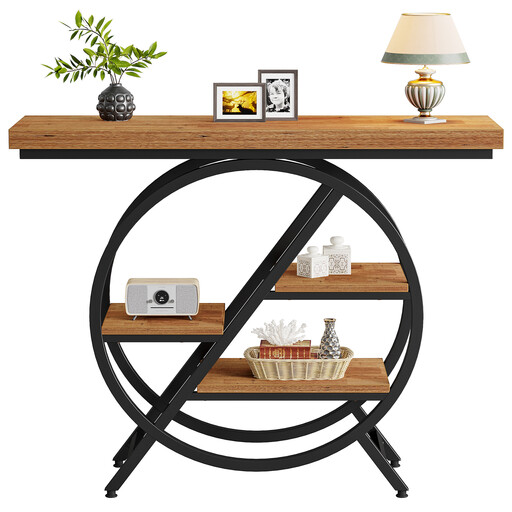
Why it suits this profile: The 100 cm width and open design make this model easy to arrange for a first hallway, living room or entrance setup.
The three staggered shelves offer more than just a decorative tabletop. According to the product information, the four adjustable feet are designed to improve stability on an uneven floor.
Open storage, a metal frame, a 4 cm tabletop according to the product description and a stated load capacity of up to 150 kg.
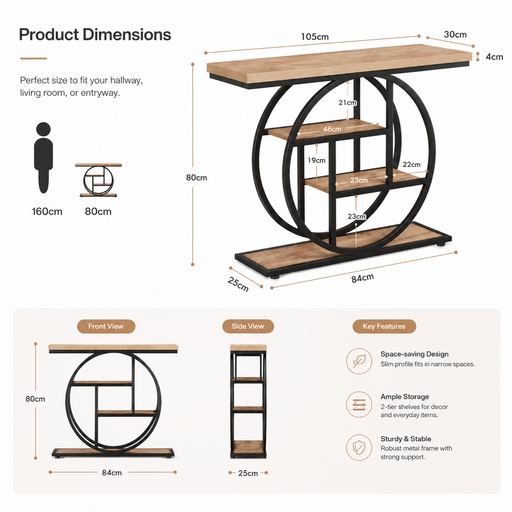
Why it suits this profile: The combination of four tiers, a circular metal frame and a width of 105 cm suits an industrial or rustic interior.
The dimensions are listed as 30D x 105W x 80H cm. This makes it easier to assess in advance whether the table is suitable for a narrow passageway or behind the sofa.
Four staggered tiers, adjustable foot pads and a stated load capacity of up to 100 lb according to the product information.
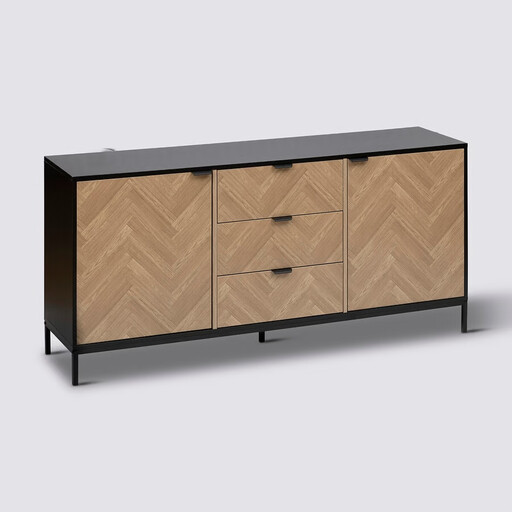
Why it suits this profile: This wide sideboard provides concealed storage for a living room, dining room or long wall where you want to keep loose items out of sight.
The product information lists two doors and three drawers, allowing you to store different types of items separately. According to the description, assembly requires two people.
Dimensions of 160 x 40 x 75 cm, a maximum total load capacity of 55 kg and FSC certification stated in the product details.
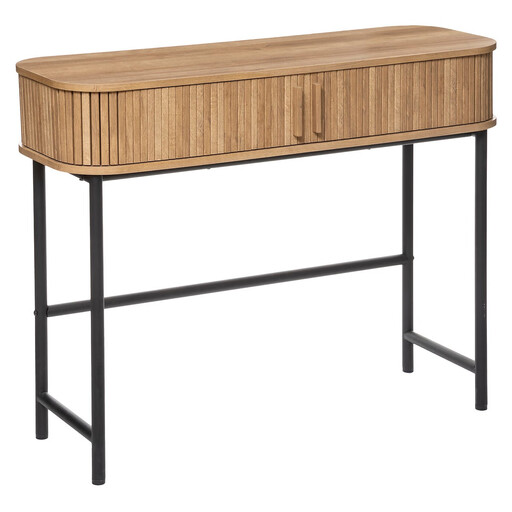
Why it suits this profile: Its compact size and two sliding doors suit a Scandinavian, natural interior and spaces where hinged doors would be inconvenient.
The 35 cm depth is clearly stated and the sliding doors require no additional swing space. The product details also specify a shelf load capacity of 10 kg.
100 cm wide, 35 cm deep, with a back panel, shelf or shelves, metal legs and a statutory warranty of at least two years, as stated in the product information.
We’ve put together a complete, up-to-date list of products that fully meet these strict selection criteria and the applicable European safety regulations.
Before assembling the furniture, check that all parts and fixings are included. Assemble it loosely at first and only tighten the screws once the frame is straight. For a heavy sideboard, it is best to have two people assemble it.
Place a side table on a level surface and use adjustable feet if they are supplied. For tall or wide cabinets, wall mounting is advisable if specified in the instructions. Distribute weight across several shelves and avoid exceeding the stated limit.
Clean MDF or chipboard furniture with a lightly damp cloth. Do not leave water on the surface for extended periods, even if the product description states that it has a water-resistant finish.
First measure the clear passageway and take doors and skirting boards into account. A model around 30 to 35 cm deep is often suitable for an entrance or hallway. Also check the layout of your home, as the available space varies from one property to another.
Yes. A sofa table behind the sofa can be used for lighting, books, plants or decorations. Choose a width that suits the sofa and check that the tabletop does not protrude awkwardly. Measure the height of the backrest before ordering too.
It can be, especially if you choose a narrow model with sliding doors, drawers or several open tiers. Closed compartments keep belongings out of sight, while open shelves provide quicker access. Always compare the usable internal space with the items you actually want to store.
