Ventilate first, both during and after your shower: a dehumidifier removes moisture, but it doesn’t replace the removal of polluted indoor air. If the conservatory remains damp for a long time afterwards, a condensation dehumidifier may be an option if the room is usually warm enough; for a cold, unheated conservatory, adsorption is more suitable. Compare the specific model’s operating temperature range, energy consumption and safe placement requirements.
Who is this buying guide for?
Owner of a cold conservatory
Your conservatory gets cold during the season, and you want to choose a unit that can still dehumidify at that temperature. The Consumers’ Association recommends adsorption for cold or unheated rooms; check the operating temperature range of the specific model too.
Someone dealing with shower moisture in the conservatory
You notice condensation or measure higher humidity after showering. Before buying a unit, you want to find out whether more ventilation will help. The Dutch government recommends ventilating especially after showering.
Someone without an easy way to drain water
You don’t want to keep emptying a tank, so you need to work out whether a safe, practical hose drain is possible. Check the instructions for the exact model’s tank and drainage options.
What should you look for when buying?
Ventilation removes both moisture and polluted air, while a dehumidifier removes moisture from the air. The Dutch government recommends extra ventilation during and after showering.
| What to consider |
What should you look for? |
Who will find this important? |
| Performance in cold conditions |
Measure the usual temperature in your conservatory and compare it with the model’s operating range. The Consumers’ Association says condensation models are mainly suitable above 15 °C. |
If my conservatory gets cold, I want to know whether the unit will still work at that temperature; around 36% of consumers prioritise performance in cold conditions. |
| Shower moisture and ventilation |
Find out where the moisture is coming from, ventilate more during and after showering, and see whether the humidity remains high afterwards. |
After showering, I want to find out whether ventilation and tackling the cause are enough before buying a unit; around 29% of consumers prioritise this consideration. |
| Water collection |
Check the tank capacity, what the instructions say when the tank is full, and whether you can drain water by hose to a suitable place. |
I don’t want to keep emptying a tank, so I’ll check whether a hose drain will work with my set-up; around 21% of consumers prioritise a practical way to drain water. |
| Energy use and noise |
Compare energy use and noise levels under similar conditions and settings. Night mode doesn’t automatically make a unit quieter. |
If the conservatory is next to a room where I spend time, I’ll consider energy use and how noticeable the noise is during operation; around 14% of consumers see these as deciding factors. |
Common buying mistakes
-
Thinking a dehumidifier can replace ventilation
A dehumidifier removes moisture from the air, but it doesn’t remove polluted indoor air. If the cause of the moisture remains, the unit could use electricity unnecessarily.
Ventilate more during and after showering, and investigate persistent damp before choosing a unit.
-
Assuming the maximum capacity reflects performance in a cold conservatory
A stated maximum in litres per day doesn’t tell you how much moisture a unit will remove at the temperature in your conservatory. The Consumers’ Association measures capacity under different combinations of temperature and humidity.
Compare performance and the stated operating temperature range in the conditions you’ll actually use the unit in.
-
Assuming night mode makes the unit quieter
According to Duux, the Bora’s night mode dims the lights and switches off beeps, but doesn’t change the actual noise level.
Compare the noise level of the exact model at each fan setting.
Brands to compare
Wood’s
The WDD80 is an adsorption model worth comparing for a cold conservatory.
- Wood’s states that the WDD80 can be used from 0 °C, and has a 2-litre tank and a hose connection.
- Check energy use and safe placement separately; these model specifications don’t compare performance in your conservatory.
Trotec
The TTR 57 E is an adsorption option that Trotec also recommends for a conservatory.
- Trotec states that it can be used from 1 °C, has a 5-litre tank and a stated capacity of 9 litres per 24 hours.
- The stated capacity isn’t an independent measurement of dehumidification in a conservatory after showering.
Eurom
The DryBest 20 is a condensation model worth comparing if the conservatory usually stays warm enough while it’s in use.
- Eurom states that this model operates at 5–35 °C, has a capacity of 20 litres per 24 hours and a 5-litre tank, and includes a connection for continuous drainage.
- The stated maximum capacity doesn’t necessarily apply at the lower limit of 5 °C.
Duux
The Bora 20/30L Smart range offers condensation models for comparing automatic humidity control and remote operation.
- Duux states that the models have a humidistat and support hose drainage.
- According to Duux, performance drops in cooler rooms, and the Bora works best at 16–32 °C. Night mode doesn’t change the actual noise level; check the specifications of the version you choose.
Dehumidifiers at Joybuy
These product picks are suited to moisture that persists after ventilation and to anyone wanting to drain water through a hose. For a cold conservatory, check the operating temperature range of the exact model. The NVWA states that electrical consumer products sold in the Netherlands must carry CE marking; check this for the product you choose.
 No image available
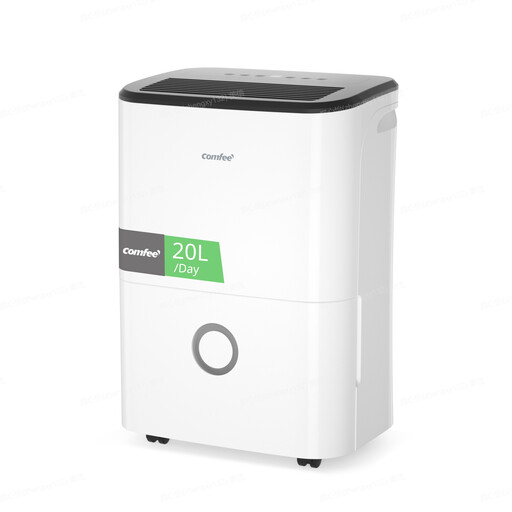
Comfee' MDDF-20DEN7
Could suit you if you want to manage moisture after ventilating and use either a tank or hose drainage.
Stated capacity: 20 l per day; tank: 3 litres; continuous drainage, three settings and a 24-hour timer.
View at Joybuy
 No image available
CONOPU 16L
An option to compare if you’re looking for a dehumidifier with a tank and continuous drainage to deal with moisture that persists after ventilation.
The product name lists a 2.5-litre tank, hose drainage and a 24-hour timer.
View at Joybuy
 No image available
TRULIVA AP10-2012EE
Could suit you if you want to use hose drainage and your conservatory is within the chosen model’s operating range.
The product name states that it’s suitable for approximately 32 m², and lists a 24-hour timer, automatic defrost and continuous drainage. Don’t place the unit where water could splash onto it, and follow the earthing instructions.
View at Joybuy
 No image available
ELECCI 12L/D
An option to consider if you’re looking for a model with a tank and continuous hose drainage to deal with moisture that lingers after ventilation.
The product name lists a 3.8-litre tank, automatic defrost, a 24-hour timer and suitability for approximately 25 m².
View at Joybuy
 No image available
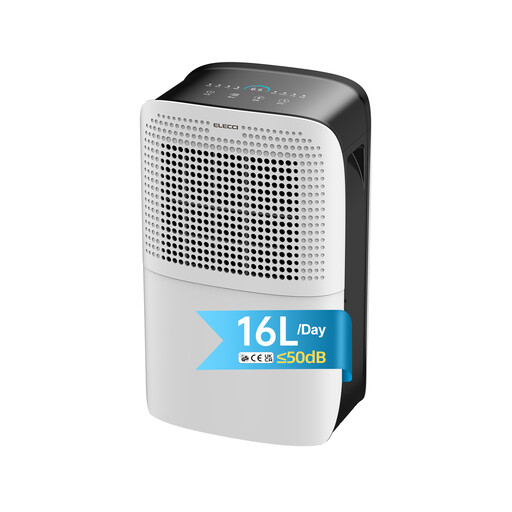
ELECCI 16L/D
Could suit you if you want continuous drainage and the stated room size is right for your conservatory.
The product name lists a 3.1-litre tank, four settings, R290, continuous drainage, automatic defrost, a 24-hour timer and suitability for approximately 32 m².
View at Joybuy
Frequently asked questions
Should I ventilate after showering if I have a dehumidifier?
Yes. The Dutch government recommends ventilating especially after showering to remove moist, polluted air. A dehumidifier may also help if you’ve addressed the cause but humidity still remains high for a long time.
Can I put an electric dehumidifier right next to the shower?
Don’t put it there without checking the manual. For example, the Eurom DryBest 20 manual warns against placing it near water or taps. Check the instructions for your chosen model to assess the exact location and electrical installation; this doesn’t establish a generally safe distance for every shower or conservatory.
Does CE marking prove that a dehumidifier is suitable for my conservatory?
No. The NVWA states that electrical consumer products sold in the Netherlands must carry CE marking, but this doesn’t prove that a model can be safely placed anywhere near a shower or will dehumidify effectively at the temperature in your conservatory. Check the manual and model specifications for that.
How do I compare capacity for a cold conservatory?
Compare performance at the temperature you’ll use the unit in, not just its maximum capacity in litres per day. The Consumers’ Association measures capacity at different combinations of temperature and humidity; also check the specific model’s operating temperature range.
What running costs and warranty should I consider?
Factor in energy use and any model-specific filter replacements. Duux recommends replacing the Bora’s carbon filter after 1 to 1.5 years; this doesn’t automatically apply to other models. In the Netherlands, there’s no fixed period for the statutory warranty, and the retailer is your point of contact if a product breaks during normal use sooner than you could reasonably expect.


