
Vandaag of morgen in huis

Kwaliteit gegarandeerd

Welkomstaanbiedingen ontgrendelen: GRATIS bezorging | Tot 80% korting | Gratis 30 dagen JoyPlus-proefperiode
Download de app
A shopping trolley can make it easier to carry groceries, parcels and heavy items. However, not every wheeled shopping trolley is suitable for everyday use. A frame that’s too small, wheels that are easily damaged or unclear load limits can quickly make a trolley awkward to use.
Look out for these three common pitfalls:
Read on to find out which specifications matter for pavements, cycle paths, shopping streets and stairwells in the Netherlands.
Check two separate figures: the bag capacity in litres and the maximum load in kilograms. A 25-litre bag is suitable for a smaller shop, while 38 to 60 litres may be more practical for a family or a weekly shop.
Treat the stated maximum load as an upper limit and distribute heavy items as evenly as possible. Bottles, cartons of drinks and tins put more strain on the base and wheels than lighter groceries. With a 2-in-1 shopping trolley, the load capacity may also differ between bag mode and sack truck mode.
For smooth shop floors and pavements, wide EVA or PVC wheels are usually a practical choice. Look out for:
A stair-climbing shopping trolley doesn’t make stairs risk-free. Hold the trolley firmly, use the handrail where possible and don’t exceed the stated load limit.
An aluminium frame can help keep the trolley’s own weight down. A steel frame is usually heavier, but some models pair it with a higher stated load capacity. Check the bag material too. 600D Oxford fabric is listed in the product information for several models as a hard-wearing material with a water-repellent coating. According to the product description, this helps protect against light rain and dust; it doesn’t mean the bag is fully waterproof.
A foldable shopping trolley should fold away without sticking or requiring complicated steps. Also check the handle height, the weight of the trolley itself and any extras, such as a rear pocket, cool bag compartment or securing strap.
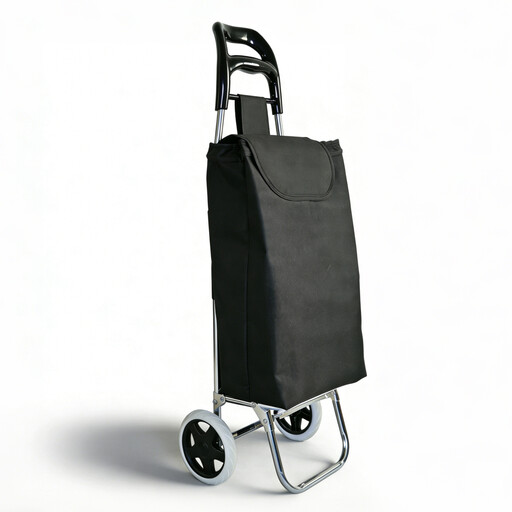
Why it suits this profile: With a stated weight of just 1.15 kg, this model is easy to take to the supermarket, put in the car or store at home.
The specifications state both a 25-litre bag capacity and a maximum load of 20 kg in sack truck mode, making the key limits clear.
1.15 kg own weight, 2-in-1 design, water-repellent Oxford bag and EVA wheels.
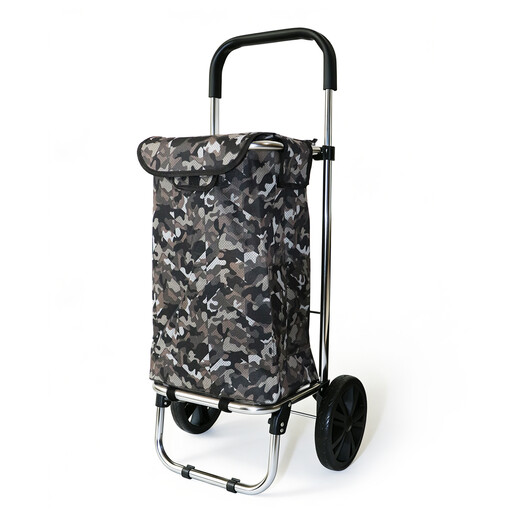
Why it suits this profile: This model has a bag with a capacity of around 45 litres, making it suitable for bigger shops, laundry and everyday transport.
The product information mentions a sturdy bag, a solid axle and a removable bag. Always check the current maximum load on the product page.
Around 45 litres of capacity, 600D Oxford fabric, EVA wheels and a foldable frame.
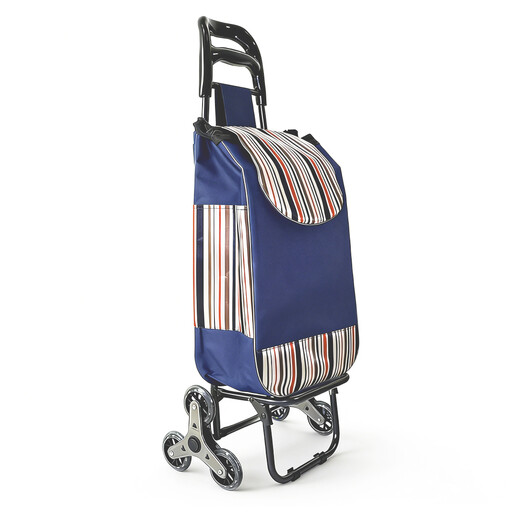
Why it suits this profile: The six PU wheels and tri-wheel system are designed for stairs, kerbs and uneven paving.
The wheel design is specifically described as suitable for steps and kerbs, rather than just smooth shop floors.
38-litre capacity, 30 kg sack truck capacity, six PU wheels and a flat-folding design.
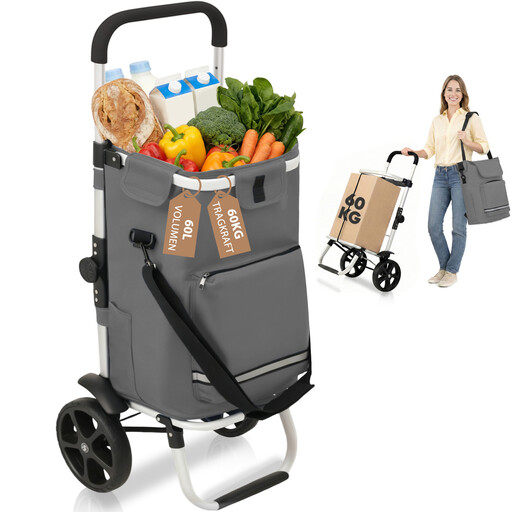
Why it suits this profile: The 3-in-1 design combines a shopping trolley, sack truck and detachable shoulder bag. The insulated compartment is handy for food and drinks on the go.
The product details state a 60-litre capacity, a lashing strap and a maximum load of 60 kg. Always secure the load and don’t exceed this limit.
60-litre capacity, aluminium frame, cool bag compartment, two solid PVC wheels and 3-in-1 use.
We’ve put together a complete, up-to-date list of products that meet these strict selection criteria and comply with the current European safety regulations.
Only models with wheels designed for this purpose are intended for use on stairs. A stair-climbing shopping trolley with six wheels can tackle steps differently from a model with two standard wheels. Move slowly, secure the bag properly and follow the manufacturer’s safety information.
Its lifespan depends on the load, surfaces, storage and maintenance. Don’t use the trolley beyond its stated weight limit, check the wheel axles and folding joints regularly, and store the bag somewhere dry. According to the product description, a water-repellent coating protects against light rain, but prolonged exposure to moisture can damage materials.
The price is mainly affected by the frame, wheel type, capacity and extra features. A basic lightweight trolley is often all you need for a small shop. For stairs, heavy crates or a cool bag compartment, you’ll generally pay for a more complex design. So compare the load capacity and intended use first, then consider the price.
