
Vandaag of morgen in huis

Kwaliteit gegarandeerd

Welkomstaanbiedingen ontgrendelen: GRATIS bezorging | Tot 80% korting | Gratis 30 dagen JoyPlus-proefperiode
Download de app
A shopping trolley can make it much easier to carry shopping, parcels and laundry. However, models vary considerably in load capacity, wheel type, bag capacity and ease of storage. A cheap shopping trolley may prove less suitable as soon as you encounter a kerb, stairs or a bumpy street.
Look out for these three common pitfalls:
A shopping trolley with a capacity of 25 to 30 litres may be enough for a small daily shop. If you do a larger weekly shop, you may want to look at 38, 45 or 60 litres instead. Bear the size of your shopping in mind: a tall bag isn’t always practical for heavy bottles or boxes.
Load capacity is given in kilograms. A 2-in-1 shopping trolley, for example, might combine a 25- or 38-litre bag with a handcart function that can carry 20, 25 or 30 kg. This is useful for parcels and crates, but check whether the maximum load applies to the bag, the frame or the handcart function.
Put heavy items at the bottom and secure the load if a strap is included. Don’t exceed the stated maximum load.
For flat shop floors and pavements, two EVA or PVC wheels are often enough. Product information describes EVA wheels as quiet and suitable for surfaces such as paving and supermarket aisles.
If you live in a flat upstairs or regularly encounter kerbs and stairs, you could look for a shopping trolley with stair-climbing wheels. A trolley with six PU wheels has a system of three rotating wheels on each side. This can help with steps, kerbs and uneven paving. Move the trolley slowly and check beforehand that the wheelbase is suitable for the stairs.
Also look out for:
An aluminium frame can be relatively lightweight, while steel or rust-resistant steel may provide greater structural strength. The right material depends on how much weight you usually carry. Also check whether the bag can be removed if you want to use the trolley as a handcart or sack truck.
An adjustable handle is useful for households with several users. A fixed, horizontal handle may be more comfortable if you prefer a simple pulling position. For a lightweight shopping trolley, its own weight matters just as much as its maximum load capacity. A 1.15 kg model is easier to lift into a car or carry upstairs than a frame weighing almost 4 kg, but the product information also gives it a lower load capacity.
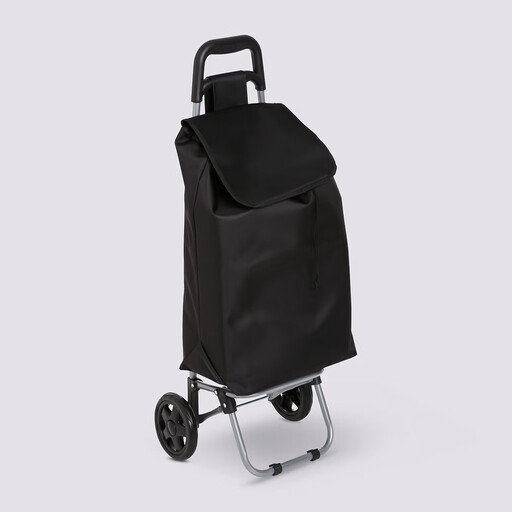
Why it suits this profile: A simple wheeled shopping trolley for smaller shops, with a capacity of 30 litres and a stated product weight of 1.33 kg.
The product specifications list the capacity and dimensions separately, so you won’t mistake 30 litres for a high load capacity in kilograms.
30-litre capacity, foldable design and two wheels according to the product information.
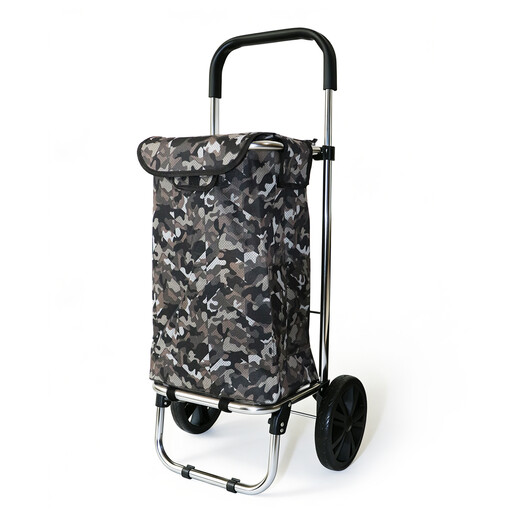
Why it suits this profile: Ideal for households carrying shopping, laundry and parcels, and looking for a bag with a capacity of around 45 litres.
The product information mentions a protective top flap and water-repellent Oxford fabric, but doesn’t claim that the trolley is fully waterproof.
Rust-resistant stainless steel frame, bag capacity of around 45 litres and EVA wheels.
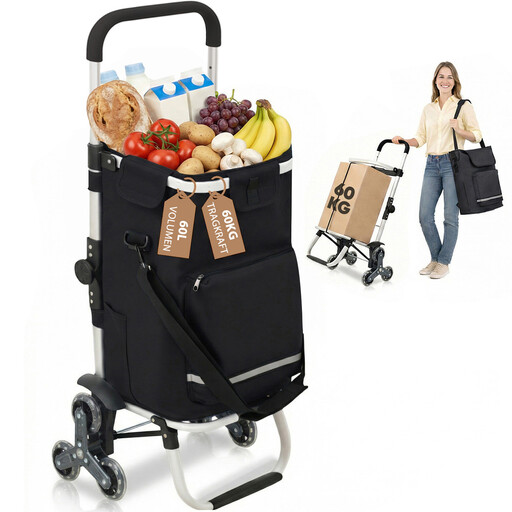
Why it suits this profile: For big shops, camping or carrying loads when you want a 3-in-1 design and stair-climbing wheels.
The stated limit of 60 kg is separate from the bag capacity. The included strap helps secure the load while you’re on the move.
60-litre capacity, six PU wheels for stairs and a 3-in-1 design with a shopping bag, handcart and detachable shoulder bag.
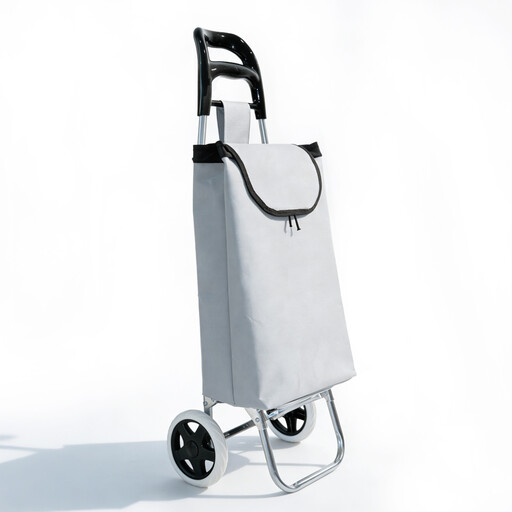
Why it suits this profile: A practical choice if easy lifting, taking it in the car and compact storage matter more than maximum capacity.
Its low weight makes it clear that this model is designed to be easy to carry; the stated handcart load capacity is 20 kg, not 60 kg.
1.15 kg product weight, 25-litre bag, 2-in-1 function and quiet EVA wheels according to the product specifications.
We’ve put together a full, up-to-date list of products that meet these strict selection criteria and the applicable European safety regulations.
Place heavy items low down and distribute them as evenly as possible in the bag. Use a protective flap or fastening, and an included strap if there is one. Before setting off, check that the bag is securely attached to the frame. When using the handcart function, place boxes against the support plate so they can’t slide backwards.
Its lifespan depends on the load, surface, moisture and maintenance. Clean the frame and wheels with a slightly damp cloth, and store the trolley somewhere dry. Check the wheel attachments, seams, fastenings and folding mechanism regularly. A trolley that’s often pulled over kerbs may wear out faster than one used mainly in shops.
There are generally no ongoing running costs. However, the wheels, fittings or bag may need replacing over time. A model with a detachable bag can be handy if you only want to use the frame as a handcart. When buying, also check the warranty information and the statutory guarantee that applies to the product.
