
Vandaag of morgen in huis

Kwaliteit gegarandeerd

Welkomstaanbiedingen ontgrendelen: GRATIS bezorging | Tot 80% korting | Gratis 30 dagen JoyPlus-proefperiode
Download de app
A shoe rack may seem like a simple piece of furniture, but the wrong choice can quickly become frustrating. It might be too deep for your hallway, lack space for boots or become unstable once you add more shoes. A shoe cabinet with drop-down doors isn’t automatically practical either: wide shoes, high-top trainers and heeled shoes won’t fit in every compartment.
Before you buy, look out for these three common pitfalls:
So a good choice doesn’t start with colour or price, but with the space available, the types of shoes you own and how you plan to use the unit.
Measure the spot where you plan to put the shoe rack in three places:
For a narrow hallway, a slim shoe cabinet around 24 centimetres deep may be more practical than an open rack that’s 30 centimetres or deeper. Also check which way doors and drop-down compartments open. A shoe cabinet with drop-down compartments needs space in front to open them.
A fixed compartment works for low-cut shoes, but is less flexible for ankle boots, high-top trainers or heeled shoes. Adjustable shelves make a shoe cabinet more useful throughout the year.
Also check whether the stated capacity is realistic for your collection. A rack that holds 30 pairs, for example, may be best suited to low-cut shoes. If you own a lot of boots, you’ll need more usable space than someone with only trainers and slip-ons.
An open shoe rack keeps your shoes close at hand and allows them to air. That’s handy in a busy household, but your shoes will be on show. A shoe cabinet keeps things looking tidier and protects shoes from dust, but you’ll need to pay more attention to compartment sizes and ventilation.
For wardrobes and small bedrooms, stackable shoe boxes or a shoe organiser can be useful. Always check the internal dimensions. Some product descriptions specify a suitable shoe size, but fits vary between brands and models.
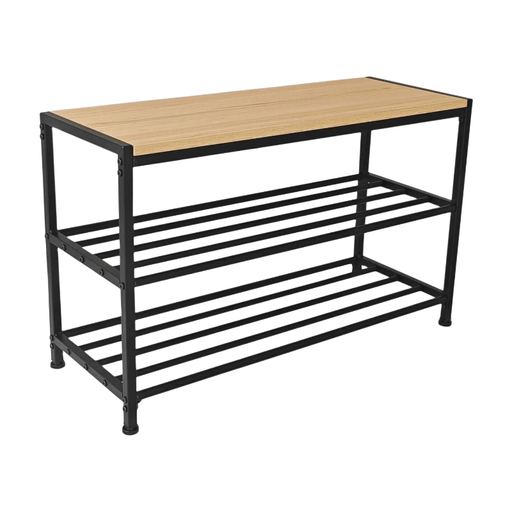
Why it suits this profile: This compact model holds 6 pairs of shoes and has a wooden top shelf for accessories or decorative items. Its dimensions make it a good fit for a smaller hallway, bedroom or corridor.
The capacity and overall dimensions are clearly stated. This means you can check in advance whether 6 pairs will be enough and whether 80 x 30 x 49.2 cm will fit in your chosen spot.
Black powder-coated metal, a wooden top shelf, an open design and a freestanding build.
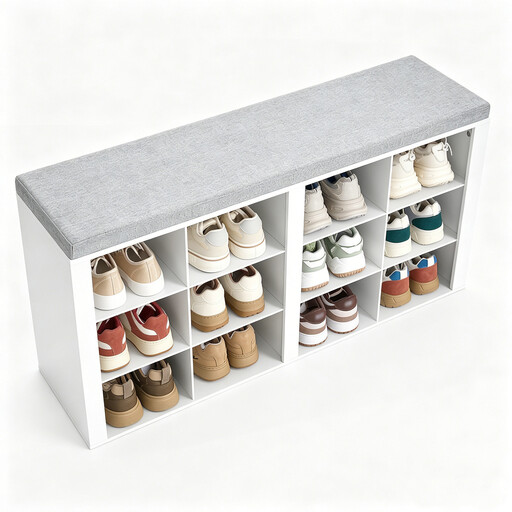
Why it suits this profile: This shoe bench combines a place to sit with 12 compartments. It’s handy in a hallway where you want to sit down to put on your shoes and keep spare pairs out of sight.
According to the product description, the shelves are height-adjustable. This gives you more room for different types of shoes than compartments that are all fixed in place.
Measures 30.5 x 104.5 x 49.5 cm, has removable cushion covers and a manufacturer-stated load capacity of 150 kg.

Why it suits this profile: With room for up to 30 pairs, this freestanding rack is designed for households with a larger shoe collection. Its small footprint of 65.5 x 24.5 cm makes good use of vertical space.
The product information makes it clear that this is a freestanding rack and isn’t designed to be sat on. This helps prevent it being used incorrectly as a shoe bench.
White metal and plastic, a height of 138 cm and an open layout. Assembly is required; place the rack on a level, stable surface.
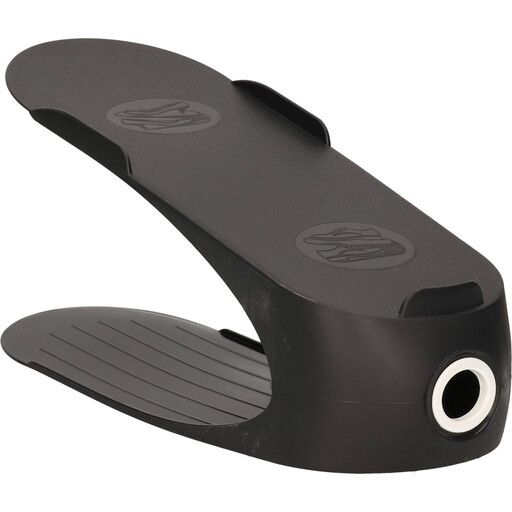
Why it suits this profile: This compact shoe organiser is designed for a wardrobe, under the bed or against a wall. It’s suitable for shoes up to size 46.
The maximum load is clearly stated: no more than 3 pairs of shoes. This helps prevent overloading and instability.
Made from polypropylene, measures 29.5 x 11.1 x 14 cm and has a raised edge to help keep shoes in place.
Before assembly, check that all the parts are included and use a level surface. Tighten the connections securely, but avoid damaging them by applying too much force. Securing a tall shoe rack to the wall can make it more stable, especially in a household with children or pets.
Clean metal, plastic and laminated panels with a soft, slightly damp cloth. Avoid abrasive cleaners. Don’t leave wet shoes in a fully enclosed shoe cabinet for long periods; let them dry first to help prevent moisture build-up and odours. How long the rack lasts depends on its materials, the load it carries, how it’s assembled and how often it’s used. Check the screws, connections and shelves from time to time.
We’ve put together a complete, up-to-date list of products that meet these strict selection criteria and the applicable European safety regulations.
Allow for the depth of the rack as well as enough room to walk past it. If the model has drop-down compartments, leave enough space for them to open fully too. Remember to measure the skirting board and the door’s swing.
An open shoe rack is easy to access and allows shoes to air well. A shoe cabinet looks tidier and keeps shoes more out of sight. If your shoes are wet, it’s best to let them air outside the closed cabinet for a while.
Place the rack on a level surface, spread heavier shoes across the tiers and don’t exceed the stated load capacity. Securing a tall model to the wall can provide extra peace of mind, as long as the product is designed for it.
