
Vandaag of morgen in huis

Kwaliteit gegarandeerd

Welkomstaanbiedingen ontgrendelen: GRATIS bezorging | Tot 80% korting | Gratis 30 dagen JoyPlus-proefperiode
Download de app
A shoe rack may seem like a simple purchase, until it does not fit in the hallway, wobbles or holds fewer shoes than expected. Particularly when shopping online, dimensions, load capacity and the difference between an open rack and a shoe cabinet are not always considered carefully enough.
The most common pitfalls:
First, determine how many shoes you actually want to store. For a small household, a shoe rack for 6 pairs may be sufficient. A family or household with lots of seasonal footwear is more likely to need a shoe rack for 30 pairs or a multi-tier shoe rack.
Also consider the space between the tiers. A rack with many levels is efficient for low shoes, but is not always suitable for boots. With a shoe cabinet featuring adjustable shelves, you can adapt the layout more easily to different shoe sizes and heights.
Measure the area where the shoe rack will be placed and leave a few centimetres of clearance around it for doors, skirting boards and walking space. A narrow shoe rack is useful in a cramped hallway, but a depth of just a few centimetres is not the same as a full-sized rack for larger shoes.
For a shoe rack for the hallway, these points are particularly relevant:
A hanging shoe organiser or over-the-door shoe hanger makes use of vertical space and keeps the floor clear. However, check that the door can still close properly and that the weight does not put pressure on the door or hinges.
A metal shoe rack can generally be wiped clean easily with a soft, slightly damp cloth. Dry the surface afterwards to help prevent moisture marks. Open racks made from metal, steel or plastic also have a different look and care routine from a closed shoe cabinet made from engineered wood.
With wooden or wood-effect components, it is advisable to avoid prolonged contact with wet shoes. Check the stated materials, assembly instructions and any warnings for each product. Do not use a shoe rack as a bench or step unless the product information specifically allows it.
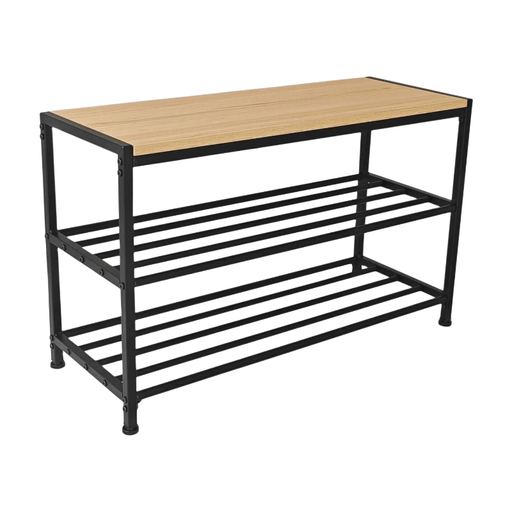
Why it suits this profile: This compact model holds 6 pairs of shoes and, measuring approximately 80 x 30 x 49,2 cm, fits in a hallway, corridor or bedroom.
The capacity and dimensions are clearly specified. This means you can check in advance whether the rack suits your everyday shoe collection.
Black powder-coated metal frame, wooden top shelf and open construction for air circulation.
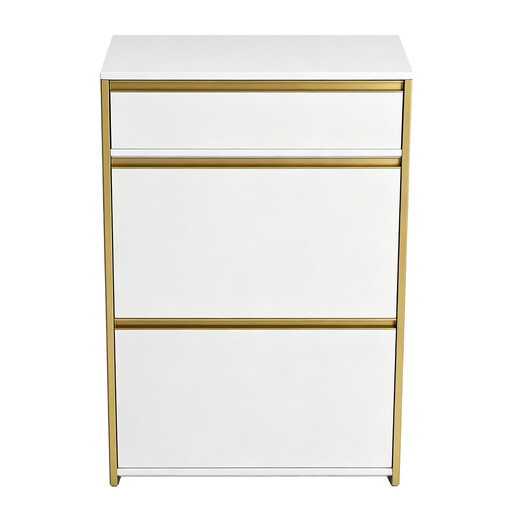
Why it suits this profile: If you want to keep shoes out of sight, this closed cabinet offers drawers, adjustable shelves and a top surface for accessories or decorations.
The stated maximum capacity is 12 pairs. This helps prevent you from buying a compact shoe cabinet with unrealistic expectations.
Dimensions of 60 x 24 x 104,5 cm, adjustable and removable shelves, and an anti-tip feature according to the product description.

Why it suits this profile: This tall freestanding shoe rack is designed for households that want to organise many pairs in one place without installing a wide shoe cabinet.
The product information states a capacity of 30 pairs and dimensions of 65,5 x 24,5 x 138 cm. Pay particular attention to the tall configuration and position the rack securely.
Metal construction, modern white finish and vertical storage with a relatively small footprint.

Why it suits this profile: This hanging shoe organiser makes use of a door and is suitable for a hallway, wardrobe or bedroom where floor space is limited.
The organiser has 24 pockets and a metal frame with mesh. Measure the door and check before use that it can move freely.
Foldable design, tool-free assembly according to the product information, and dimensions of approximately 48 x 7 x 170,7 cm.
We have compiled a complete, up-to-date list of products that fully meet these strict selection criteria and the applicable European safety regulations.
Use an open shoe rack when shoes are worn every day and need to be easy to access. A shoe cabinet is a better choice when you want a tidy look and prefer to keep shoes out of sight. A top shelf or drawer can provide extra storage for accessories, scarves or small bags.
An over-the-door hanger is practical in a wardrobe or bedroom, but less suitable when the door is heavily loaded or frequently slammed shut. Do not place a freestanding rack in front of a radiator, and put wet footwear on a mat or drip tray first. This helps limit moisture on the floor and in the material.
That depends on the width of the tiers and the type of shoes. For example, a compact model may hold 6 pairs, while a tall model is stated in the product information to accommodate 30 pairs. Wide shoes and boots take up more space than low shoes.
A shoe cabinet keeps shoes out of sight and may suit a tidy hallway better. An open shoe rack provides quicker access and better ventilation. Choose based on the space available, how you use it every day and whether you prefer visible or concealed storage.
Place the rack on a level surface, tighten all the connections securely and check them regularly. With tall models, or in homes with children and pets, securing the rack to the wall can provide additional safety, provided this is done according to the product instructions.
