
Vandaag of morgen in huis

Kwaliteit gegarandeerd

Welkomstaanbiedingen ontgrendelen: GRATIS bezorging | Tot 80% korting | Gratis 30 dagen JoyPlus-proefperiode
Download de app
A shoe rack may seem like a simple purchase, until it does not fit in the hallway, shoes stick out over the edge or the structure starts to wobble. Product photos alone are not enough, especially when shopping online. A rack can look compact, while its actual depth or height turns out to be impractical.
Three common pitfalls are:
Measuring the available space first and only then considering the style will usually help you avoid a disappointing purchase. For more inspiration, take a look at the range of shoe storage for the front door.
Do not just measure the alcove or wall; also allow for doors, skirting boards and the passageway. In a narrow hallway, a deep shoe cabinet can get in the way. For a shoe rack in the hallway, these points are important:
A shoe rack for a wardrobe requires different dimensions. In this case, a low height and limited depth are often more important than a large capacity.
A model for 12 pairs of shoes is suitable for a smaller collection or everyday footwear. For a household with several residents, a shoe rack for 12 to 30 pairs of shoes may be more practical. However, pay attention to the layout: a shelf for low-top trainers is used differently from a compartment for boots.
A closed shoe cabinet keeps shoes out of sight and can provide additional storage space on top. An open metal shoe rack gives you quicker access to your shoes and allows air to circulate between the pairs. Also check whether the shelves are adjustable. This is useful when storing different types of footwear.
A metal shoe rack generally has an open structure with metal tubes or shelves. Check whether plastic connectors are used and whether the maximum load capacity per tier is stated. According to the product description, a JOYFURNOS model has a static load capacity of 10 kg per tier and 30 kg in total.
For a chipboard shoe cabinet, adjustable shelves and an anti-tip feature are relevant specifications. Secure a tall or narrow unit to the wall according to the instructions when recommended. For maintenance, usually use a dry or slightly damp cloth and avoid abrasive cleaning products.
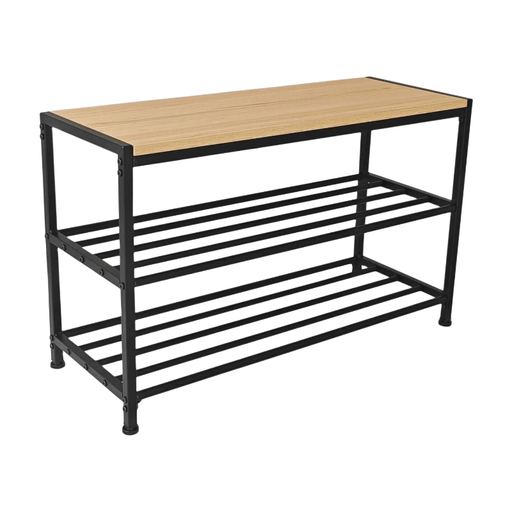
Why it suits this profile: This compact model holds 6 pairs of shoes and, measuring approximately 80 x 30 x 49,2 cm, fits into a smaller hallway, corridor or bedroom.
The capacity and dimensions are clearly stated, so you will not automatically buy a rack that is too large for a limited space.
Powder-coated metal frame, wooden top shelf and freestanding design.
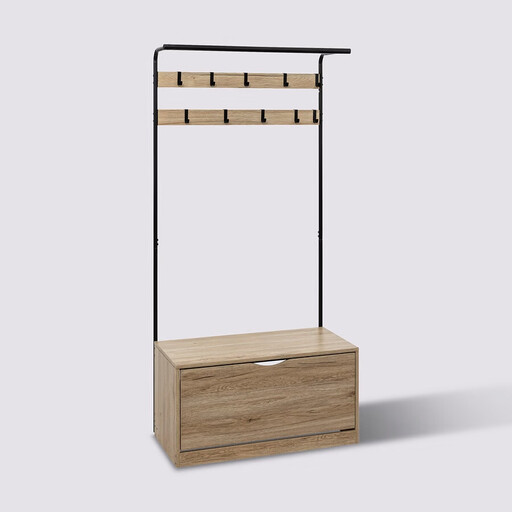
Why it suits this profile: According to the product specifications, this tall shoe rack combines a steel structure with two shelves and additional elements. It is suitable when you want to make good use of vertical space.
The height of 175 cm is clearly stated. Measure the available wall height beforehand and plan the assembly carefully.
Steel structure, 80 cm wide and suitable for indoor use.
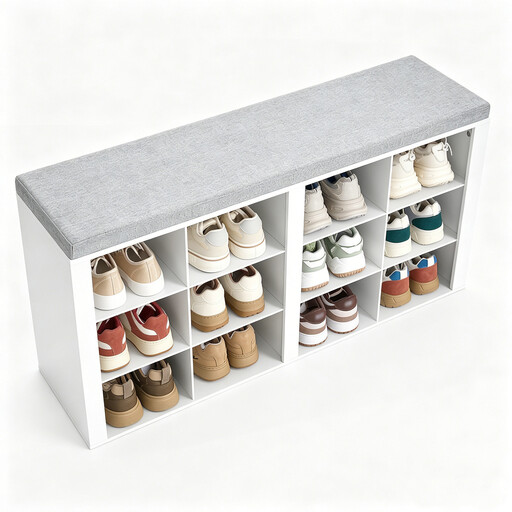
Why it suits this profile: A shoe rack with a bench is useful by the front door when you want to sit down to put on your shoes. The adjustable shelves provide space for different types of footwear.
The product description states that it has adjustable shelves and a load capacity of 150 kg. Always check the instructions and fixing points during assembly.
12 compartments, adjustable shelves and dimensions of 104,5 x 30,5 x 49,5 cm.
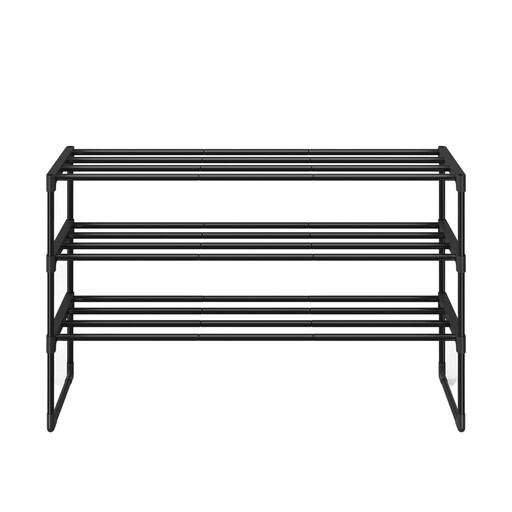
Why it suits this profile: According to the product description, this stackable shoe rack can be positioned upright, upside down or stacked. This makes it suitable for a hallway, wardrobe or living room.
The flexible layout is useful when a single fixed configuration does not suit your space. However, check its stability after stacking.
Dimensions of 92 x 30 x 55 cm, metal tubes and a maximum of 10 kg per tier according to the product information.
We have put together a complete, up-to-date list of products that fully meet these strict selection criteria and the applicable European safety regulations.
This depends on the layout and the type of shoes. A multi-tier model can store 12 pairs of shoes vertically without taking up much floor space. Measure the width of your largest shoes and leave enough room to take them out easily.
A shoe cabinet keeps shoes out of sight and often creates a neater look in the hallway. An open shoe rack is more accessible and makes it easier to grab your shoes quickly. Choose a cabinet when appearance and enclosed storage are your priorities; choose an open rack when ventilation and accessibility matter more.
Place the rack on a level surface, distribute heavier shoes across the bottom tiers and tighten all the connections securely. For tall or narrow models, wall fixing is advisable when specified by the manufacturer or when there is a risk of tipping. After assembly, regularly check that the fixings are still secure.
