
Vandaag of morgen in huis

Kwaliteit gegarandeerd

Welkomstaanbiedingen ontgrendelen: GRATIS bezorging | Tot 80% korting | Gratis 30 dagen JoyPlus-proefperiode
Download de app
A shoe rack may seem like a simple purchase, until you discover that it does not fit in the hallway, holds too few shoes or starts to feel unstable after just a few weeks. In Dutch flats, student accommodation and narrow entrances in particular, every centimetre counts. That is why the right choice should start not with colour or price, but with the space available, the number of pairs of shoes you own and how you intend to use the rack.
A narrow shoe rack may seem convenient, but its depth and height also determine whether your shoes will fit properly. Always check the full dimensions. For example, a rack measuring 87 x 30 x 155 cm requires considerably more vertical space than a low model approximately 50 cm high.
Do not just measure the floor space, but also:
A shoe rack for 30 pairs of shoes sounds spacious, but the stated capacity may be based on low-top trainers or slippers. Tall boots and sturdy shoes take up more room. So pay attention to the number of shelves, the gap between them and whether the shelves are adjustable.
An open metal shoe rack makes shoes easy to reach. A shoe cabinet with doors keeps the space looking tidier, but may be less suitable for wide or tall footwear. Also check whether a product is designed to be sat on. A freestanding rack is not automatically a shoe rack with a bench.
A plastic shoe rack is lightweight and often easy to move. Polypropylene is suitable for indoor use, but check the stated load capacity and place the rack on a level surface. A metal shoe rack may appear sturdy, but the connections and assembly are important here too.
For tall or narrow models, it is worth considering wall fixing. Follow the supplied instructions and regularly check that the connections are still secure. Never use a shoe rack as a step stool unless the manufacturer expressly specifies another intended use.
For a hallway, a narrow shoe rack or a shoe rack for small spaces is often practical. Look at the total width, depth and height, not just the product title. A depth of around 24 to 30 cm can save space, but measure your largest shoes first.
A stackable shoe rack offers flexibility as your collection grows. However, check that the product is actually designed to be stacked. Some models may be stacked, while others specifically state that no more than one unit may be placed on top of another.
Count your everyday shoes, sports shoes, slippers and boots separately. A model with fixed levels is easy to organise, while a cabinet with adjustable shelves can accommodate different types of footwear as your needs change.
A shoe rack for 30 pairs of shoes is particularly suitable for a household with lots of footwear. For one person or a compact bedroom, a model for six to twenty pairs may make more sense. Check whether the capacity is stated per pair, per shelf or for the entire piece of furniture.
Open metal or plastic racks are generally easy to wipe clean. With a chipboard shoe cabinet, it is best to avoid prolonged contact with moisture. Use a soft, slightly damp cloth on metal surfaces and dry the surface afterwards.
Before buying, check:
Brand information about durability or ease of use is not an independent guarantee. Base your decision primarily on verifiable details such as dimensions, material, number of levels and stated load capacity.
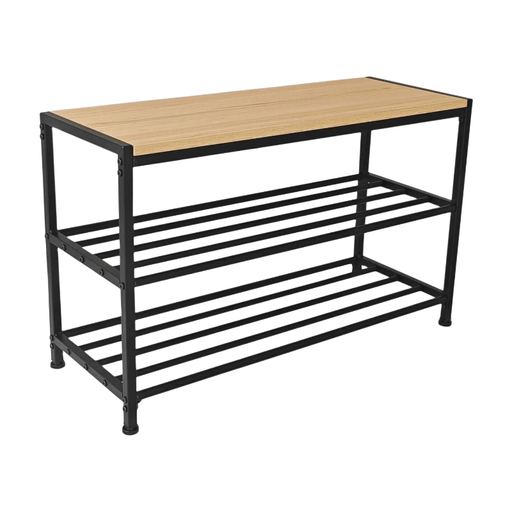
Why it suits this profile: This compact model holds six pairs of shoes and, measuring approximately 80 x 30 x 49,2 cm, fits in a hallway, bedroom or corridor where space is limited.
The capacity and dimensions are clearly stated, so you do not have to rely solely on a generic product image.
Black metal frame, wooden top shelf and open design; suitable for six pairs of shoes.
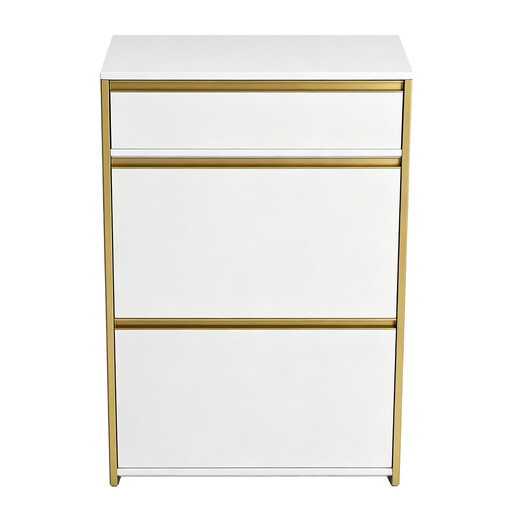
Why it suits this profile: The combination of enclosed storage, a drawer and adjustable, removable shelves is ideal for anyone who wants to keep shoes out of sight while also using the cabinet for small items.
The adjustable layout means you are not limited to storing low shoes. An anti-tip feature is designed for fixing the cabinet to the wall.
Dimensions of 60 x 24 x 104,5 cm, space for up to 12 pairs and multifunctional use in the hallway, corridor or living room.
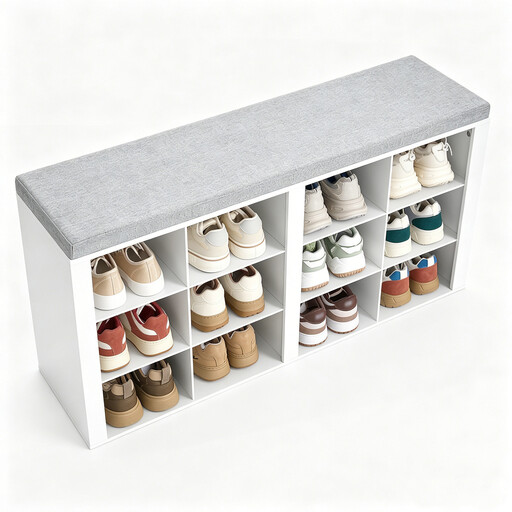
Why it suits this profile: This shoe cabinet with bench combines shoe storage with a seat. That is practical in an entrance where you want to sit down to put on your shoes.
Unlike a standard freestanding rack, this model is designed as a bench according to the product information. The shelves are height-adjustable.
Size of 30,5 x 104,5 x 49,5 cm, adjustable shelves and a stated load capacity of 150 kg.

Why it suits this profile: If you do not want to give up floor space, you can use a door or cupboard door instead. The organiser is designed for hallways, wardrobes or an unused corner.
The dimensions and quantity of 24 pockets are clearly specified. However, check that the door has enough clearance to open freely.
Metal frame, mesh fabric, foldable design and vertical use of a door or cupboard.
We have put together a complete, up-to-date list of products that fully meet these strict selection criteria and the applicable European safety regulations.
First measure the available width, depth and height. Take doors, skirting boards and walking space into account. For a narrow hallway, a shallow rack or hanging shoe organiser is often more practical than a wide shoe cabinet. Also check whether the shelf spacing is suitable for your largest pair of shoes.
That depends on the construction, connections and stated load capacity. Metal can provide a stable frame, while plastic is lighter and easier to move. So do not compare the material alone; also consider the weight, shelf layout and maximum load per level.
Put shoes away dry and clean, allow wet footwear to air first and avoid overloading the shelves. Wipe metal and plastic with a soft cloth. With a shoe cabinet made from board material, take extra care to keep it away from moisture. If you assembled it yourself, check all the connections again after a few weeks.
